'Clear-eyed' on China: takeaways from Pete Hegseth's Shangri-La speech

U.S. Secretary of Defense Pete Hegseth gestures during a question and answer session in a plenary session of the International Institute for Strategic Studies (IISS) Shangri-la Dialogue Defense Summit in Singapore, Saturday. Defense ministers and officials from 44 countries are gathered in the city state for the IISS Shangri-la Dialogue, an annual high-level defense summit in the Asia Pacific region. EPA-Yonhap

U.S. Defense Secretary Pete Hegseth addressed the annual Shangri-La Dialogue in Singapore, Saturday morning, just two weeks after a summit between the presidents of China and the United States.
The speech was expected to be a barometer of the summit's outcomes between President Xi Jinping and his U.S. counterpart Donald Trump.
Here are some of the main points from Hegseth's address.
Tough on China, but less confrontational
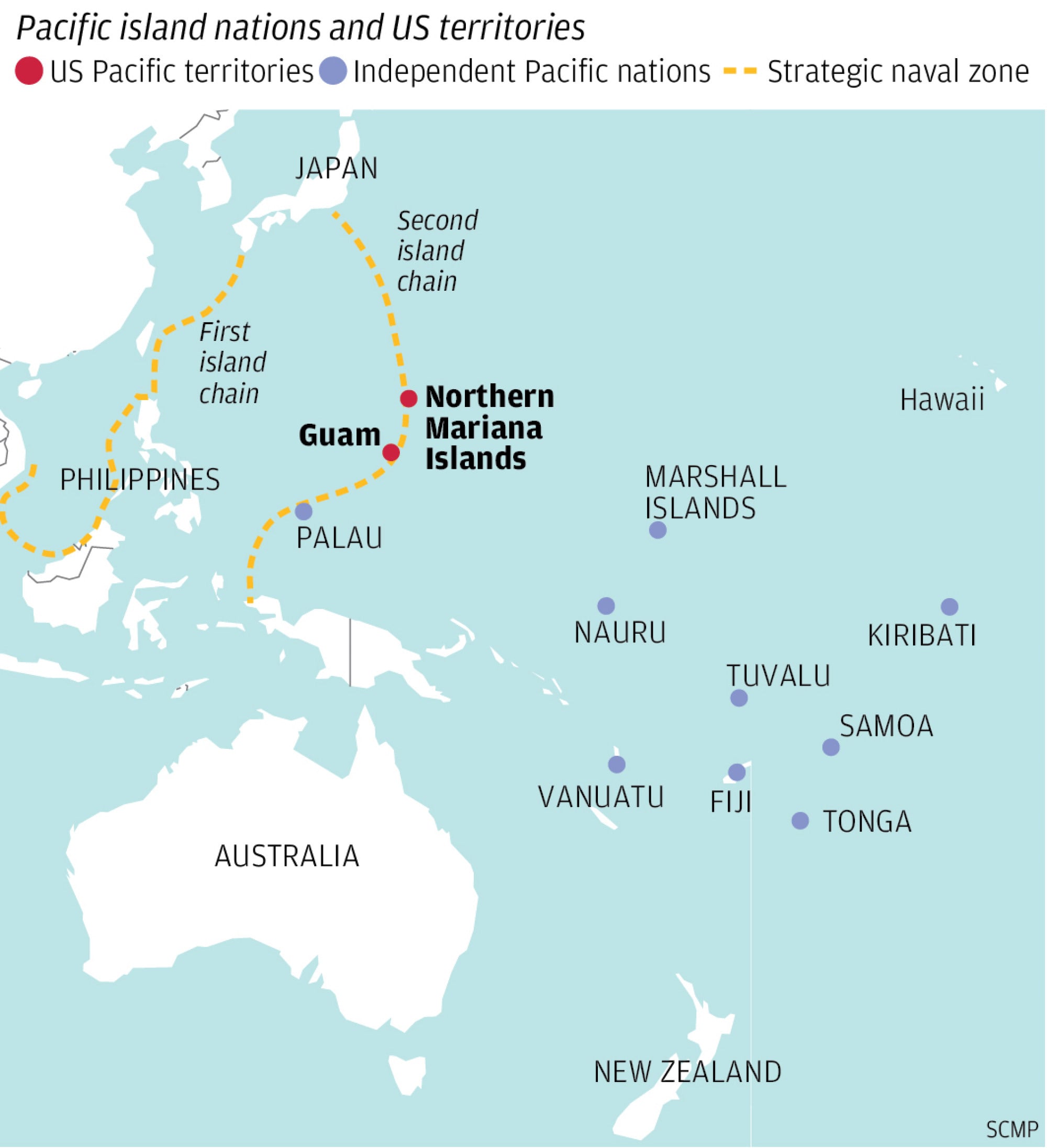
Hegseth referred to China's "historic military build-up" and reaffirmed that the U.S.'s strategy in the Pacific centered on "deterrence by denial" along the first island chain.
This is widely seen as intended to counter the People's Liberation Army (PLA) in a potential conflict in the Taiwan Strait.
But the tone of Hegseth's speech was markedly milder than last year, when he said that the China threat was real and it could be imminent and that the PLA was rehearsing for the "real deal."
On Saturday, he said U.S.-China relations were "better than they have been in many years" and praised the Xi-Trump talks in Beijing last month as "historic."
He also stressed the need to expand military-to-military communication to "deconflict and reduce the risk of miscalculation," adding that the U.S. would not respond to the challenge of Chinese military activities with unnecessary confrontation.
Arms sales to Taiwan
Taiwan was mentioned five times in his speech last year but the island was not referred to at all in Hegseth's address this year.
However, in the question and answer session afterwards, he was asked about Washington's arms sales to the self-ruled island.
In response, he said any decision "will rest with" Trump.
"Certainly, having been there in those meetings in Beijing [between Xi and Trump], there is no change in our status there," Hegseth said, without saying whether Taiwan arms sales would go ahead.
Trump has not yet approved a $14 billion sale of weapons to Taiwan and Beijing has repeatedly warned Washington to exercise the utmost caution in this matter.
Beijing regards Taiwan as part of its territory, to be reunified by force if necessary. Most countries, including the U.S., do not recognise Taiwan as an independent state, but Washington opposes any attempt to change the status quo by force and is committed to supplying the island with defensive weapons.
Iran peace talks
Despite a brief mention of the Iran war at the beginning of his speech, Hegseth did not talk about U.S. peace talks with Tehran.
The two sides are inching towards a deal but uncertainties remain.
In the Q&A session, Hegseth said Trump was "patient" in the pursuit of the deal but "any deal will be a good deal".
"I had a chance to talk to President Trump this morning. He wanted me to reiterate how patient he is in ensuring that with America undertaking this kind of historic endeavour, any deal will be a good one, a great one," he said.
Earlier this month, a U.S. admiral said arms sales to Taiwan had been suspended due to ammunition shortages caused by the war with Iran.
But Hegseth said Saturday that he "would not couple the two in any way at all".
Indo-Pacific allies
Hegseth singled out partner after partner for praise, including South Korea, the Philippines, Japan and Australia but refrained from mentioning the South China Sea.
He also hailed India for its capacity to repair and support U.S. Navy vessels.
He called on allies to carry more of the burden in the defense relationship, spend at least 3.5 percent of their GDP on defense, and earn front-of-line treatment on arms sales, intelligence-sharing and industrial collaboration.
'Free-riding' European allies
Hegseth took repeated swipes at European allies, saying Washington's pleas for them to spend more had long "fallen on deaf ears".
He accused European capitals of throwing open their borders and hollowing out their militaries while chasing "empty globalist rhetoric".
"No freeriding," he said, declaring the era of U.S. subsidising wealthy nations' defense was "over."
He hinted at more friction ahead, warning that European allies had "some big decisions to make."
The Trump administration has repeatedly expressed its dissatisfaction over the lack of support from Nato allies in its war on Iran, even threatening to withdraw from the security bloc.
Praise for Trump
Hegseth credited Trump with restoring American deterrence and a "realistic" approach to defense, citing the military operation that removed then Venezuelan President Nicolas Maduro and strikes on Iran.
He also hailed Trump's record-breaking $1.5 trillion defense budget request as one that would unleash "America's arsenal of freedom and expand America's military dominance for decades to come."
He said that under Trump, the U.S. had "the most powerful and capable military in the history of the world."
Read the article at SCMP.