Bear attacks surge in Japan as bears increasingly lose fear of humans
Rising bear attacks in Japan linked to changing bear behavior
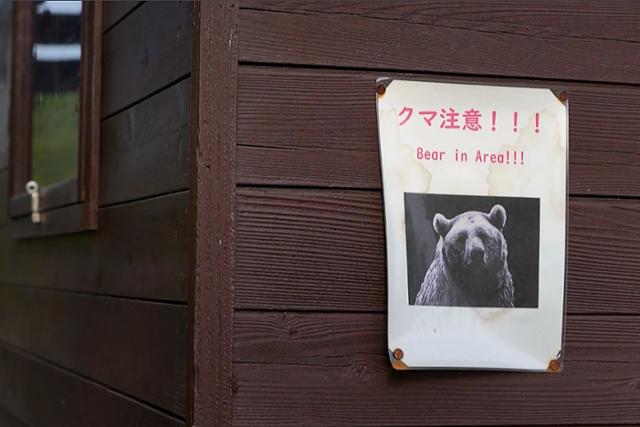
A warning sign about bear sightings is posted at the entrance to a mountain near Akita Prefecture on Oct. 25. AFP-Yonhap
On Oct. 7, a car traveling on a road in southern Hokkaido suddenly encountered a massive figure. Before the shocked driver could react, the creature stood upright and stared directly at the vehicle. It was a bear standing more than two meters tall, with saliva dripping from its sharp teeth.
It then charged at high speed, chasing the reversing car and striking its hood with force. The panic-stricken driver sped away, and the bear reportedly chased the vehicle for some distance.
Although no one was injured in this incident, residents are increasingly alarmed that the bear not only confronted the vehicle but aggressively chased it. Their fear is understandable: Deaths and disappearances linked to bear attacks have surged across Japan this year.
On Oct. 12, a newspaper deliveryman in his 70s was killed in a residential area of Hokkaido. Five days later, an employee at a hot spring facility in Iwate Prefecture in the Tohoku region vanished, leaving behind only his glasses and sandals. Foragers searching for mushrooms in the mountains have also been found dead or missing, with some remains discovered decapitated. All cases have been attributed to bears.
The Ministry of the Environment of Japan says bear sightings nationwide surpassed 20,000 between April and September, marking the highest figure in the past five years. According to NHK, as of Oct. 11, bear-related casualties had reached at least 220 across 21 prefectures, exceeding the previous record of 219 in 2023. Thirteen of the victims have died this year, compared with six in 2023. How has Japan reached what some describe as a war with bears?
Surge in the bear population and the rise of a ‘new generation’
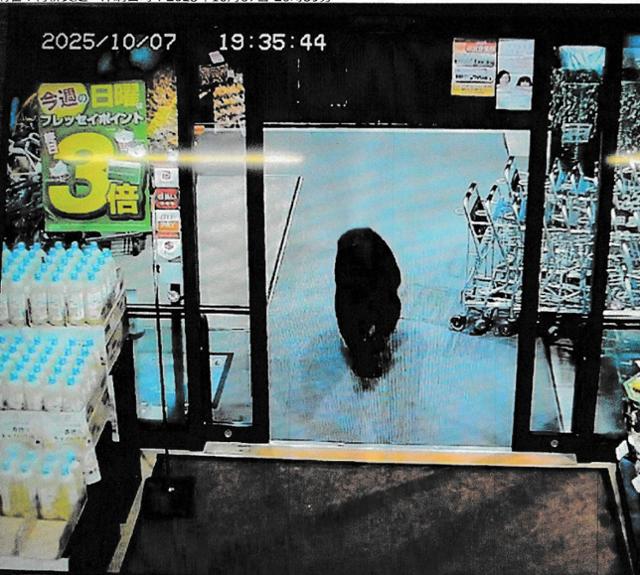
A bear wanders inside a supermarket in Numata, Gunma Prefecture, as seen in CCTV footage from Oct. 7. The footage is provided by police and reported by Jiji Press. AFP-Yonhap
Bears, known for their wariness, typically lived in the dense forests that cover about two-thirds of Japan. Their numbers fell after World War II due to extensive hunting. But after the government banned bear hunting and rural populations declined, their habitat expanded significantly. The Ministry of the Environment of Japan says bear distribution areas grew 1.3 times in Hokkaido and 1.4 times in Honshu over a 15-year period beginning in 2003.
During that time, bear behavior also changed. Bear sightings increasingly occurred not in remote mountains but in residential and urban areas. The Nihon Keizai Shimbun (Nikkei) reports that “new-generation bears” that no longer fear humans have emerged. Bears are highly intelligent, learning from past experiences and passing that knowledge on to their offspring. A bear generation lasts only about 18 months, meaning any learned behavior spreads quickly. It is believed that bears that learned in 2023 that food can be found near human settlements have passed this behavior to their young.
Some analysts note that Japanese bears are far more aggressive than those in other regions. Cowboy State Daily, a local news organization in Wyoming, U.S.A., said Japan’s bears descend from Asian black bears that evolved in continental regions where Siberian tigers lived. This makes them genetically distinct from North American black bears. Unlike the latter, which often flee when startled, Asian black bears and brown bears tend to be more fierce and persistently attack. The Japan Times reported that the likelihood of a person being killed by a bear in Japan is 4.2 times higher than in the United States.
Food shortages have made the situation worse. Since 2023, beechnuts, which are a key food source for bears, have seen consecutive poor harvests. This year, five prefectures with frequent bear sightings also reported poor yields, forcing bears to search for food in villages. Some have even been seen hunting live deer during spring, when they normally rely on nuts. While bear encounters traditionally peaked in autumn, 37 injuries were reported between April and June this year, suggesting significant changes in their feeding patterns.
‘Emergency hunting’ approved but limited; Japan Self-Defense Forces offer only rear support
As casualties rise, the government has rushed to introduce countermeasures. In September, Japan amended its Act on the Protection and Management of Wildlife, and the Optimization of Hunting to allow “emergency hunting.” It permits licensed hunters to kill bears on the spot without police approval. The first such case occurred on Oct. 15 in Sendai, and more regions are now adopting the system.
But the measure has serious limitations. NHK reports that many municipalities lack equipment or insurance coverage to ensure safe operations. Legal ambiguities remain if a bystander is accidentally shot. As a result, many hunters are reluctant to respond to municipal requests. “The current system, which relies on hobbyist hunters to protect residents’ lives, is not sustainable.," NHK said.
With local governments overwhelmed, some have turned to the Japan Self-Defense Forces (JSDF). Akita Prefecture, facing some of the worst damage, requested JSDF assistance on Oct. 27. Japan's Ministry of Defense said it was beginning support operations on Nov. 5.
However, the JSDF faces strict restrictions. Japan’s constitution allows weapon use only under limited conditions, meaning JSDF personnel cannot directly hunt bears even if they encounter one. Instead, they are permitted only to provide "rear support," such as transporting traps for civilian hunting associations. Past precedents and current law suggest direct intervention remains unlikely.
The government of Japan still lacks accurate nationwide data on bear population numbers, complicating any long-term strategy. Current measures remain fragmented, such as placing bear-repellent spray in convenience stores or offering subsidies for residents to remove persimmon trees that attract bears.
Cities adapt as bear sightings reshape daily life

gettyimagesbank
As bear encounters grow more common, Japanese cities are changing. According to the Asahi Shimbun, a high school in Akita City altered its track-and-field meet on Oct. 6. The original course included a public park, but due to recent bear sightings, all races were confined to the school grounds. During the event, loud music and firework sounds were used to prevent bears from approaching, and barricades were set up near the venue.
In Yamagata Prefecture, a water-meter inspection company in Sakata supplied employees with bear spray and instructed them to avoid working during known bear-activity hours. Japan Post recently announced it may temporarily halt mail collection and delivery if bear sightings are confirmed. In some cities with frequent encounters, residents say fewer people are walking outside at night.
Public demands for stronger action continue to rise. An NHK poll released Tuesday found that 71 percent of respondents believe the government should “strengthen its response,” compared with 19 percent who think current measures are sufficient.
This article from the Hankook Ilbo, the sister publication of The Korea Times, is translated by a generative AI system and edited by The Korea Times.