China's frail Q2 GDP growth raises urgency for more policy support
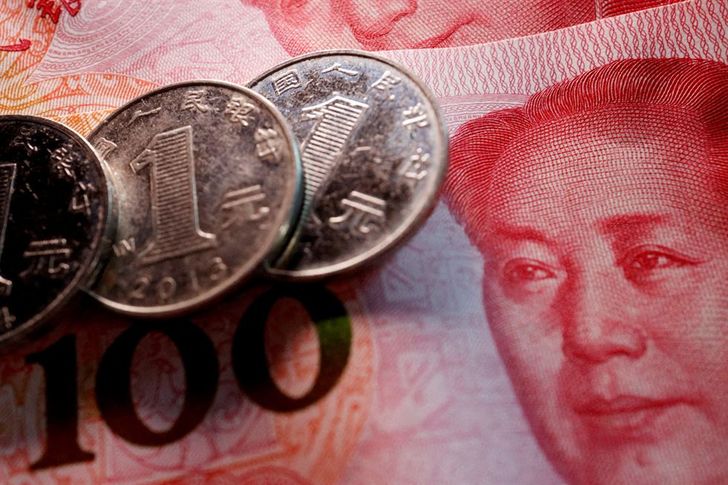
In this Feb. 24, 2022 file photo, coins and banknotes of China's yuan are seen. Reuters-Yonhap
China's economy grew at a frail pace in the second quarter as demand weakens at home and abroad, with the post-COVID momentum faltering rapidly and raising pressure on policymakers to deliver more stimulus to shore up activity.
Chinese authorities face a daunting task in trying to keep the economic recovery on track and putting a lid on unemployment, as any aggressive stimulus could fuel debt risks and structural distortions.
Gross domestic product grew just 0.8 percent in April-June from the previous quarter, on a seasonally adjusted basis, data released by the National Bureau of Statistics showed on Monday, versus analysts' expectations in a Reuters poll for a 0.5 percent increase and compared with a 2.2 percent expansion in the first quarter.
On a year-on-year basis, GDP expanded 6.3 percent in the second quarter, accelerating from 4.5 percent in the first three months of the year, but the rate was well below the forecast for growth of 7.3 percent.
The annual pace was the quickest since the second quarter of 2021, but it was heavily skewed by economic pains caused by stringent COVID-19 lockdowns in Shanghai and other major cities last year.
"The data suggests that China's post-COVID boom is clearly over," said Carol Kong, economist at Commonwealth Bank of Australia in Sydney.
"The higher-frequency indicators are up from May's numbers, but still paint a picture of a bleak and faltering recovery and at the same time youth unemployment is hitting record highs."
More timely June data, which was released alongside the GDP numbers, showed China's retail sales grew 3.1 percent, slowing sharply from a 12.7 percent jump in May. Analysts had expected growth of 3.2 percent.
Industrial output growth unexpectedly quickened to 4.4 percent last month from 3.5 percent seen in May, but demand remains lukewarm.
Private fixed-asset investment shrank 0.2 percent in the first six months, a sharp contrast to the 8.1 percent growth in investment by state entities, suggesting weak private business confidence.
Recent data showed a rapidly faltering post-COVID recovery as exports fell the most in three years due to cooling demand at home and abroad while a prolonged downturn in the key property market has sapped confidence. The weak overall momentum has raised expectations policymakers will need to do more to shore up the world's second-biggest economy.
Authorities are likely to roll out more stimulus steps including fiscal spending to fund big-ticket infrastructure projects, more support for consumers and private firms, and some property policy easing, policy insiders and economists said.
But a quick turnaround is unlikely, analysts say.
All eyes are on an expected Politburo meeting later this month, when top leaders could chart the policy course for the rest of the year.
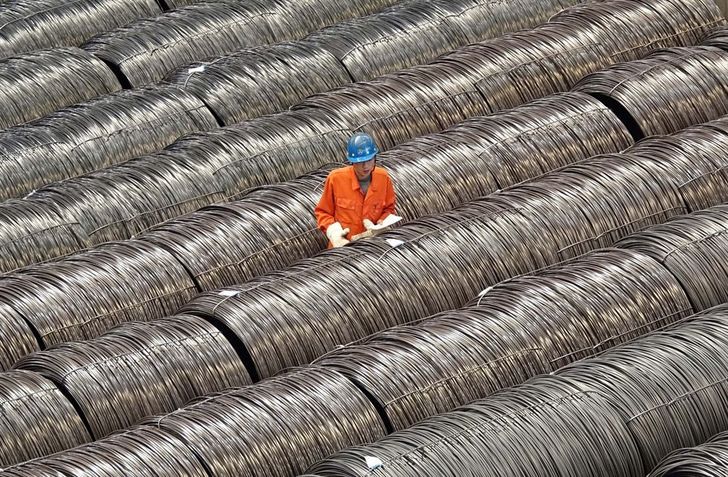
In this May 15, 2017 file photo, a worker checks steel wires at a warehouse in Dalian, Liaoning province, China. Reuters-Yonhap
'No silver bullet'
Asia shares slipped, while the Chinese yuan eased after the underwhelming data.
While China is seen on track to hit its modest 2023 growth target of around 5 percent, some analysts say there are risks of the goal being missed.
"It was quite a disappointing number at just 6.3 percent, so clearly the momentum is slowing down," said Alvin Tan, head of Asia FX strategy at RBC Capital Markets in Singapore.
"At this pace of deceleration, there's now actually a risk that the growth target may not be achieved ― this 5 percent may not be achieved if the economy continues to decelerate at this pace. So I think this does raise greater urgency for more policy support soon."
China's economy grew just 3 percent last year due to COVID curbs, badly missing the official target.
Most analysts say policymakers are unlikely to deliver any aggressive stimulus due to worries about growing debt risks.
However, a deeper slowdown could stoke more job losses and fuel deflationary risks, further undermining private-sector confidence, they said.
Youth jobless rate climbed to 21.3 percent in June from 20.8 percent in May, a new record high, as graduates scrambled for limited offers during the job hunting season.
China's property sector, which accounts for about a quarter of the economy, remains firmly in a downtrend, with new home prices for June stalling.
Property investment slumped 20.6 percent in June year-on-year after a 21.5 percent drop in May, according to Reuters calculations.
A senior central bank official said on Friday that the bank will use policy tools such as the reserve requirement ratio(RRR) and medium-term lending facility to weather economic challenges.
Last month, the central bank cut its benchmark lending rates by a modest 10 basis points.
Some economists have blamed the "scarring effects" caused by years of strict COVID measures and regulatory curbs on the property and technology sectors ― despite recent official efforts to reverse some curbs to support the economy.
Some economists have flagged the risk of a balance sheet recession, as Chinese households and private firms build up savings and reduce borrowing and spending after three years of COVID curbs.
"We expect to see monetary policy easing in coming months and targeted fiscal supports given to key industries, including real estate and construction," Goldman Sachs economists said in a note. "But that extra support won't be a silver bullet. Increasingly, 2023 is looking like a year to forget for China." (Reuters)