Australia's central bank hikes interest rates, flags more to come
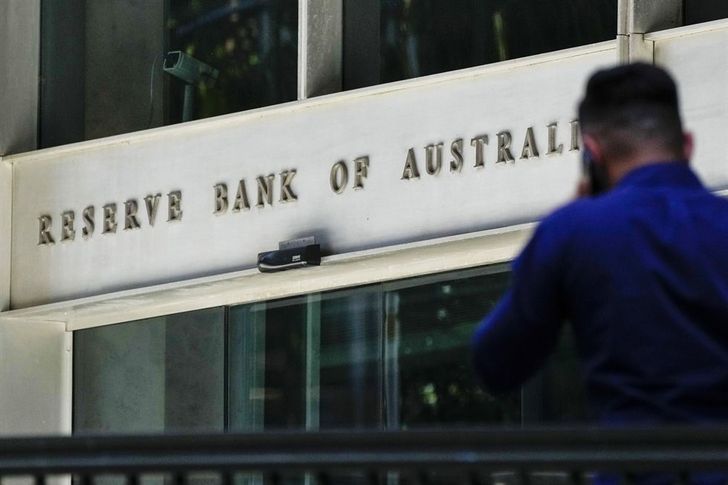
A man walks past the Reserve Bank of Australia building in Sydney, in this Oct. 7, 2021, file photo. Australia's central bank lifted its benchmark interest rate for the first time in more than 11 years, May 3. The cash rate was pushed from 0.1 percent to 0.35 percent. AP-Yonhap
Australia's central bank raised its main cash rate by a surprisingly large 25 basis points to 0.35 percent, Tuesday, its first hike in more than a decade, and flagged more to come as it runs down the curtain on pandemic stimuli.
The news will not be welcome to Prime Minister Scott Morrison as he fights a tough election campaign that, going by opinion polls, could see him turfed out of office May 21.
Wrapping up its May policy meeting, the Reserve Bank of Australia (RBA) said it was the right time to begin withdrawing extraordinary monetary support as inflation had picked up significantly and the economy was near full employment.
"The Board is committed to doing what is necessary to ensure that inflation in Australia returns to target over time," RBA Governor Philip Lowe said in a statement. "This will require a further lift in interest rates over the period ahead."
Lowe has scheduled a media conference for 6 a.m. (GMT).
The size of the move helped lift the local dollar up 1 percent to $0.7116 as a majority of analysts in a Reuter's poll had expected a rise to only 0.25 percent.
The policy shift came after consumer price inflation spiked to a 20-year peak of 5.1 percent in the first quarter, led by costs for petrol, housing, food and education.
Core inflation jumped to 3.7 percent and above the RBA's target band for the first time since 2010, a radical turnaround from recent years when it consistently undershot.
The red-hot report led markets to narrow the odds on a hike in May, even though many analysts suspected the RBA would rather wait until after the election and to see if wages data due May 18 would confirm a long-awaited pick up.
Markets see 0.75 percent by June
Futures quickly priced for a move to 0.75 percent in June and a whole string of hikes to around 2.5 percent by the end of the year, and 3.5 percent by the middle of 2023.
That would be the most aggressive RBA tightening cycle in modern history and a drag on consumer spending power given household debt is at all-time highs.
The uber-hawkish outlook in part reflects the global rush to tightening, with markets wagering the Federal Reserve alone will hike by 150 basis points by the end of July.
The RBA also announced it would let its more than $350 billion ($249.03 billion) of government bond holdings expire at maturity, rather than actively sell them as some central banks are doing.
Rising mortgage rates will only add to surging cost of living pressures that are a headache for the Liberal government as it campaigns heavily on economic management.
An ANZ survey out on Tuesday showed consumer confidence nose-dived 6 percent last week, the sharpest drop since an Omicron wave swept through the eastern seaboard in January.
"This is the lowest level for consumer confidence at the start of a tightening cycle since the inflation targeting regime began in the early 1990s," noted ANZ's head of Australian economics, David Plank.
"This may see the RBA tighten more slowly than the market is pricing." (Reuters)