Iran mulls response as it prepares to bury killed nuclear scientist
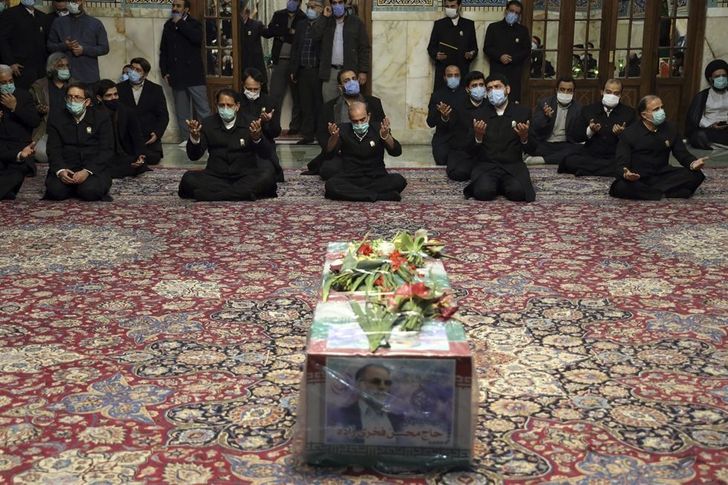
In this picture released by the Iranian Defense Ministry and taken on Saturday, Nov. 28, 2020, people pray over the flag draped coffin of Mohsen Fakhrizadeh, an Iranian scientist linked to the country's disbanded military nuclear program, who was killed on Friday, during a funeral ceremony at the Imam Reza holy shrine in the northeastern city of Mashhad, Iran. AP
Debate raged in Iran on Sunday over how and when to respond to a top nuclear scientist's assassination, blamed on arch-foe Israel, as his body was honoured at Shiite shrines to prepare it for burial.
Two days after Mohsen Fakhrizadeh died from wounds sustained in a firefight between his guards and unidentified gunmen near Tehran, parliament demanded a halt to international inspections of Iranian nuclear sites while a top official hinted Iran should leave the global non-proliferation treaty.
Iran's Supreme National Security Council usually handles decisions related to the country's nuclear programme, and parliamentary bills must be approved by the powerful Guardians Council.
President Hassan Rouhani has stressed the country will seek its revenge in "due time" and not be rushed into a "trap".
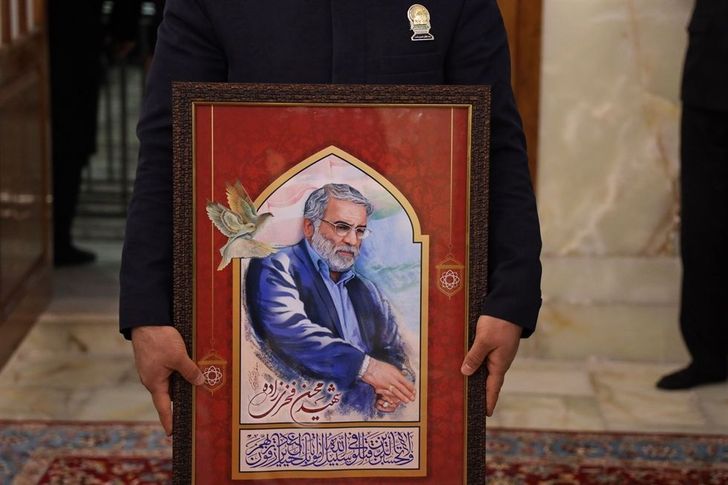
A handout picture provided by Iran's Defence Ministry on November 29, 2020 shows a servant of the Imam Reza Shrine carrying a framed painting depicting Iran's assassinated top nuclear scientist Mohsen Fakhrizadeh during his funeral procession in the northeastern city of Mashhad. AFP-Yonhap
Israel says Fakhrizadeh was the head of an Iranian military nuclear programme, the existence of which the Islamic republic has consistently denied, and Washington had sanctioned him in 2008 for activities linked to Iran's atomic activities.
The scientist's body was taken for a ceremony on Sunday at a major shrine in the holy city of Qom before being transported to the shrine of the Islamic republic's founder Imam Khomeini, according to Iranian media.
Fakhrizadeh's funeral will be held Monday in the presence of senior military commanders and his family, the defence ministry said on its website, without specifying where.
Israel has not officially commented on Fakhrizadeh's killing, less than two months before US President-elect Joe Biden is set to take office after four years of hawkish foreign policy under President Donald Trump.
Trump withdrew the US from a multilateral nuclear agreement with Iran in 2018 and then reimposed and beefed up punishing sanctions as part of its "maximum pressure" campaign against Tehran.
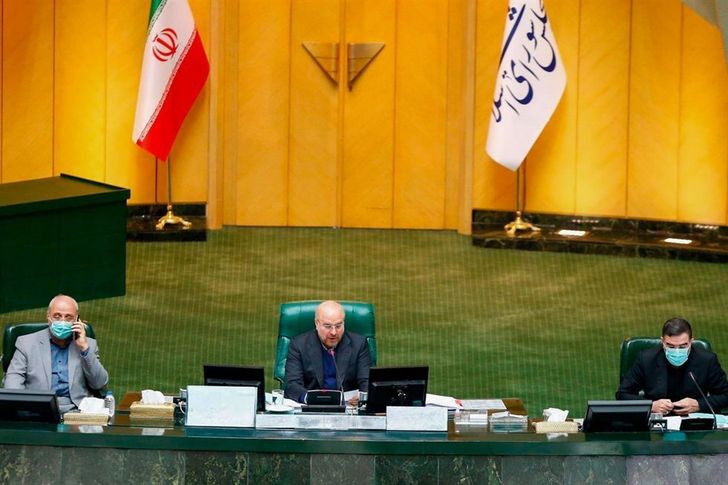
A handout picture provided by the Islamic Consultative Assembly News Agency on November 29, 2020 shows Iranian parliament speaker Mohammad-Bagher Ghalibaf (C) chairing a closed session in the capital Tehran to investigate the killing of Iran's top nuclear scientist Mohsen Fakhrizadeh. AFP-Yonhap
Biden has signalled his administration may be prepared to rejoin the accord, but the nuclear scientist's assassination has revived opposition to the deal among Iranian conservatives.
The head of Iran's Expediency Council, a key advisory and arbitration body, said there was "no reason why (Iran) should not reconsider the Nuclear Proliferation Treaty".
Mohsen Rezai said Tehran should also halt implementation of the additional protocol, a document prescribing intrusive inspections of Iran's nuclear facilitates.
Iran's supreme leader Ayatollah Ali Khamenei called Saturday for Fakhrizadeh's killers to be punished.
Parliament speaker Mohammad-Bagher Ghalibaf called Sunday for "a strong reaction" that would "deter and take revenge" on those behind the killing of Fakhrizadeh, who was aged 59 according to Iranian media. (AFP)