What you need to know about the national security law for Hong Kong
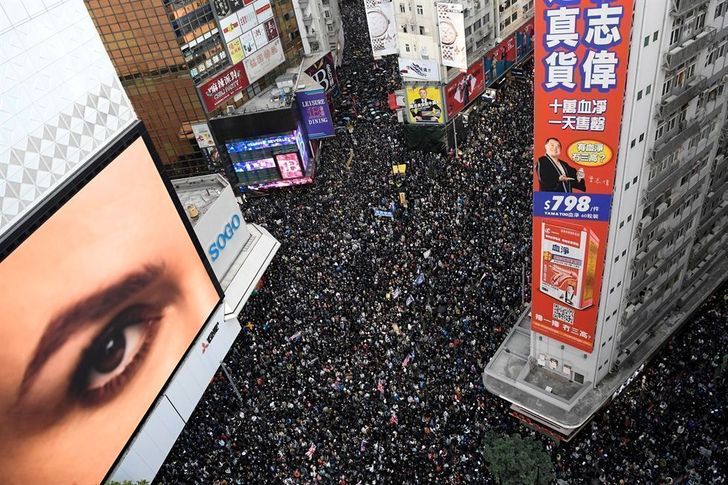
In this Dec. 8, 2019, file photo, protesters attend a Human Rights Day march in the district of Causeway Bay in Hong Kong. Reuters
.jpg)
Chinese legislators are expected to discuss a new law concerning Hong Kong's national security at the upcoming parliamentary session. The law would ban all seditious activities aimed at toppling the central government and external interference in the city's affairs, as well as target terrorist acts in the special administrative region, sources say. Here is a rundown of the background of the issue.
What does Hong Kong need a national security law for and why does it not have one?
Under Article 23 of the Basic Law, or the city's mini-constitution, the Hong Kong government must enact its own national security law prohibiting acts of “treason, secession, sedition, subversion against the central people's government, or theft of state secrets … and to prohibit political organisations or bodies of the region from establishing ties with foreign political organisations or bodies”.
In 2003, the Hong Kong government was forced to shelve a national security bill after an estimated half a million people took to the streets to oppose the legislation, which they warned would curb their rights and freedoms.
How has the issue developed since then?
The Hong Kong government has steered clear of introducing the legislation. After the 2014 Occupy Central protests, Hong Kong's pro-Beijing politicians urged the city administration to consider reviving the Article 23 bill. National People's Congress deputy Stanley Ng Chau-pei had suggested incorporating mainland China security laws into the Basic Law.
Since taking office as the city's chief executive, Carrie Lam Cheng Yuet-ngor has repeatedly said that Article 23 legislation could only be enacted when the timing and the political atmosphere were right.
Pressure to bring in the legislation has been mounting since protests erupted in June last year, initially over the now-withdrawn extradition bill, but which morphed into a wider anti-government movement.
What other options are available under the Basic Law?
Under Article 18, national laws can only be applied in Hong Kong if they are listed in Annex III of the mini-constitution and relate to defence, foreign affairs and “other matters outside the limits” of the city's autonomy. The national laws would then either be promulgated ― taking effect automatically ― or adopted through local legislation.
What happens next?
This week ― A resolution paving the way for the legislation will be presented on Friday to the National People's Congress (NPC), the country's legislature.
By the end of May ― The NPC is expected to vote on the resolution at the end of the annual session, likely on May 28. The resolution will then be forwarded to the NPC Standing Committee to flesh out the details of the legislation.
By the end of June ― The Standing Committee is expected to hold its next meeting as early as June. A draft law will be presented at the start of the gathering, which could last for about a week. That draft could be approved and promulgated in Hong Kong by the end of the meeting.