Transvestite monk meditates through cosmetic makeup
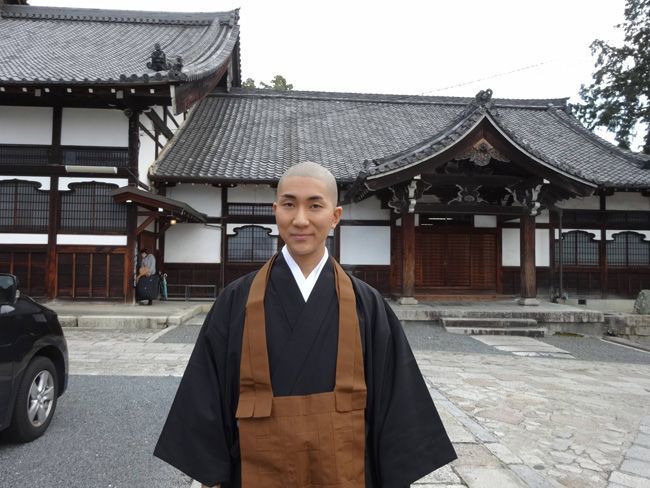
Kodo Nishimura is a monk and also a makeup artist. / Courtesy of Hankook Ilbo
By Ko Dong-hwan
Japanese monk Kodo Nishimura believes all people are equal. This typical message, however, carries more weight because Nishimura is a transvestite who works during daytime as a renowned makeup artist.
The seemingly weird mixture of professions started from a pre-teen identity crisis, which was overcome by self-enlightenment and matured into discovering a destiny of helping others look good while reminding them not to deny their natural appearances.
Nishimura, 27, says cosmetic artists and monks have something in common in that they “make others happy.”
“Each person carries a unique hue,” he says. “My hands and heart make it shine brighter.”
Nishimura has been travelling Tokyo and New York putting colorful touches on celebrities.
His coming-out in 2013 did not solve his deep questions of “why do people live” or “why should people do good things.” This situation led him to train to be a monk, which he did two years later.
He had pondered whether to give up either of the two worlds because being a cosmetic artist violates the rules of becoming a monastery member. But his makeup teacher encouraged him that “when you go outside and grab attention, you are spreading Buddhism’s message that all living creatures are equal.”
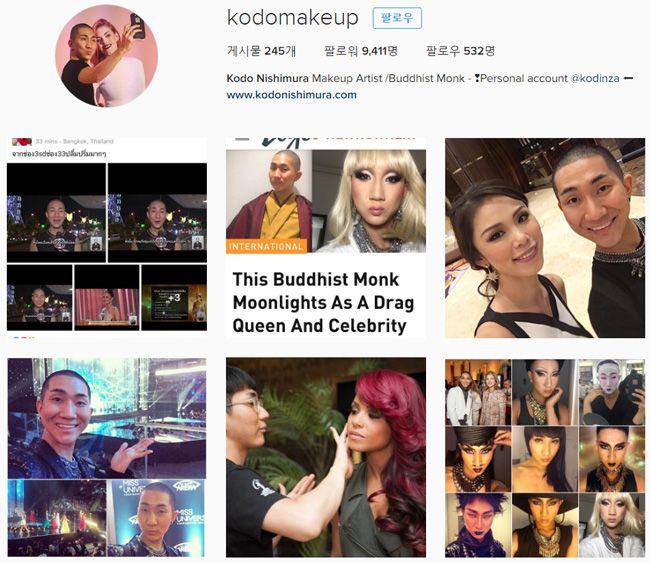
Nishimura's Instagram page vividly portrays his life as a makeup artist.
Outside the monastery, Nishimura lives an exotic life. His
are filled with selfies of himself as a woman wearing different makeup styles and wigs; and photos of him with other models in glamorous outfits. Offline, he gives makeup lessons to other sexual minority celebrities in Japan.
“Transgender people still have men’s skin, which cannot be the same as that of biological women,” he says.
“Transgender people need makeup techniques that can enliven their unique skin tone. When their confidence grows, I become happy too.”
Realizing that his sexual orientation was unlike that of other boys when he was eight years old, he hid the fact throughout the teenage years and went to the U.S. to study fine arts after graduating from high school.
But with a different skin color than that of Caucasians, his ethnicity-based psychological exploration continued, until Japanese model Mori Riyo won Miss Universe in 2007.
Her typical Asian look, which did not have double eyelids or a sharp nose, became the champion’s look with the help of makeup that accentuated such traits instead of hiding them. Riyo’s make-up artist then taught him cosmetic techniques.
Nishimura considers the world as a kaleidoscope, where everyone has unique beauty.
“Whatever people say about your skin color, you go ahead and cultivate your own self,”he says. This is what he teaches.