UAE marks 45th anniversary of National Day

Atlantis, the Palm hotel in Dubai, UAE / Courtesy of UAE Embassy
The Embassy of the United Arab Emirates contributed this article on the occasion of the 45th anniversary of its National Day. — ED.
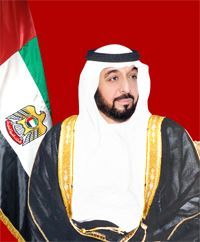
UAE President Sheikh Khalifa Bin Zayed Al Nahyan
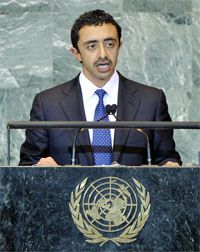
Sheikh Abdullah Bin Zayed Al Nahyan, UAE Minister of Foreign Affairs & International Cooperation
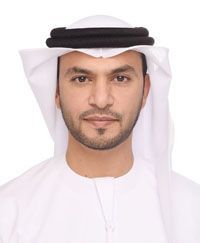
Abdullah Saif Al Nuaimi, Ambassador of UAE to Korea
The United Arab Emirates commemorates its 45th National Day on Dec. 2, a day that embodies the Spirit of the Union and celebrates 45 years of great achievements since the federation was established in 1971.
The path of celebration was first announced by the founding President of the UAE, the late Sheikh Zayed bin Sultan Al Nahyan, and his fellow founding fathers of the UAE Federation. This path is now followed by His Highness Sheikh Khalifa bin Zayed Al Nahyan, President of the UAE, who continues to lead the nation’s march to progress and prosperity.
The incredible achievements of the UAE in recent years have been made possible due to the directives of President His Highness Sheikh Khalifa bin Zayed Al Nahyan, and His Highness Sheikh Mohammed bin Rashid Al Maktoum, Vice President, Prime Minister and Ruler of Dubai, as well as His Highness Sheikh Mohamed bin Zayed Al Nahyan, Crown Prince of Abu Dhabi and Deputy Supreme Commander of the UAE Armed Forces, and their fellow members of the Supreme Council and Rulers of the Emirates, who have consistently contributed to promoting and developing the country through knowledge and innovation. The UAE today ranks among the world’s leading destinations across several key indicators and has become a true role model for countries around the world.
The country enjoys a prestigious position in the Arab world, and beyond, due to its significant achievements in various fields and its strong presence in political, diplomatic, economic and humanitarian arenas at regional and international levels. The UAE has always been dynamic and proactive in communicating with other countries and building bridges of close cooperation and strategic partnerships to lead the way in political, economic, commercial, industrial, technological, scientific, educational, health and other sectors.
Sustained growth and prosperity
Despite the current situation in the region, in 2016, exceptional strides have been made in infrastructure, the fields of energy, space, information technology, telecommunications and other vital areas, in addition to the environment and sustainability, which have significantly contributed to modernising the UAE and enabling the country to achieve top international rankings.
The UAE has maintained its position as the leading Arab country for the fourth year in a row in the latest World Bank report on the Ease of Doing Business, and now ranks 26th globally in the same report. The UAE is also ranked the top Arab country for well-being and life satisfaction according to the Legatum Prosperity Index. The report also revealed that the UAE is among the top countries for safety and security and economic quality, and ranks 41st worldwide. The annual Prosperity Index ranks 142 countries across eight categories: the Economy, Entrepreneurship and Opportunity, Governance, Education, Health, Safety and Security, Personal Freedom and Social Capital.
Global Competitiveness
The country has been ranked high on many global competitiveness indicators. The 2016 report by the Federal Competitiveness and Statistics Authority reveals that the UAE ranked first regionally and 16th globally, maintaining its lead among the top 20 competitive economies in the world, according to the recent version of the Global Competitiveness Report 2016 issued by the World Economic Forum (Davos) in Switzerland.
The report monitors annual performance and competitiveness of the economies of countries in terms of strength, weakness, impact on quality of life, prosperity and the well-being of people, thanks to the efforts of the federal and local taskforces who are working as one team under one vision for 2021.This year's report surveys the economies of 138 countries rated through 114 performance indexes and in 12 basic axis, including institutions, infrastructure, education, health, innovation, efficiency of the labour market and other topics. Evaluation is based on statistics and data from participating countries in the report in terms of opinion polls and surveys on executives and major investors in those countries.
The UAE was ranked in the top 10 positions globally in three basic themes in the report. It is also among the top 20 countries globally in half of these axes. The UAE came in third place globally in the list of efficient goods market, which is the sign of success of the diversification policy of the economy in the state, clarity of vision and strategic plans on the performance and efficiency of the business market. It also came in fourth place globally in the infrastructure hub, an indication of activity in infrastructural projects across the country and its role in supporting the UAE economy in all areas and sectors, making it an attractive environment for investment and business at the regional and global level. The UAE was ranked first globally in the absence of impact of crime and violence at work index, and second place globally in the people's trust in the leadership and lack of wasteful government spending indexes. The UAE ranked in third place globally in the efficient government index. This reflects the success of the leadership strategy and steps taken toward achieving the high performance and efficiency in the government work at the federal and local levels to ensure the happiness of citizens and residents and well-being on the territory of the state.
On infrastructure, the UAE took first place globally in the road quality index and second place globally in the airport infrastructure and means of air transport quality index. It also came in the third place globally in the seaport infrastructure quality and rate of mobile phone subscriptions per 100 users indexes. The UAE ranked in fourth place in the global index of quality of infrastructure and fifth in the index of number of airline seats available for each million passengers a week. This performance reflects the huge investments made by the state to develop and improve the infrastructure in terms of extending road networks, building new airports and the expansion of existing airports, and the development of seaports.
The UAE ranked first globally in the lack of impact of taxes on investment index, and second place globally on the lack of the tax impact on the labour market and the ability of the state to attract international skills indexes. The UAE also came in third place in the global index of lack of tariff barriers and the ability of the state to retain the World skills.
On the readiness of the technology sector, the maturity of the business sector, and higher education and training areas, the UAE achieved first position globally in the index of government spending on new technologies, second place globally in the index of provision of specialised trade zones (free zones), and third place in the global index of foreign direct investment and technology transfer to the state. The state was also ranked fourth globally in the index of Internet connection to schools and universities, and fifth place in the global index of availability of scientists and engineers in the state.
The Global Competitiveness Report issued by the World Economic Forum (Davos) in Switzerland, is one of the world's most important reports and aims to help countries around the world to identify obstacles to sustainable economic growth and development of strategies to reduce poverty and increase prosperity. It assesses the countries abilities to provide high levels of prosperity and well-being of their citizens. The report also provides a comprehensive assessment of the strengths and challenges facing the economies of countries.
Foreign policy
Since the Union was founded, the UAE political leadership has recognized that for the young and evolving Union to endure internal and external challenges to mature into a viable state, they needed a skillful, dynamic management of diplomatic relations with other countries. With his wisdom and insight, the late Sheikh Zayed bin Sultan Al Nahyan, the founding father and first president, was able to set out firm principles for a moderate, balanced foreign policy which still guides the UAE's energetic diplomacy today under the able leadership of President His Highness Sheikh Khalifa bin Zayed Al Nahyan.
The policy applies the principles of strengthening bonds of friendship and cooperation with all countries of the world on the tenets of justice, equality, dialogue, mutual respect and understanding and love for goodness for all without exception, good neighborliness, respect of sovereignty and non-interference in the internal affairs of other states. It also advocates settling all its disputes amicably as per UN Charter and international legitimacy and international laws and conventions, and the promotion of peace, stability, and security in regional and international arenas.
Under the stewardship of H.H. Sheikh Abdullah bin Zayed Al Nahyan, Minister of Foreign Affairs and International Cooperation, UAE diplomacy has built a wide network of strategic relationships and partnerships with countries around the world that has direct influence on the national economy, strengthening its presence and position.
The UAE's vital role in this regard is highly commended and appreciated by countries all over the world. It is seen both regionally and globally as an example of promoting the values of harmony and coexistence between different cultures and civilizations.
The UAE recognizes that the challenges arising throughout the region and the world are partly due to the absence of the culture of coexistence, the spread of extremism and violence. Therefore, the UAE calls, in various regional and international fora, for the need to develop strategies for enhancing constructive dialogue between cultures, respecting beliefs and religions and spreading the culture of peace in order to challenge the attempts to distort the values of religions and provoke religious hatred.
In a statement at the General Debate of the 71st Session of the United Nations General Assembly in New York last September, H.H. Sheikh Abdullah bin Zayed Al Nahyan set out the UAE's approach towards many pressing regional and international crises and challenges. “In our region and beyond, several countries are facing multiple crises and conflicts that ignited after 2011. We have witnessed a number of Arab countries including Yemen, Libya, Iraq, Syria and Somalia that have descended into internal fighting. At the same time, the Palestinian people’s plight continues under the Israeli occupation without a just solution on the horizon that returns to the Palestinian people the rights that were stripped of them, to establish their state on June 1967 borders, with East Jerusalem as its capital.”
His Highness noted that regional interference in Arab affairs, mainly perpetrated by Iran, the only country in the world with a constitution that explicitly calls for exporting its revolution, has aggravated conflicts in the region.
“The serious challenges facing our region and many other countries require us to reflect together on ways to address these crises and reach consensual, timely and effective solutions, without undermining the existing significant efforts made in this regard,” His Highness said.
“The reality is that prominent powers in these crises, whether regional or international sides, have settled for managing the crises that have struck our region without overcoming them. As a result, the dangers have been exacerbated, rendering these crises difficult to solve without doubled efforts and tremendous financial and human cost.”
“The plight and suffering of the Palestinian people is nearing its seventh decade and has contributed to the increased waves of violence and counter violence due to the sub-par management of crises without seeking serious solutions by major actors and prominent powers, including those responsible for this tragedy,” His Highness explained.
Similarly, Iraq has been suffering for more than a decade from sectarian acts and violence on an almost daily basis, in addition to the control of terrorist groups over a part of its territory, spreading fear and terror in the hearts of the Iraqi people and risking its regional integrity. “Moreover, the interference of Iran in its internal affairs has exacerbated the factors of division among its people. Yet, there is no comprehensive political solution that promotes consensus among the components of the Iraqi people, and puts an end to the marginalization of whole sections of Iraqi society,” Sheikh Abdullah said.
On Libya, H.H. Sheikh Abdullah said that the UAE also welcomed the Skhirat Agreement reached by the concerned parties in Libya as well as the formation of the Government of National Accord. “We hope that it will lead to further commitment to Libyan constitution-building, and solidifies cooperation between the Presidential Council and the House of Representatives, which both represent legitimacy in Libya. We also look forward to a unified national position that protects Libya’s territorial soil and maintains the unity of its people.”
With regards to Syria, the minister said that the UAE sees no possibility of resolving the Syrian crisis through military force. “To date, this path has only intensified the suffering of the brotherly people of Syria and increased the flow of refugees to other countries. The situation is further complicated by the interference of Iran and its terrorist militias in Syria’s affairs. This has distorted the vision for Syria and derailed it from the existing path, which is based on internationally agreed terms, which constitute the only salvation from this horrific tragedy,” he said.
Speaking on the situation in Yemen, His Highness said there have been a number of initiatives, including an effective roadmap, presented by the legitimate government of Yemen in Kuwait, and at the quartet meeting held in Jeddah this past August, that could have saved the Yemeni people from their suffering. “We hope that these efforts result in a political solution if the intentions of these militias are sincere and if they live up to the standards of national interest and its responsibilities.”
In 2016, the UAE reiterated its unwavering position on rejection of the continued Iranian occupation of the three islands, Greater Tunb, Lesser Tunb and Abu Musa, which constitute an integral part of the United Arab Emirates' territory.
The state demands restoration of full sovereignty over its three islands. It also stresses that all actions and measures carried out by the Iranian authorities are contrary to international law, norms and common values.
The international community, including the Arab League, GCC and OIC, also stressed its support for the UAE’s sovereignty over the three islands, territorial waters, airspace, continental shelf and the three Islands' economic zone.
“The crises of our region should not distract us from our core national issue which is the sovereignty of the UAE over its three islands which are occupied by Iran against the provisions of international law and the Charter of the United Nations,” Sheikh Abdullah said.
"My country has called, and continues to call on, our neighbor Iran, to return the occupied islands to their rightful owners either voluntarily or through peaceful means, particularly through international justice or arbitration, in order to maintain friendly relations and good neighborliness in the Arabian Gulf region. We also affirm that my country will never give up its sovereign right over these islands, and this approach emphasizes the UAE’s insistence on the principles of international law,” H.H. Sheikh Abdullah affirmed.
The UAE condemned the “Justice Against Sponsors of Terrorism Act” that will allow the families of 9/11 victims to sue Saudi Arabia’s government for damages.
“The ‘Justice Against Sponsors of Terrorism Act’ is contrary to general liability rules and the principle of sovereignty enjoyed by states. It represents a clear violation, given its negative repercussions and dangerous precedents,” said H.H. Sheikh Abdullah bin Zayed Al Nahyan.
He stressed that the UAE is looking forward to US legislative authorities reviewing the law and not ratifying it in light of the serious consequences associated with implementing this law on the well-established international principles attached to sovereignty, which, he said, represents a cornerstone of international relations.
H.H. Sheikh Abdullah warned of the negative effects of the law on all countries, including the United States, and the possible impact of chaos in the context of international relations.
The UAE continued to lead as the ‘most powerful passport’ in the MENA region with visa-free access to 122 countries, according to Henley & Partners’ annual Visa Restrictions Index for 2016.
The Visa Restrictions Index provides a global ranking of 199 countries based on the freedom of travel for their citizens.
The UAE led the MENA region for the 2nd year in a row, increasing by two spots to 38, with visa-free access to 122 countries. This increase follows last year’s agreement with the EU which gave the UAE citizens visa-free travel to 36 countries, including the 26 Schengen area states, making the UAE the first Arab country to be granted a European visa waiver.
The UAE leadership strives to make the UAE the promise of a new Middle East, a safe haven of peace, stability, opportunity, moderation and tolerance in the most rapidly changing and challenging world.
Looking to the future, the UAE leadership is committed to ensuring that its foreign policy will continue to be characterized by prudence, support, conciliation and consensus, as well as cooperation with international institutions, partners, friends and allies.
The fight against terrorism
As a responsible, committed member of the international community, the United Arab Emirates strongly condemns terrorism and extremism in all forms. By working closely with the United States of America, United Kingdom and other international partners and allies, the UAE is demonstrating its commitment to confront, degrade and eradicate terrorism and extremism across the Middle East and worldwide.
The UAE reaffirms that terrorism in all its forms and manifestations constitutes one of the most serious threats to international peace and security and underlines the need to bring perpetrators, organisers, financiers and sponsors of these reprehensible acts of terrorism to justice.
The UAE reiterates that any acts of terrorism are criminal and unjustifiable, regardless of their motivation, wherever, whenever and by whomsoever committed.
The UAE condemns the brutal methods used by terror groups and organisations in the name of Islam and affirms that they have no connection with the tolerant teachings of Islam, which calls for peaceful coexistence and acceptance of others.
In his statement at the General Debate of the 71st Session of the United Nations General Assembly, in New York in September, Foreign Minister H.H. Sheikh Abdullah bin Zayed Al Nahyan said, “We are all aware of the incidents of violence and terrorism which have taken unprecedented forms and used heinous methods, causing fear and terror not only in the Middle East but in many countries of the world, and which proved that violence and terrorism are no longer associated with a certain state or a region, but are global threats, with no borders. Countering terrorist groups is a right and duty of all states.”
The Government of the United Arab Emirates continued to build its counterterrorism capacity and strengthened its international counterterrorism cooperation. The UAE government remains dedicated to providing strong support for the Global Coalition to Counter Daesh. Prominent officials and religious leaders continue to publicly criticise violent extremist ideology and decry and criminalise terrorist acts taking place across the world.
Dr. Anwar Gargash, Minister of State for Foreign Affairs, in a speech at the Third Abu Dhabi Strategic Debate, ADSD, in November, 2016, said: “The UAE is absolutely committed to combating and overcoming extremism and terrorism. The UAE argues that the link between extremist ideologies and terrorist acts is a clear one. We cannot face up to one without the other.”
“Furthermore, we believe that confronting extremism and terrorism is a long drawn out and extended challenge. This understanding is essential in our efforts to confront extremism and terrorism. Various tools are required in this lengthy battle, including control of financial flows and deconstructing the extremist ideology,” he said.
He added that the UAE is an active member of the Global Coalition to Counter Daesh and fully supports the international community’s efforts to degrade and destroy Daesh. The ongoing battle to liberate Mosul is a critical turning point in this effort, he said.
UAE government leaders and senior Emirati officials publicly highlighted the dangers of Daesh and violent extremism, using media to counter Daesh messaging. The UAE is leading efforts to promote tolerance and compassion through Islam, countering the root causes of extremism and disrupting online messages that lead to radicalisation.
The Sawab Centre, a joint collaboration between the UAE and US to counter extremist propaganda and terrorist messaging in the online space, was launched in July 2015 to contest Daesh’s online presence by responding directly to its propaganda through immediate reactive messaging as well as proactive campaigns. It uses other content that exposes Daesh’s true nature, highlights the successes of the Global Coalition, amplifies regional voices of moderation, and offers an alternative, positive vision that underscores the true values and diversity of Islam.
Under the UAE government’s cybercrime law, the UAE criminalises the use of the internet by terrorist groups to promote their ideologies and finance their activities.
Another major UAE initiative is Hedayah, the International Centre of Excellence for Countering Violent Extremism, CVE, which was created in response to the growing desire from members of the Global Counter-Terrorism Forum and the wider international community for the establishment of an independent, multilateral centre devoted to Countering Violent Extremism in all of its forms and manifestations.
The Abu Dhabi-based Centre’s mandate focuses on three core areas: Dialogue and Communications; Capacity Building Programmes and Research and Analysis Cataloguing. In late October, 2016, Hedayah launched the “Creative Minds for Social Good,” a new public-private initiative to increase the capacity of credible private voices in the Middle East and North Africa to create and disseminate compelling online content that counters terrorist propaganda and promotes positive alternatives in the region. Hedayah conducted the programme in collaboration with the U.S. Department of State and Facebook.
Through close coordination and cooperation, the UAE and the US are working together to stop the influx of foreign fighters to Syria and Iraq. H.H. Sheikh Abdullah bin Zayed said at the 71st Session of the UN General Assembly in September that, “My country has built mechanisms and means to protect our youth from falling into the clutches of extremism and violence.”
“We established the Hedayah Centre to combat extremism, and participated with the United States of America in creating the Sawab Centre. Additionally, the Muslim Council of Elders and the Forum for the Promotion of Peace in Muslim Communities were established to demonstrate the true face of Islam. These institutions aim to protect young people who have been polarised by extremist, sectarian and terrorist groups, and to counter the false claims of these groups,” he added.
The UAE is a founding member of the Global Counterterrorism Forum, GCTF, and chaired the Working Group on Countering Violent Extremism with the UK. Through close monitoring and strict enforcement, the UAE has effectively prevented and disrupted the illicit financing of extremist groups through the UAE financial system and within UAE borders. The Joint UAE-US Financial Counterterrorism Task Force enhances cooperation, coordination and information sharing to shut down terrorist financing networks and cut off the flow of funds to extremists. The Task Force helps block funding to extremists from individuals and commercial activity such as black market sales of oil, and prevents access to the international banking system.
The UAE supports strict enforcement of counterterrorist financing laws and regulations, encouraging increased monitoring of charitable fundraising and further examination of money flows across the region. Regionally, the UAE called upon the Organisation of Islamic Cooperation, OIC, to adopt a collective and strategic approach that strengthens its role in international counterterrorism efforts.
Globally, the UAE has endorsed a United Nations plan to prevent terrorism and extremism.
The country welcomed the adoption of a UN draft resolution that aims to prevent violent extremism, saying it must also address factors that promote extremism, such as “foreign occupation and state terrorism.”
Relations with the Republic of Korea
As the bilateral ties with the friendly Republic of Korea are concerned, a great progress has been achieved in many areas including since the establishment of these ties in 1980. It thereby continued its progress to the strategic partnership since 2009. Since then, the relationships are in continuous development and growth in the fields of trade and economic, culture, health and other exchanges, thanks to the support and follow-up by the leaderships in both the two friendly countries. The mutual visits of the leaders of our two countries, the growing levels of trade and economic, cultural, health and other exchanges, are standing witnesses on the strength of the relationships that bind our countries in all fields. We look forward to the enhancement, development and expansion of cooperation in all existing fields and new engines of growth in the coming years.