23-million-year-old lizard fossil preserved in amber
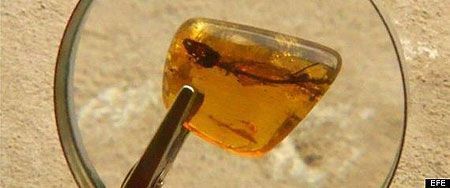
Researchers in Mexico recently discovered after finding the well-preserved remains of a 23-million-year-old lizard in a small piece of amber.
The rare fossil was found a few months ago in Simojovel, an area of the Mexican state of Chiapas well known for its amber deposits. The trapezoidal piece of amber is only about 1.7 inches by 0.5 inches, but it contains "a complete and articulated animal that also preserves remains of soft tissue and skin," Francisco Riquelme of the National Autonomous University of Mexico's Physics Institute told Spanish international news agency EFE.
While it's currently a tad too early to confirm the lizard's species, preliminary examination suggests the specimen might be a new species belonging to the genus Anolis.
The genus - often considered an example of evolutionary diversification - includes several hundred different species that live across the Neotropics, Nature notes.
Easily adaptable, the lizards thrive in warmer climates and are often outfitted with large finger and toe pads, which help them climb over a variety of surfaces quickly and efficiently.
The lizard is now on display at Chiapas's Amber Museum, located near San Cristóbal de las Casas.
Some of the most striking amber fossils discovered around the world in recent months include a 100-million-year-old spider attack, and a trio of 230-million-year-old insects discovered in Italy.