Naked mole rat's cancer resistance maybe used to prevent disease in humans
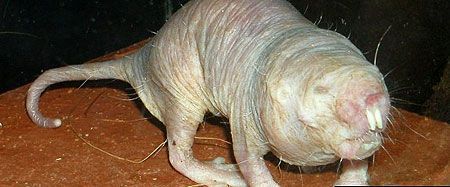
Apart from their hairless appearance, naked mole rats are known for several distinguishing characteristics: They have an unusually long life span for a rodent, and they seem to be protected from developing cancer. Now, researchers have pinpointed a natural substance found between the rodents' tissues that may explain their cancer resistance.
Understanding how this substance, known as hyaluronan, protects naked mole rats from developing cancerous tumors could lead to novel cancer-prevention techniques for humans, said study lead author Vera Gorbunova, a professor at the department of biology at the University of Rochester in New York.
In animals, hyaluronan is a component of the extracellular matrix (the non-cellular part of tissues) and is known to hold cells and tissues together. The substance also acts as a signal to control the growth of certain cells.
The researchers studied tissue cultures from naked mole rats and found these small, subterranean rodents produce a unique, high-molecular-mass form of hyaluronan, which they referred to as HMW-HA.
When this substance was removed, Gorbunova and her colleagues found that naked mole rat cells became susceptible to tumor growth, suggesting HMW-HA plays an important role in the rodents' resistance to cancer.
"This is unique to this species, so it's pretty amazing," Seluanov told LiveScience.
Whereas humans also produce hyaluronan naturally, it is in much smaller quantities, and the physical properties are different, according to the researchers. Still, determining the anti-cancer mechanism in naked mole rats could have far-reaching clinical applications for humans.
"We are very optimistic that the anticancer mechanism we found in the naked mole rat can be translated to humans," Gorbunova said. The detailed results of the study were published online today (June 19) in the journal Nature.