Future of Olympic sliding center still uncertain
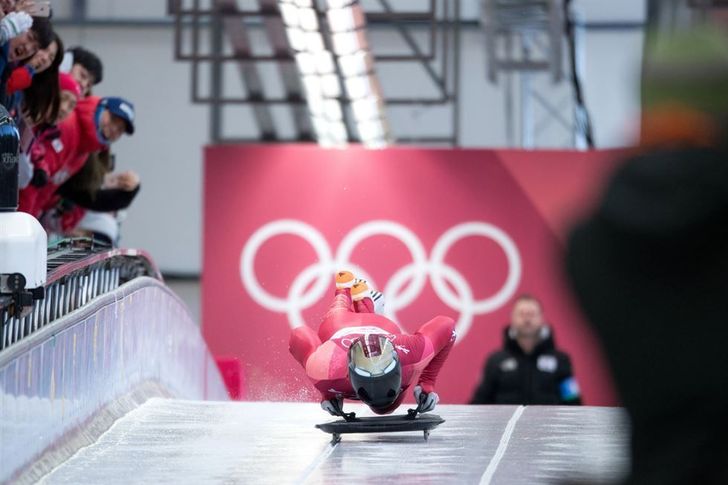
Korea's Yun Sung-bin starts his PyeongChang Winter Games men's skeleton heat 3 race at the Olympic Sliding Center, Friday. / Korea Times photo by Shim Hyun-chul
By Nam Hyun-woo
Despite hopes that Korea may stand as a powerhouse in sledding sports in the future, the fate of the track on which skeleton racer Yun Sung-bin won the country’s first Olympic gold is uncertain. This is because the central government and Gangwon Province are locking horns over its management after the PyeongChang Games.
After Yun rose to glory at the Olympic Sliding Center, expectation was growing that Korea might become a power in another medal-winning winter sport. President Moon Jae-in even wrote to Yun, saying that his feat would “lead Korea to become a sleigh powerhouse.”
But Korea’s skeleton-bobsleigh team head coach Lee Yong is not so optimistic.
On Saturday, Lee told reporters, “You can say it’s a miracle, but it was possible because of money.
“There used to be me and one assistant coach but now we have 17 coaches with seven from foreign countries. Corporate sponsorship and assistance from the sports authorities helped us win the medal.”
He continued, “It is lucky that we have this track (the Olympic Sliding Center), but it is still uncertain who will take care of it after the Olympics … If there are no big games on this track, it may not be managed properly and other support for the sport will decline.”
After winning the rights to host the 2018 Winter Games, the Games organizers built the 2,018-meter track at a cost of 114.1 million won ($105.7 million). It became the first venue for sliding sports in Korea, which initially had no proper tracks for athletes to compete or train on.
Yun’s successful Olympic campaign is also attributable to the sliding track. Since the track opened in 2016, Yun has raced there 380 times, an advantage that racers outside of Korea could not have.
According to government officials, Korea National Sport University is scheduled to operate the sliding center after the Olympics, running programs for tourists and training sessions. However, it is still undetermined who will pay the cost, an expected 1 billion won a year.
Gangwon Province’s stance is clear. It hopes to shoulder part of the cost, with the central government and the university shouldering the remainder.
The province recently asked the central government for 3.4 billion won ($3.1 million) for post-Olympics management of four PyeongChang Games venues, including the track.
However, the sports ministry almost halved the budget to 1.8 billion won and did not include the Alpensia Ski Jumping Center, saying the center was already built before Korea won the right to host the Winter Olympics. The finance ministry is even considering cutting the subsidy further.
Even if the plan is agreed upon, however, it is a one-time subsidy -- there is no further plan on how to finance management in the long term.
Gangwon Province expects to pay 10.1 billion won every year for seven Olympic venues, including the sliding center.
As it lacks capability to shoulder this amount, the municipality is calling for the National Assembly to ratify a revision to the National Sports Promotion Act, which forces the central government to take control of those venues.
However, the revision has been pending at the Assembly for more than a year because of opposition from the finance and sports ministries.
“The government and Gangwon Province will continue negotiations over the sliding center,” a province official said.