Cho gets PyeongChang rolling
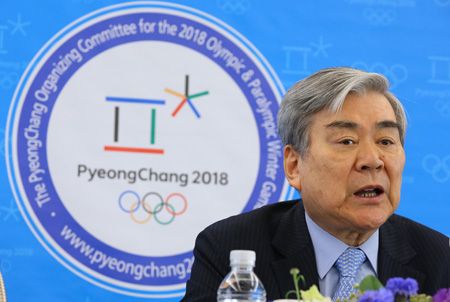
Cho Yang-ho
By Nam Hyun-woo
Five delegates of the 2018 PyeongChang Organizing Committee for the Olympic Games (POCOG) flew to Rio de Janeiro, Feb. 24, to talk to the International Olympic Committee (IOC) about preparations for the Games at an Executive Board meeting.
“Gaining international trust is critical,” POCOG President Cho Yang-ho was quoted as telling the delegates. “We must assure the IOC members that we will deliver what we promised.”
In a private charter, they spent a sleepless night for a presentation at the meeting and called on the IOC to set up an Integration Working Group between the POCOG, the IOC, the Korean government and Gangwon Province.
A month later, a delegation from the IOC visited a venue city of Gangneung, Gangwon Province, to hold the first meeting of the working group. In a press call after the meeting, journalists questioned Cho and IOC Coordination Commission Chairwoman Gunilla Lindberg over the success of the Games, but Lindberg dismissed domestic worries, saying “We are satisfied with the progress.”
The day was a critical juncture for Cho and PyeongChang organizers to brush off the ghost of co-hosting some events with other countries and suspicions that the IOC is not satisfied with the preparation for the Games which haunted them for a long time.
The organizers have achieved the major task of earning many IOC members' trust, but Cho says it is not the time to be complacent and continues to fasten his grip on the Olympics, apparently betting his fate and fortune for the success of the first Winter Games on Korean soil.
According to PyeongChang organizers, Cho, concurrently Korean Air chairman, appears at POCOG office in central Seoul at 7 a.m., everyday, setting aside his job as the chief of the nation's largest air carrier.
Cho's daily work starts from checking e-mail reports from the POCOG staff. As soon as he took the helm of the POCOG last summer, he ordered his staff to e-mail him, instead of submitting documents, to streamline the working process and make sure he can be connected to his job everywhere. Also he scheduled daily and weekly meetings between organizers 30 minutes earlier in the morning, urging staffers to work more passionately.
Small changes made such a difference -- Cho's human network in global sports community helped the Olympics preparation pick up its momentum. According to the organizers, Cho traveled a total of 640,000 kilometers, which is tantamount to circling the globe 16 times, to earn votes from IOC members during his two-year stint as the bid committee chairman when PyeongChang earned the right to host the Games.
Connections he built then paid off in hosting the 2014 Incheon Asian Games and still continues to boost PyeongChang preparations. Pundits say POCOG before Cho had wasted a lot of time in political power game, but after Cho led the committee, the preparation for the Games went into full swing.
For Cho, the PyeongChang Games have been a project that he put his time, energy, effort and money into.
In Sept., 2009, Cho was appointed as co-chairman of the 2018 PyeongChang bid committee along with then Gangwon Province Governor Kim Jin-sun and fetched his country the Winter Games in 2011 after two botched attempts for the 2010 Games and the 2014 Games.
After a fierce competition, Kim was nominated as the POCOG president, while Cho returned to his Korean Air post. However, Kim abruptly resigned after some three years on the job and Cho was named as the chief organizer last summer, assigned with a task to accelerate the slowing progress of the PyeongChang Games.
“I stand here with my commitment that who starts this work should finish this,” Cho said during the nomination ceremony on July 31. “Based on my experience as the chairman of the bid committee, I will devote myself for the success of the PyeongChang Games.”
What POCOG officials label as the biggest strength of Cho is his mobility and swift actions -- the virtue he excels as a CEO of an air carrier. Rather than sitting behind the desk, he boards on his Global Express business jet or chopper to visit venues himself.
Since Aug. 1, a day after he became POCOG president, he made more than 10 trips to the host county of PyeongChang and other venues so far, in order to check on the progress of venues' construction.
For the Games, General Electric decided to sponsor lighting systems needed for night time events and broadcasting. Also Bombardier, a manufacturer of trains and private jets, including Cho's Global Express, will also endorse snowmobiles and snowcats. Organizers say the deals, which will cut POCOG's expense significantly, were only made possible because Cho is a CEO of an air carrier and has connections with these industries.
According to close aides to Cho, he is now focusing on improving marketing and other content of the Games. Corporate sponsorship garnering showed progress, signing with seven domestic companies, including Korean Air and Samsung Group, so far. In March, POCOG launched a foundation, tentatively named “PyeongChang Winter Series foundation,” to prepare 28 test events which will first start from February next year.
Though there were a number of hurdles so far and more to come until the Olympics, Cho says he is ready to “take flight anytime” to address problems. Now he has some 1,000 more days to go before the PyeongChang Games.