Cafe ban on teenage boys sparks discrimination debate in Korea
Summary
A cafe in Korea has sparked debate after banning male middle and high school students. The cafe said excessive profanity and mess left by the students caused discomfort to other customers, and it described the restriction as unavoidable. Critics called it discrimination and part of a growing pattern of excluding specific groups through no-X zones. The National Human Rights Commission of Korea says blanket exclusion of a specific demographic from a space or service constitutes discrimination.
Key Facts
- Posts on Tuesday showed a cafe entrance sign that said groups of male middle and high school students were prohibited from using the store.
- The cafe said the students had used excessive profanity and left a mess, causing discomfort to other customers.
- The cafe’s location was not disclosed.
- The National Human Rights Commission of Korea says blanket exclusion of a specific demographic from a space or service constitutes discrimination.

An image generated by artificial intelligence
A cafe in Korea has sparked debate after banning male middle and high school students.
Following the emergence of "no-kids zones" that bar children, a "no male student zone" has now surfaced. While some view the policy as an exercise of a business owner's right to run their business as they see fit, critics argue it illustrates a growing trend of exclusion and discrimination against specific demographic groups.
Posts circulating on multiple online forums and social media platforms on Tuesday showed an image of the cafe's entrance sign, which read, "Groups of male middle and high school students are prohibited from using the store." The original poster sympathized with the business, saying, "Things must have been bad for the owner to go that far."
The cafe cited excessive profanity and leaving a mess as the reasons for the ban, saying the students caused discomfort to other customers. The cafe asked for understanding, describing the restriction as an "unavoidable decision." The cafe's location remains undisclosed.
Online reactions were divided, with some commenters defending the owner. Supporters of the entry ban argued that businesses cannot accommodate customers who violate basic etiquette and manners. They emphasized profanity among teenagers has become rampant, extending beyond simple noise complaints, and said the owner had a valid reason to make the decision even at the risk of losing sales.
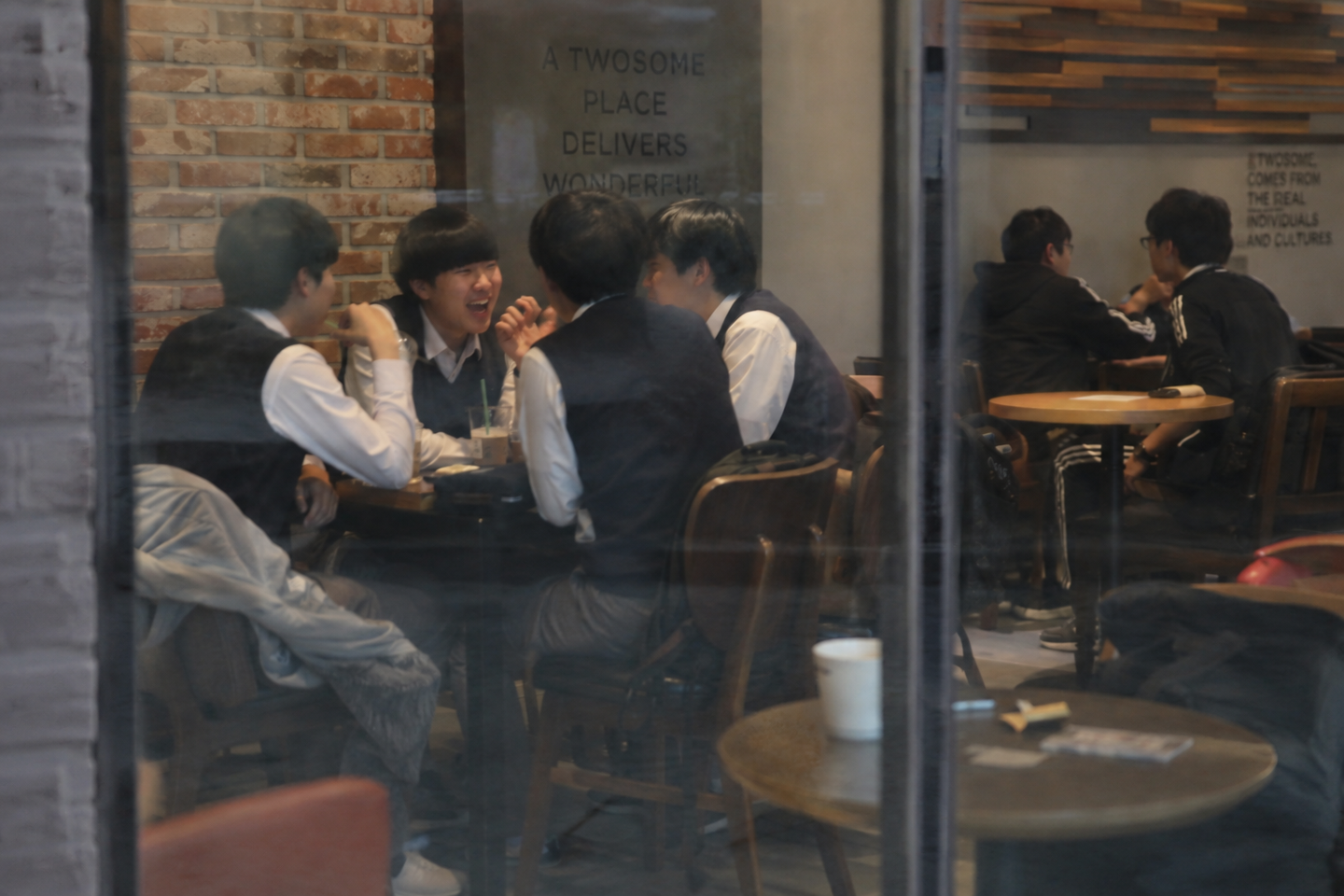
An image generated by artificial intelligence
Conversely, others voiced strong concerns about the spreading trend of barring specific groups from public businesses through policies labeled "no-X zones." Critics called the policy explicit discrimination against teenage boys. One commenter said expanding such bans to other groups was inevitable once "no-kids zones" were accepted, while another asked sarcastically which demographic group would be banned next.
The trend of blanket bans began about 10 years ago with no-kids zones in cafes and restaurants. It has since expanded to include "no-senior zones," "no-tattoo zones" and "no-ajumma" or "no-ajae" zones, targeting middle-aged women and men. The pattern has even generated the catchall term "no-somebody zone," suggesting virtually any social group could be singled out. The National Human Rights Commission of Korea says the blanket exclusion of a specific demographic from a space or service constitutes discrimination.

A notice barring groups of male middle and high school students is posted on the entrance of a cafe. Captured from an online forum
This article from the Hankook Ilbo, the sister publication of The Korea Times, is translated by a generative AI system and edited by The Korea Times.
Explore More
- Q.
- Q.
- Q.