'Mount Gwanak for exams, Mount Acha for romance': Young Koreans seek luck in mountains, charms

“Fortune hiking” content assigning different meanings to mountains — such as luck in exams, wealth and romance — is spreading across social media platforms. Captured from Instagram
Kim, 23, a university student who enjoys hiking as a hobby, visited Mount Bukhan last month after a friend recommended it. The trip was part of what young Koreans are calling “fortune hiking” — climbing mountains believed to improve luck.
Recently, online posts claiming that Mount Bukhan brings success in business and leadership have spread widely on social media. Kim said the hike was meant to help “improve personal fortune.”
“I actually started two new tutoring jobs after the hike,” Kim said. “I don’t think it happened because I went to the mountain, but it still made me feel good somehow.”
Another college student, Choi, 22, said a visit to Mount Gwanak with family members came after the student’s mother saw a television program claiming that “wishes come true if you climb Mount Gwanak three times.”
“At the time, I was going through a difficult period so part of me wanted to believe it,” Choi said. “We talked about our wishes together while climbing, and after some of the problems were resolved, I think it gave me emotional comfort.”
Fortune hiking has become a growing trend among people in their 20s and 30s. The craze gained momentum after a fortune teller appeared on the tvN entertainment show “You Quiz on the Block” in January and advised viewers to visit Mount Gwanak when “luck is not going well.”
Since then, social media has been flooded with photos documenting fortune hikes, along with posts sharing tips for climbing Mount Gwanak and recommended food courses.
Online content categorizing mountains by the type of luck they supposedly bring has also spread rapidly. Posts claiming that Mount Gwanak improves exam and employment luck, Mount Bukhan boosts leadership and business fortune, Mount Acha improves romance luck and Mount Cheonggye brings wealth and stability have received thousands of likes online.
Kim said the recent hiking boom is noticeable on the trails.
“Three years ago, most hikers were older people or members of hiking clubs,” Kim said. “Now there are visibly more young people. I was surprised to see so many climbing in sneakers or training clothes instead of traditional hiking gear.”
‘Lucky maxxing’ culture spreads
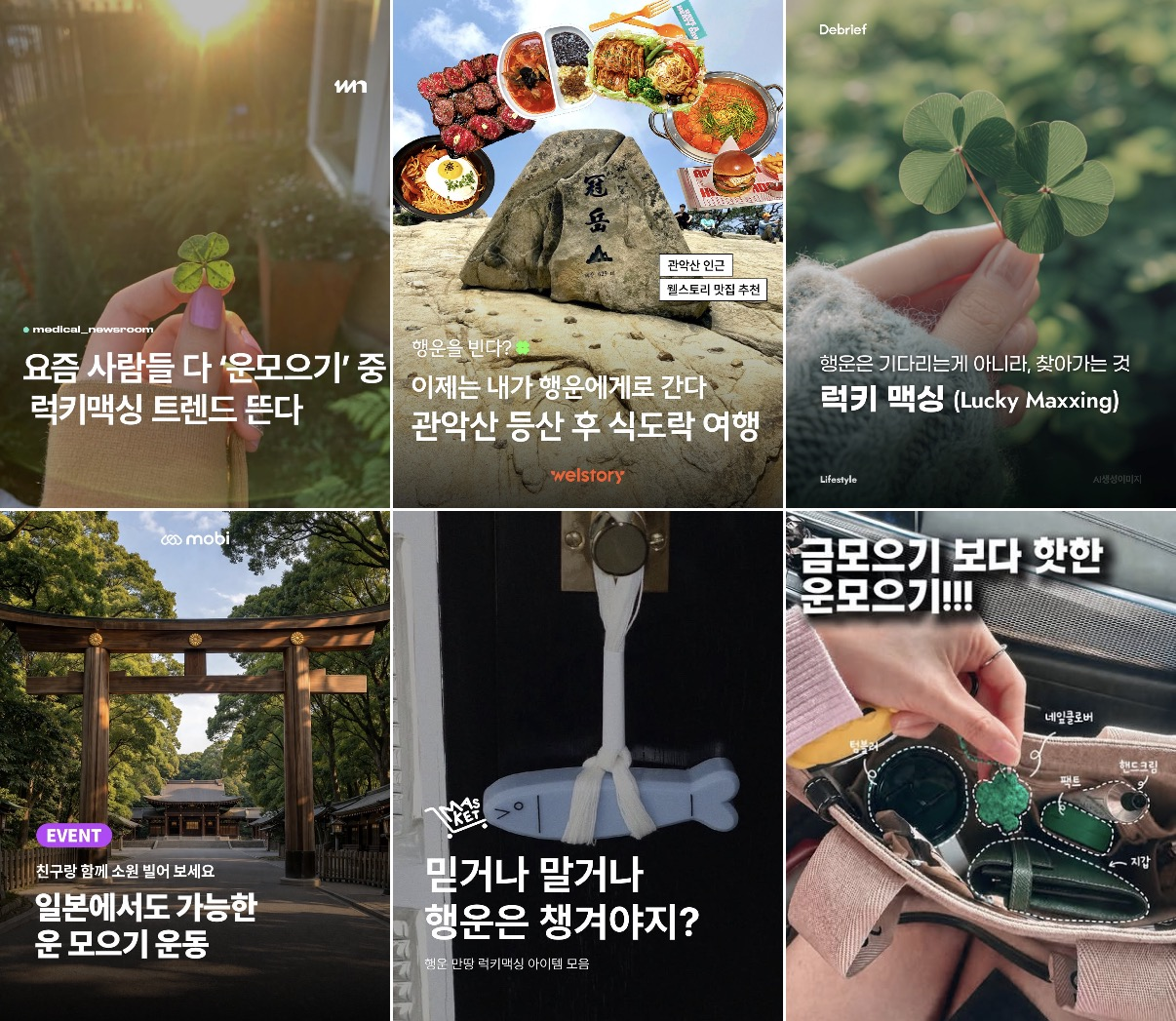
“Lucky maxxing” content centered on four-leaf clovers, lucky items and fortune-boosting trips is spreading across social media platforms. Captured from Instagram
The popularity of fortune hiking is also linked to the growing “lucky maxxing” trend among young Koreans.
Lucky maxxing refers to small actions or purchases intended to improve luck, such as finding four-leaf clovers, buying lucky charms or visiting sites believed to have good energy.
Recently, social media users have shared posts recommending makeup colors supposedly matched to one’s fortune and fate. Other popular content includes “interior designs that improve financial luck” and “bedroom layouts that attract romance,” combining feng shui with home decoration trends.
Marketing campaigns tied to luck and fortune are also becoming more common.
Lee, a 23-year old office worker, hung a dried pollock charm near the entrance to their new apartment after moving last month.
“I bought it to wish for good luck in the new year,” Lee said. “My younger sibling also bought a lucky turtle decoration this year while preparing for the College Scholastic Ability Test.”
A university student identified only as A, 23, purchased a red horse charm this year because it was believed to be a lucky symbol.
“I even gave them to people around me as gifts to wish them good fortune.”
Young people searching for comfort amid uncertainty
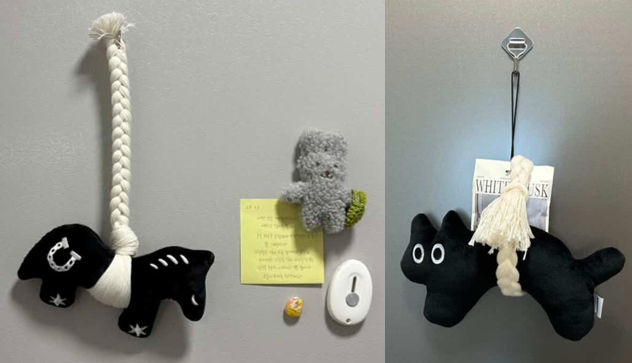
Charms displayed inside homes to wish for good luck and ward off misfortune. Provided by readers
Choi said the spread of fortune hiking and lucky maxxing culture reflects growing anxiety among young people.
“These days, there’s pressure to survive well on your own, and I think people constantly judge themselves,” Choi said. “It also feels harder to openly express emotions to others, so people seem to rely more on things related to luck or spiritual beliefs.”
Lee shared similar feelings.
“There are so many news stories about crimes and accidents, especially crimes targeting women, that living alone felt scary,” Lee said. “Even though I know these things are technically superstitions, I still found myself relying on them.”
She added that the practices gave her “a slight sense of emotional relief.”
Experts said the trend reflects young people’s desire to regain a sense of control in an uncertain world.
Na Jin-kyung, a psychology professor at Sogang University, said humans naturally seek control over their lives.
“As uncertainty among young people grows due to employment difficulties and anxiety about the future, these tendencies can become stronger,” Na said.
Na added that studies have shown that the “illusion of control” — feeling as though one has influence over uncontrollable situations — can have positive effects on stress reduction and mental health.
Concerns grow over excessive reliance on luck
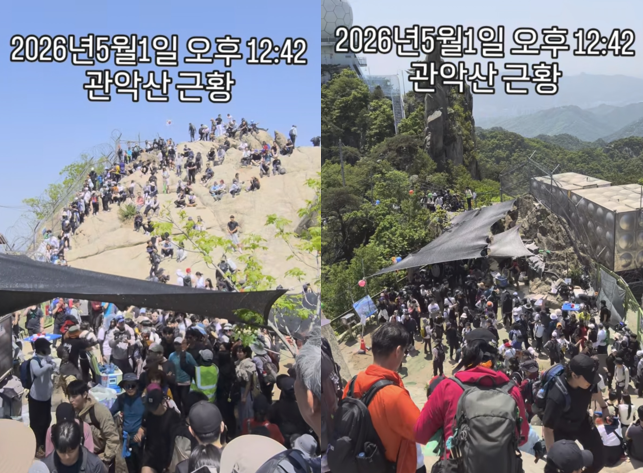
Hikers gather near the summit of Mount Gwanak. Captured from Instagram
Still, some experts warned that lucky maxxing culture could encourage excessive dependence on luck.
“Believing that things will improve simply by going to Mount Gwanak places the source of control outside oneself,” Na said. “It can be positive if it relieves anxiety and motivates people to act again, but relying solely on luck itself is not desirable.”
Na Eun-young, a social psychologist and professor at Sogang University, said people tend to focus more on luck and fortune-telling when the future feels uncertain.
“When things do not go as planned, people naturally want to find causes outside themselves,” Na said.
She added that believing “luck will improve after visiting Mount Gwanak” could be connected to what social psychology calls a "self-fulfilling prophecy."
“However, because these behaviors are ultimately closer to emotional comfort than actual problem-solving, there needs to be caution against becoming overly dependent on them,” she said.
This article from the Hankook Ilbo, the sister publication of The Korea Times, is translated by a generative AI system and edited by The Korea Times.