Illegal health insurance claims by foreigners rebound with 30 percent jump last year
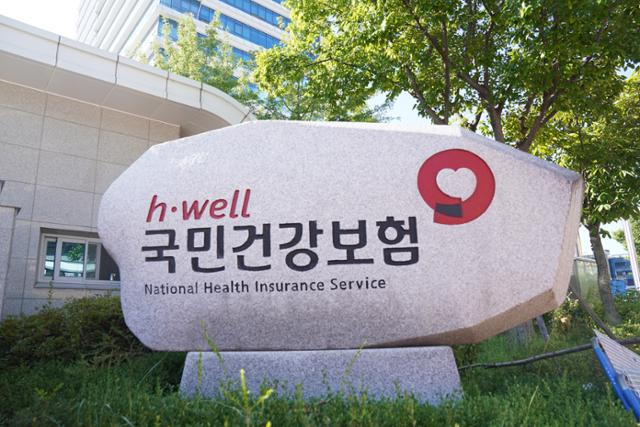
National Health Insurance Service headquarters / Courtesy of National Health Insurance Service
After years of decline, illegal health insurance claims by foreigners and overseas Koreans saw a sharp increase in 2024, rising nearly 30 percent in total costs, according to newly released data.
On May 4, the National Health Insurance Service (NHIS) submitted data to Rep. Kim Mi-ae of the National Assembly’s Health and Welfare Committee, revealing that 17,087 foreigners and overseas Koreans were caught making illegal claims on the National Health Insurance system last year — a 16.8 percent increase from 14,630 in 2023.
During the COVID-19 pandemic, in 2021 the number of illegal beneficiaries peaked at 40,265, after climbing from 25,317 in 2020. However, the figure then dropped significantly to 18,491 in 2022 and 14,630 in 2023, before reversing course last year.
In 2024, there were 45,909 confirmed illegal claims, up 14.7 percent from 40,020 the previous year. The financial damage amounted to 2.56 billion won ($1.9 million), marking a 28.5 percent increase from 1.99 billion won in 2023.
Roughly 95 to 97 percent of the fraud cases involved individuals who continued receiving medical treatment and billing for insurance coverage after losing eligibility. These cases accounted for 17,011 people, 44,943 claims, and 2.5 billion won.
Other forms of fraud were less common but still significant. In 2024, 41 individuals were caught for using borrowed or stolen health insurance cards, resulting in 845 cases and 47 million won in damages. Additionally, 35 people were found to have illegally claimed benefits during a suspension period, amounting to 121 cases and 5 million won.
“Abuse of the National Health Insurance system by some foreigners undermines its financial sustainability,” Rep. Kim said. “We must strengthen penalties for violators and consider introducing a principle of reciprocity in benefit eligibility to improve the integrity of the system.”
This article from the Hankook Ilbo, the sister publication of The Korea Times, is translated by a generative AI system and edited by The Korea Times.