Children trapped in limbo between North and South Korea

North Koreans hold cards to make an image depicting North Korean children during a mass game performance of "The Land of the People" at the May Day Stadium in Pyongyang, North Korea, in this June 25, 2019 photo. Human rights activists in South Korea have called on policymakers to better protect North Korean defectors' children who were born in third countries before coming here. AP-Yonhap
Human rights activists call for better protection of those born in third countries
By Jung Min-ho
North Korean women escaping oppression in their country cross the border to China in search of freedom and a better life. What awaits them there, in many cases, is the opposite ― even less freedom and a life of constant fear of deportation.
Without a legal identity, such women are not allowed to work, which makes them vulnerable to human trafficking, sexual violence and other crimes. As a means of protecting themselves, many end up marrying a Chinese citizen, while others are coerced into such relationships by marriage brokers.
Lee Su-min (not her real name), 41, was one of those women. Before arriving in South Korea in 2019, she had spent six years in China.
“If you want to survive, you must marry a Chinese man,” her broker told her. So she did, and lived there until the window of opportunity finally opened for her to leave for her ultimate destination ― South Korea ― with her daughter, Su-young, now five years old.
But unlike her peers who were born in North Korea before escaping to the South, Su-young is not eligible for any of the benefits for North Koreans, including special college admissions and vocational training, because she, legally speaking, is South Korean.
“My child is one of the lucky ones,” Lee told The Korea Times on Friday. “Third-country-born children, who arrived here after spending their early years in China or other countries, have more difficulty adjusting because of the language issue.”
According to government data, the number of third-country-born children of North Korean defectors enrolled in South Korean schools outnumbered young North Korean defectors for the first time in 2015. Today, they represent nearly 70 percent of the total.
Such children face unique challenges in South Korea, because they exist in a grey area as government policies fail to support their social inclusion and empowerment, according to Kim Duck-soo, deputy director of Citizens' Alliance for North Korean Human Rights, a rights advocacy group in Seoul.
One of their biggest issues is getting a university degree, a critical factor for networking and success in South Korea. Unlike legally recognized North Korean escapees, who can enter reputable schools without having to ace the college entrance exam, such children have to compete with other students who grew up here without receiving special treatment.
Another major issue is the mandatory military service. The Military Service Act states that “a person who has immigrated from north of the Military Demarcation Line” is not obliged to serve in the military. But the law does not apply to their children born in third countries.
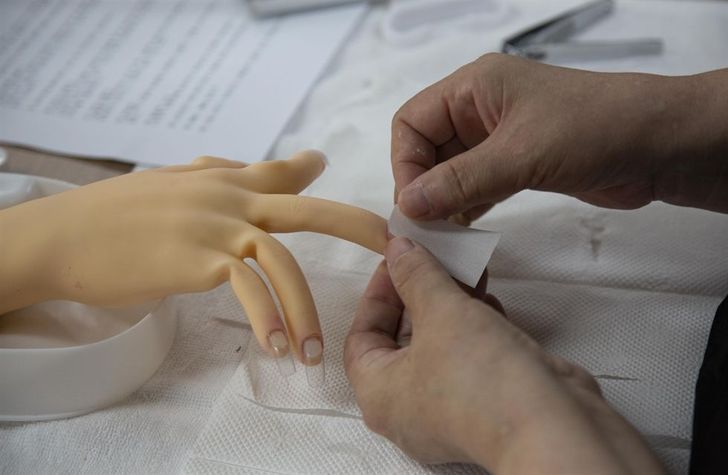
A North Korean defector attends a nail art class at Hanawon, a government-run settlement support center for North Koreans, in Anseong, Gyeonggi Province, July 10. AP-Yonhap
“In a hyper-competitive society, many of them struggle badly,” Kim said. “A combination of language, identity, education and financial issues leave them vulnerable to family problems and to poverty. With that being said, it's not just a problem for the children ― but for whole families, about 70 percent of all North Korean defectors' households with children in South Korea.”
Over the years, several bills have been proposed to reform the system to better protect the marginalized group, only to be discarded or neglected at the National Assembly. One of the main reasons came out of concern that it might lead to a diplomatic issue with China, where there are as many as 200,000 such children ― with or without citizenship. Lawmakers worry it may well become a tricky issue if too many decide to come here seeking South Korean citizenship.
But Kim believes such concerns are overblown and wrong.
“Before being a diplomatic issue, it is a human rights issue. The bottom line is that it should not be left unattended just like this,” he said. “There should be a way to resolve this, for the inclusion and empowerment of those who came here with their children to live with dignity and security.”