LGBTQ festival resumes in Seoul after 2-year hiatus

The 23rd Seoul Queer Culture Festival is under way at Seoul Plaza in Seoul , July 16. Yonhap
Sexual minorities in South Korea held an annual festival in downtown Seoul on Saturday after a pandemic-driven two-year hiatus, with Christian and other conservative groups opposing the high-profile event.
The 23rd Seoul Queer Culture Festival took place at Seoul Plaza, bringing together members of the LGBTQ community ― lesbian, gay, bisexual, transgender and queer persons ― as well as their supporters and human rights activists.
Waving the rainbow flag, a symbol of LGBTQ social movements, tens of thousands of people coalesced behind their long-standing cause against discrimination, exclusion, hate speech and violence targeting sexual minorities.
"Since the outbreak of COVID-19, sexual minorities have led lonelier, more isolated lives," Yang Sun-woo, head of the festival's organizing committee, said. "This is a venue that people have been waiting so much for."
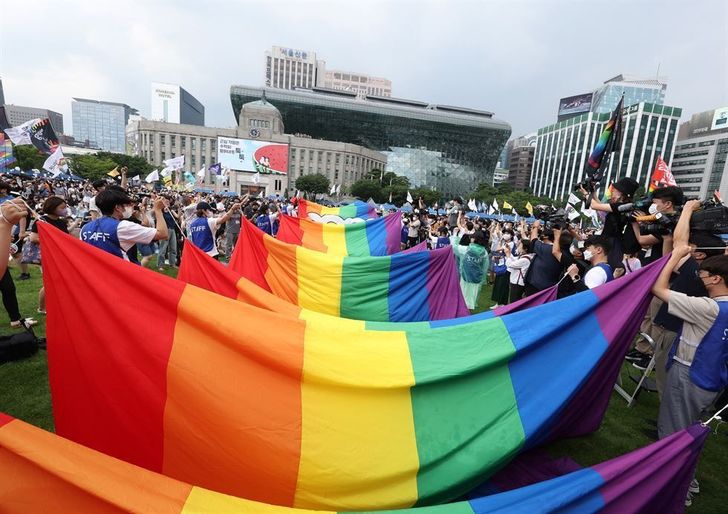
LGBTQ activists hold a banner symbolic of the transgender community in a central square in Seoul, July 16. Yonhap
Opponents also rallied to highlight their aversion to the LGBTQ festival, which they said undermined their movement to promote "wholesome sex culture." They also criticized the Seoul municipality for allowing the event to proceed.
Police beefed up security around the plaza as high-profile figures, such as new U.S. Ambassador to South Korea Philip Goldberg and other foreign diplomats, visited the festival.
Goldberg pledged to work together with the LGBTQ community to protect their human rights.
The festival featured musical celebrations and a queer parade designed to underscore the LGBTQ community's pride and their message for human dignity and equality, organizers said.
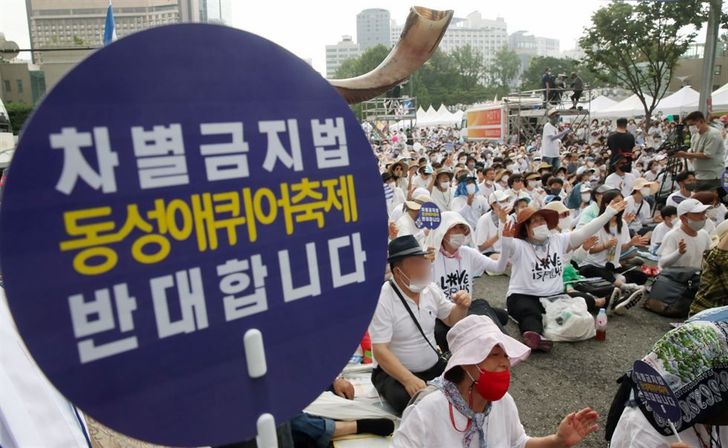
Opponents of the LGBTQ festival rally near Seoul Metropolitan Council in Seoul, July 16. Newsis
Human rights advocacy groups and other organizations set up some 80 booths in a message of their solidarity behind the LGBTQ movement. They included Amnesty International, the Anglican Rainbow Network and the Korean Sexual Violence Relief Center.
The LGBTQ community and its supporters have held the festival every year since 2000 in various neighborhoods around the city before moving to Seoul Plaza in 2015. The festival at Seoul Plaza then continued until 2019 before switching to online events due to the COVID-19 pandemic in 2020 and 2021.
The last offline festival in 2019 drew a record crowd of about 150,000 participants. (Yonhap)