Myeong-dong losing luster as tourist shopping destination

A street in Myeong-dong, a popular tourist and shopping district in Seoul, is quiet, Friday, as the government has enforced the toughest social distancing level amid a new wave of COVID-19 cases across the country. Yonhap
Vacancy rate of shops increasing despite falling rents
By Bahk Eun-ji
As the COVID-19 pandemic has continued for more than a year, leading to the virtual suspension of international air travel, merchants in Myeong-dong in downtown Seoul, a major shopping district and popular foreign tourist attraction, appear to have had no choice but to leave the district.
Foreign tourists have stopped visiting since the outbreak, and even Koreans have become accustomed to refraining from going out or eating out amid fears of coronavirus infection.
Along one of the main alleys through the district, stretching between Myeongdong Station and Myeongdong Art Theater, there were a number of empty shops with “For Lease” signs in their windows, Friday.
According to a commercial real estate rental trend survey, released recently by the Korea Real Estate Board, the vacancy rate of small shops in Myeong-dong was 43.3 percent in the second quarter of this year, up from the first quarter's 38.3 percent.
This vacancy rate is the highest number ever recorded. Related statistics have been collected since 2017.
Rent prices also began to fall as empty stores increased in the area.
In the second quarter, the rental price index for the area's medium-sized to large multi-shops ― buildings with more than three stories or a floor area exceeding 330 square meters containing multiple stores ― came to 83.3, down 4.59 percent from the previous quarter. This index was quantified by setting the rent in the fourth quarter of last year at 100.
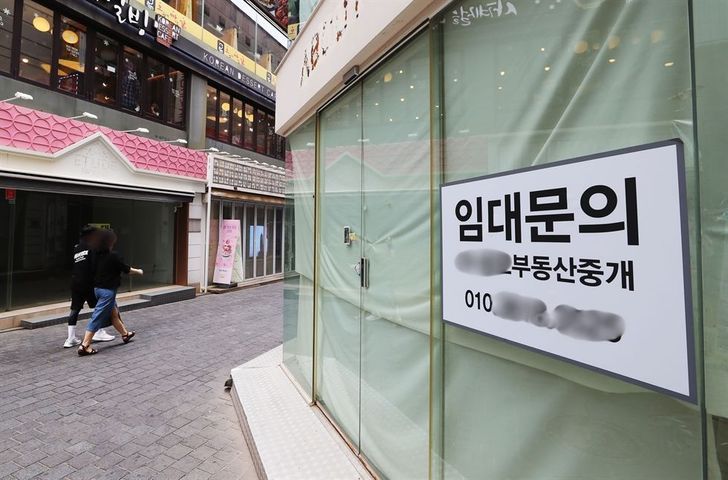
A store window in Myeong-dong has a for-lease sign in this July 19 photo. Yonhap
Building owners usually do not lower the price of rents even if they are vacant due to concerns about falling building values. But this time, they appear to have no choice, as the vacancy period has been prolonged amid no signs of a slowdown in the pandemic.
“Renters are seeking tenants by lowering rents by 50 percent and cutting long-term overdue payments from deposits, but many self-employed people can't even afford labor costs these days,” said Kim Si-kyung, who runs a real estate brokerage business in Myeong-dong.
Yoo Mi-hwa, a manager of Myeong-dong merchants' association and owner of a small restaurant in the area, said the district has been ruined by the pandemic.
“Myeong-dong, which has the highest rent in Korea and was visited by many foreign tourists, has been facing an unprecedented situation of a 99 percent decrease in tourists,” Yoo said.
“K-quarantine that has been hailed by the government as the most effective response to the pandemic has brought us nothing but pain. Why do only self-employed people like us have to suffer?” Yoo asked.
Experts say that the slowdown in the self-employed economy and expansion of non-face-to-face consumption, such as delivery services and online shopping, have had a greater impact on such large commercial districts.
Shops in residential areas have been surviving by pivoting to delivery services, but major shopping districts such as Myeong-dong have been hit directly by the reduction in work dinners, lack of foreign tourists and increasing competition with online distribution channels.
“Business districts outside residential areas that consumers can access via delivery or social media are still holding on despite the COVID-19 pandemic, while large commercial districts that generate sales through face-to-face contact, such as from office workers and foreign tourists, have been hit hard by a direct drop in sales,” said Lee Jin-suk, vice president of Realty Korea, a real estate consulting company.