Seoul finds new appreciation for urban art

People look at graffiti in an underpass in Seoul during a project to find social value in urban art pieces. Courtesy of Seoul Metropolitan Government
By Bahk Eun-ji
There is a lot of art at public spaces, such as sculptures at parks or graffiti, but some have been neglected or unappreciated, because they are located in remote places or busy people just pass them by.
To reconsider the value of such pieces and introduce them to the public, the Seoul Metropolitan Government has been organizing “discovery teams for urban art” since 2016.
The project was opened to the public giving participants the chance to discover urban art pieces thus introducing them to more people, as well as holding discussions with the city government on how to develop urban art.
This year there were 44 participants from September to November together with curators. After finishing the activities, leaflets and information maps on 40 urban art pieces were published.
Under the theme of “graffiti,” the members visited areas in northern Seoul, street art at an underpass in Sinchon, wall paintings in Ihwa Mural Village and murals around Gyeongnidan-gil in Itaewon. While many murals are still being made and destroyed, the participants talked about not only the city government's support for street artists but also the balance between tourism and privacy of residents who can be disturbed by the noise made and waste left by tourists.
The participants visited forests and parks including Yongdu Park, Seoul Forest and Dream Forest all of which feature sculptures.
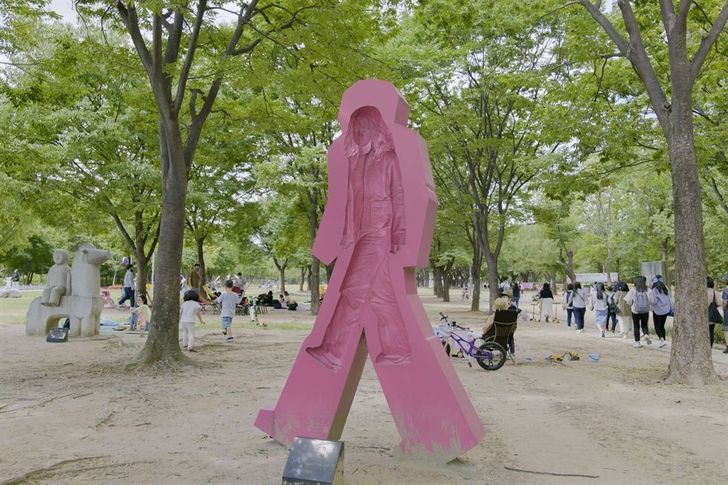
Artist Lee Yong-deok's sculpture “Walk Together” set up in Seoul Forest / Courtesy of Seoul Metropolitan Government
The participants visited the southern part of the city and discovered art in the areas near subway stations and apartment complexes, which many people did not usually notice while passing by in their everyday life. Especially, they recognized the value of metalwork art in Mullae-dong.
The members also discovered art at the Culture and Arts Park in Seocho District, Asia Park and Olympic Park. Among them, Olympic Park used to be evaluated as one of the world's top five sculpture parks in terms of scale and number of works, so the project was a chance to revisit the value of the park and its works of art again.
“The program for this year was a meaningful project in which participants present their own thoughts on urban art. We will consider how we can improve public art policies by collecting various views of the discovery teams,” said Lee Hye-young, a director of the design policy division at the city government.
The teams held a meeting to share their achievements at DDP Creative Lounge on Nov. 22, where they displayed photos of their activities and shared opinions on urban art, such as how urban art policies should be developed, how urban art should harmonize with the neighborhood and the importance of local governments to maintain urban art.
“As we plan to create a long-term direction for urban art with the public including the discovery teams, we ask people to pay more interest in urban art all around Seoul,” Lee said.