Jeju authorities under fire over 'irresponsible' balloon-flying event

People fly balloons to celebrate the New Year on Jeju Island on Jan. 1. Courtesy of Korean Animal Rights Advocates
By Jung Min-ho
Environmental and animal rights activists have criticized Jeju authorities over a balloon-flying
event, which they say is environmentally damaging and dangerous for wildlife.
“Balloon-flying events threaten the lives of animals, including birds and marine life,” the Korean Federation for Environmental Movement (KFEM) said in a statement Monday. “After the events, balloons do not just disappear; they remain as plastic waste.”
The criticism comes after organizers on the island released hundreds of balloons to celebrate the New Year.
“Where do you think the waste from the event will go? I wonder whether you thought about repercussions,” a petitioner, surnamed Lee, wrote on the Jeju Provincial Government's website on Jan. 2. “Jeju is a beautiful island that should be protected. Protect Jeju and its animals.”
According to experts, balloons over land or in the sea can be mistaken for food and eaten by animals. Sea turtles, dolphins, whales, fish and birds have been found with balloons in their stomachs.
Balloons have been widely used for New Year celebrations because balloons are a relatively inexpensive way to create a festive mood. But change is coming.
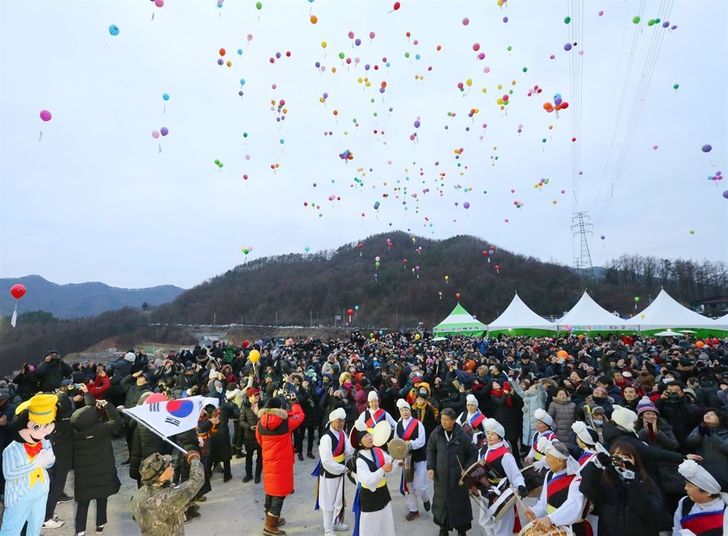
People fly balloons to celebrate the New Year at Chungju in North Chungcheong Province, Jan. 1. Yonhap
Last month, the Gyeonggi Provincial Government announced it would ban its cities and counties from holding balloon-flying events. It also encouraged civic groups to join the move and asked the central government to lead nationwide campaigns.
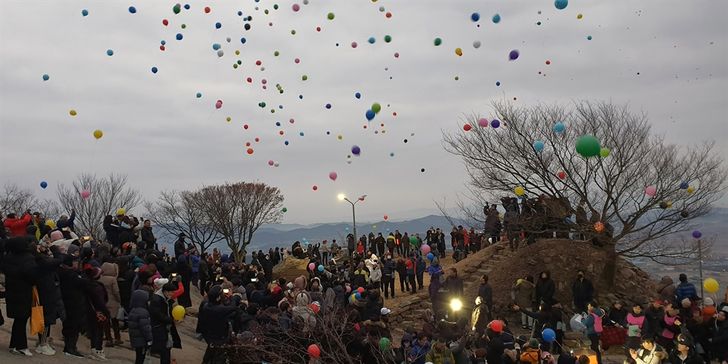
People fly balloons to celebrate New Year at Taean in South Chungcheong Province, Jan. 1. Yonhap