Donuimun Museum Village gets retro makeover

“Saemunan Theater,” a replication of a Korean movie theater from the 1960s to 80s, stands in the middle of Donuimun Museum Village, Jongno, Seoul. Old movies are screened for free on the second floor. / Courtesy of Seoul Metropolitan Government
By Lee Suh-yoon
Donuimun Museum Village, a dense cluster of historic buildings and alleys saved from demolition for Seoul's 2017 architecture biennale, is now a theme park for those who want to experience an earlier Seoul.
Thematic exhibitions and replicated interiors have been set up inside the restored buildings here, which range from traditional hanoks and two-story Japanese- and Western-style housing units to the concrete blocks built after the 1960s. Highlights include a retro arcade, an old-style movie theater, a socializing club that catered to foreigners and a photo studio specially equipped for a 1980s-style wedding altar photo shoot in black-and-white.
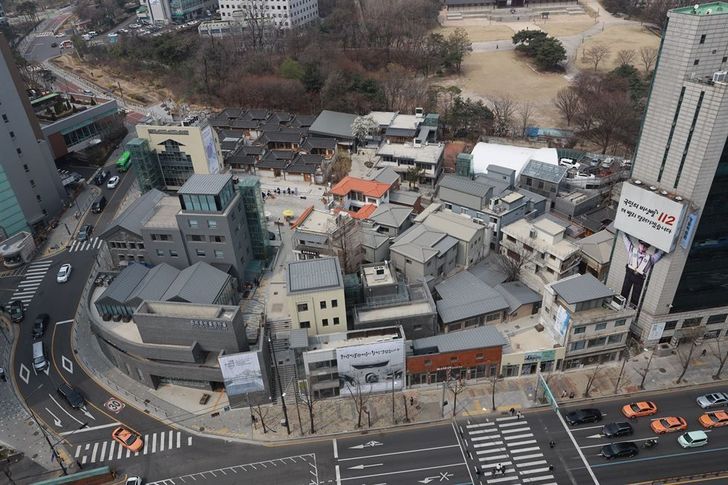
Donuimun Museum Village from above / Courtesy of Seoul Metropolitan Government
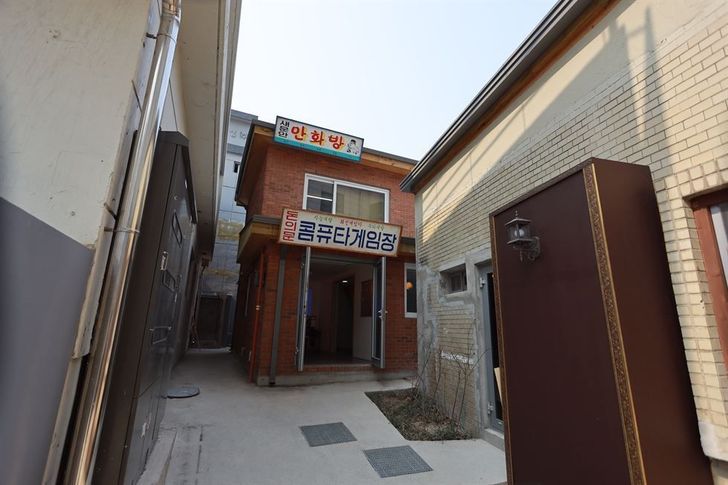
Retro arcade and comic book library at Donuimun Museum Village / Courtesy of Seoul Metropolitan Government
Young resident artists and older craftsmen now wait in designated hanoks or first-floor studios, inviting visitors to interact with art installations or make souvenirs. One exhibition, titled “Mom's closet,” displays seated mannequins dressed in “mom fashion” of the 1970s. Visitors can dress up in similar clothes packed in small bundles next to them.
To celebrate its renewal, the village will hold special music concerts, activities and guided tours this weekend.
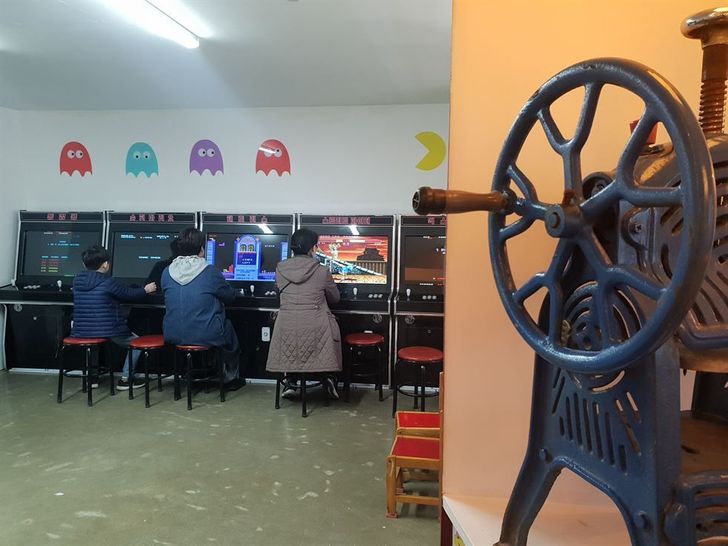
Visitors play games like Super Mario and Tetris inside the retro arcade at Donuimun Museum Village, Tuesday. / Korea Times photo by Lee Suh-yoon
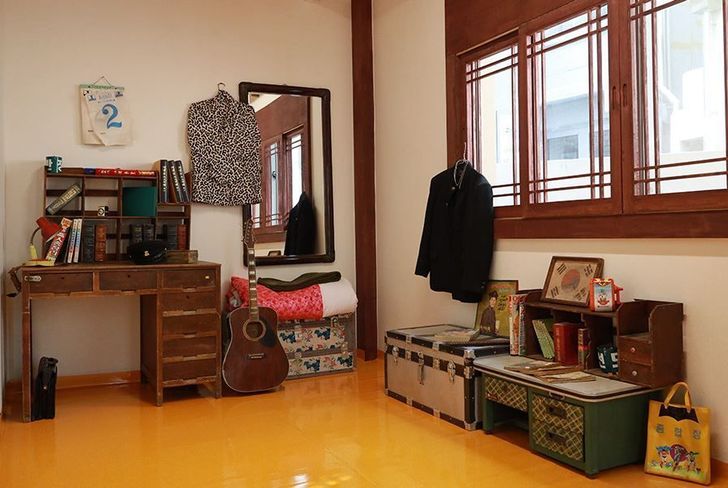
A nostalgic replication of a student's room in the 1970's / Courtesy of Seoul Metropolitan Government
The original name for the site of today's Donuimun Museum Village is Saemunan, which literally translates to “the neighborhood inside the new gate” (Donuimun is another name for Seodaemun, or old Seoul's “west gate”). The Donuimun gateway was nicknamed the “new gate” since it was demolished in 1413 and restored in 1422.
From the 1960s to 70s, Saemunan was home to hundreds of “tutoring rooms,” as the neighborhood was surrounded by Seoul's most elite high schools.
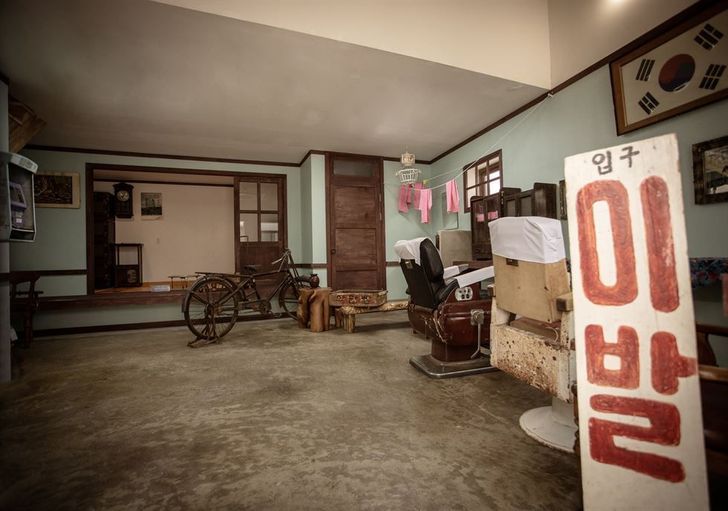
The replication of the old-fashioned barbershop at Donuimun Village / Courtesy of Seoul Metropolitan Government
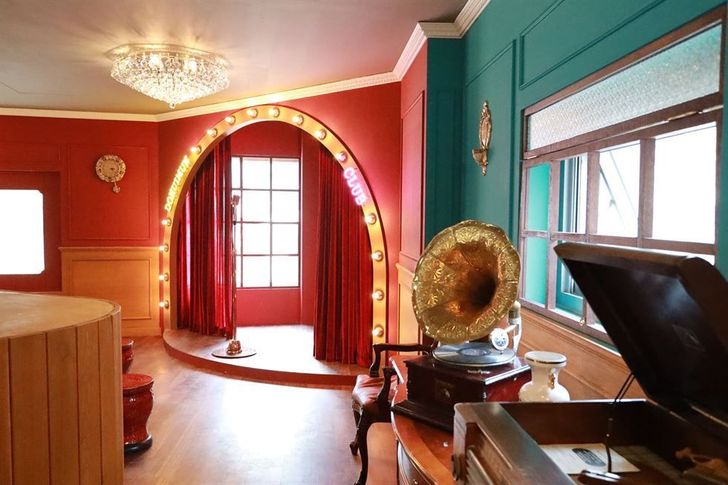
The replicated interior of a “socializing club” that catered to foreigners who lived in the area around the 1970s / Courtesy of Seoul Metropolitan Government
“This used to be the 'Sky Castle' then,” an on-site guide explained during a tour of the village Tuesday afternoon, referring to a popular K-drama named after a fictional elite housing complex where parents go to extremes to get their children admitted to top-tier universities.
But after ex-dictator Chun Doo-hwan banned tutoring in 1980 and elite high schools were relocated to the south of the Han River as part of a Gangnam-centered development in the late 1970s, the neighborhood started catering to office workers instead. It gradually turned into a dining district where white-collar workers from companies and government offices popping up near Gwanghwamun Square.
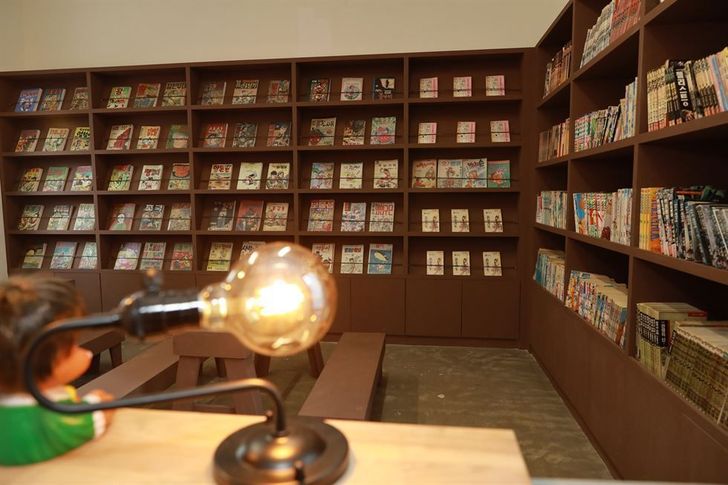
The comic book library at Donuimun Museum Village / Courtesy of Seoul Metropolitan Government
In 2003, however, the neighborhood was earmarked for development as part of the city-led New Town project, which cleared out run-down areas north of the Han River for modern complexes and facilities to catch up to the breakneck development south of the river. All tenants were cleared out of the neighborhood between 2013 and 2015, but instead of bulldozing the area to make a park ― as was the original plan ― the city decided to preserve it as a time capsule for Seoul residents.
As the remaining buildings carried safety hazards, the buildings were mostly rebuilt to their original form with minor adjustments and the village opened for the Seoul's architecture biennale in 2017.
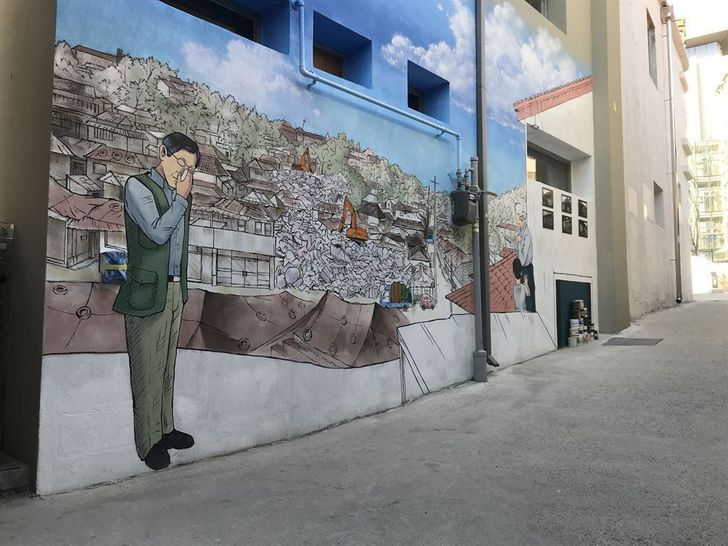
A street mural depicts a local resident grieving over the demolition of other old neighborhoods in the area to build high-rise complexes. / Courtesy of Seoul Metropolitan Government
On the glass slab in front of the movie theater, the neighborhood is described as “an urban regeneration village that sprung from a deep regret for traditional ways of 'redevelopment' that tear down everything to build something new.” The self-reflection, however, came after locals were pushed out. Donuimun Museum Village is but a petrified shell of a neighborhood that once pulsed with a dynamic community of locals.
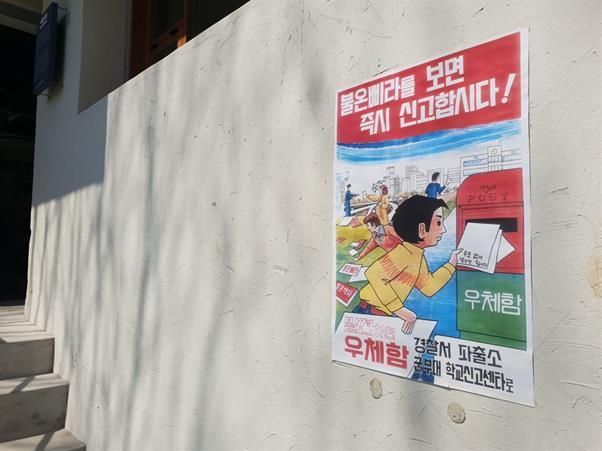
A 1970s government poster at Donuimun Museum Village tells citizens to report any North Korean propaganda slips to the police. / Korea Times photo by Lee Suh-yoon
Due to the neighborhood's rich history, the buildings themselves carry interesting stories. One hanok in the northern section of the village is where a left-leaning daily, Kyunghyang Shinmun, operated a dormitory for young boys who came to the capital alone. They sold its paper in the streets at daytime and attended school at night from 1981 to 1990. The hanok later became a loach soup restaurant.
The village will be open to visitors from 10 a.m. to 7 p.m. every day except Mondays and Jan. 1. Admission is free. Visit
for more information.