PHOTOS Seollal - then and now

In this photo taken on Feb. 14, 1964, a woman makes a deep bow while the other speaks on the frozen surface of Seoul's Han River. It was the eve of the Lunar New Year's Day and they did this to “console the spirits of their family members drowned in the river,” the attached caption read.
By Park Si-soo
Everything changes as time goes by. And it's the same for how we spend the Lunar New Year holiday, or Seollal, one of Korea's biggest holidays.
The Korea Times has explored its vast photo archive and unearthed images from 1960 onward that will amuse you while prompting a sense of nostalgia.
Let's take a brief journey back to the past.
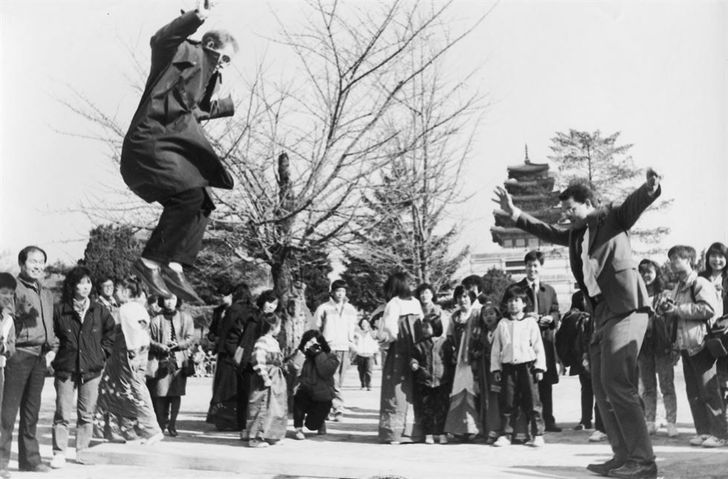
People enjoy seesaw jumping at an unidentified location on Feb. 8, 1989.
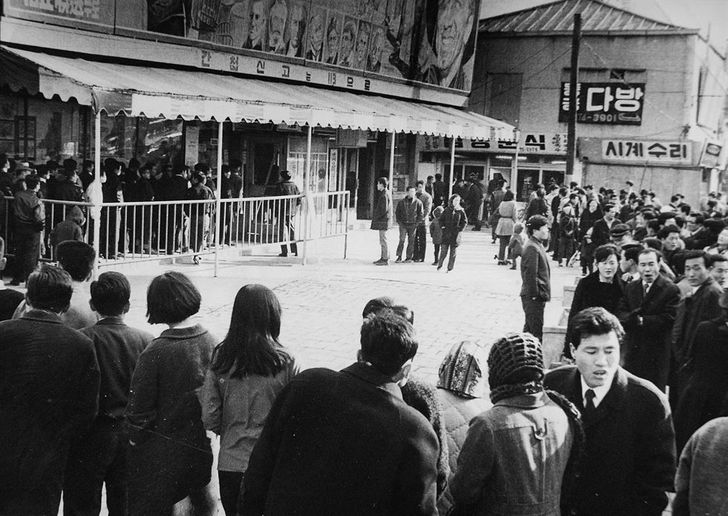
People wait in a long line at a movie theater's box office in this photo taken on July 28, 1971.
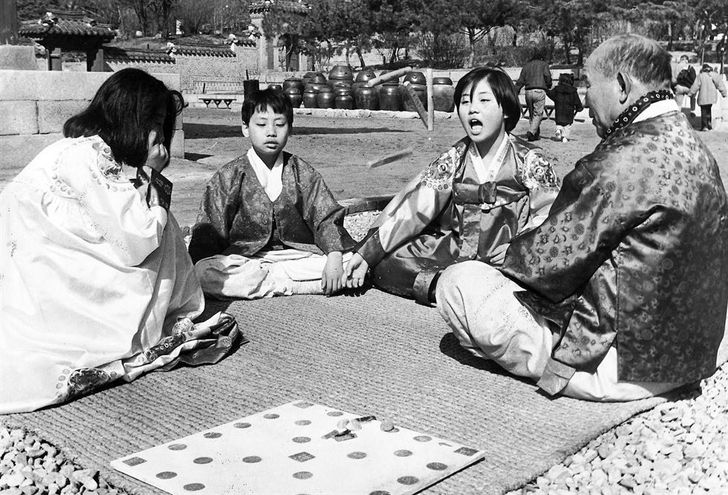
A family plays “yut,” a traditional board game, in the courtyard of the Deoksugung Palace in Seoul in this Feb. 21, 1991 photo.
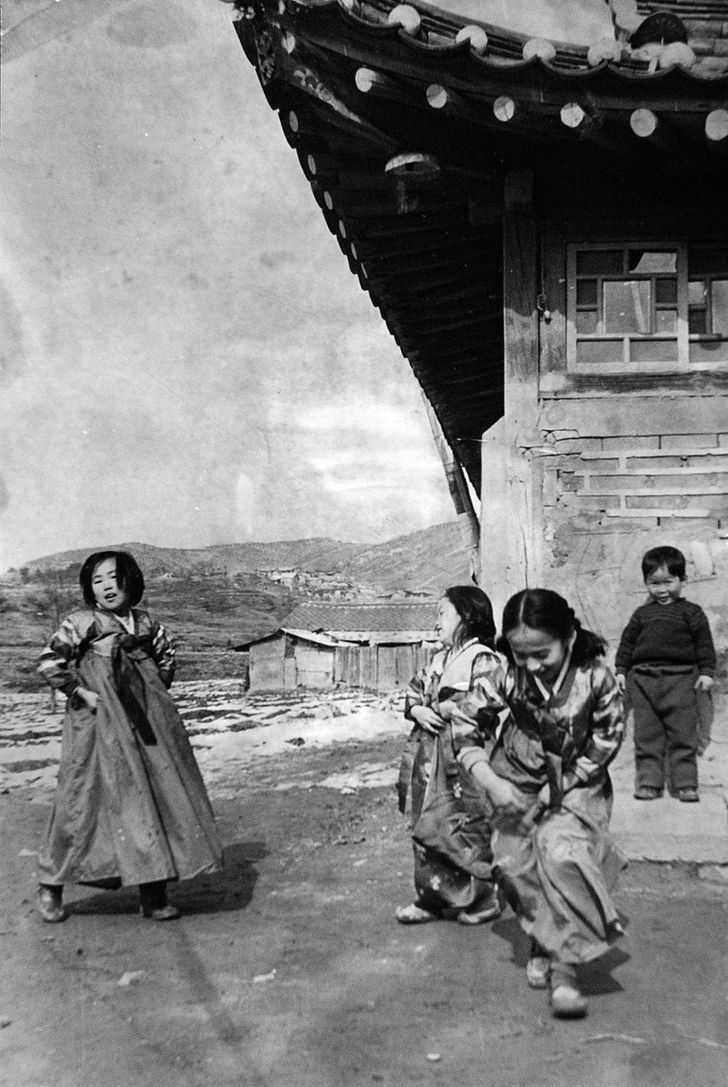
Children in traditional outfits ― “hanbok” ― at an unidentified location on Feb. 16, 1972.
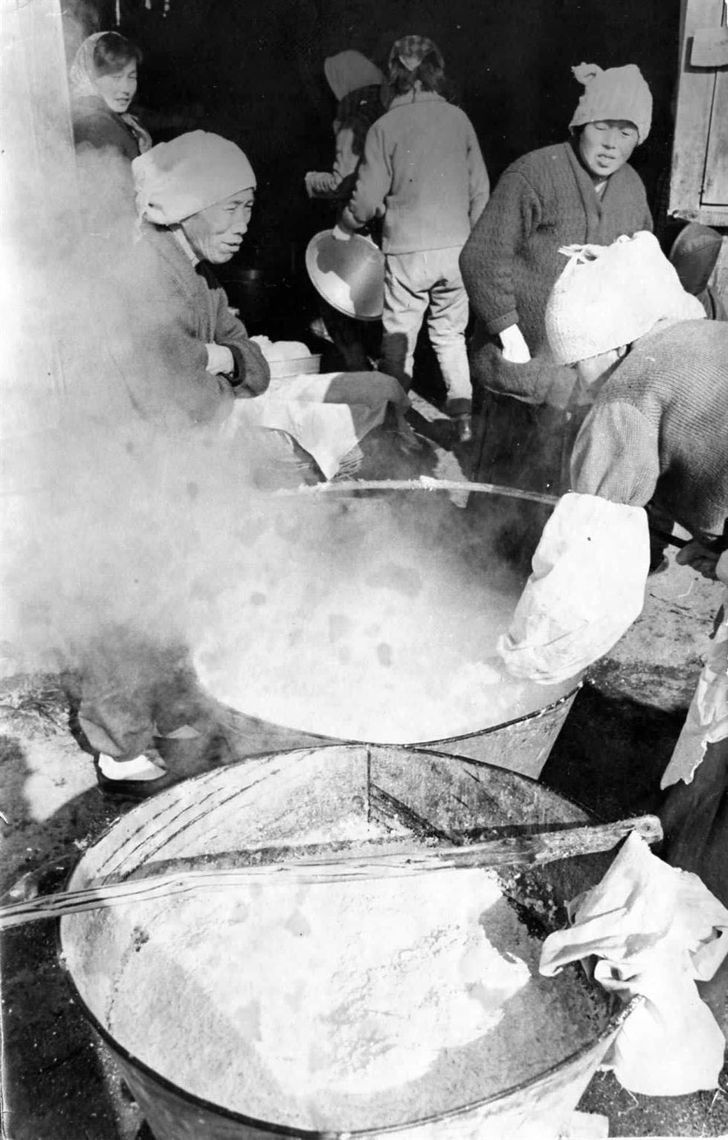
People with flour-filled buckets wait outside a rice cake-making mill on Jan. 27, 1968.
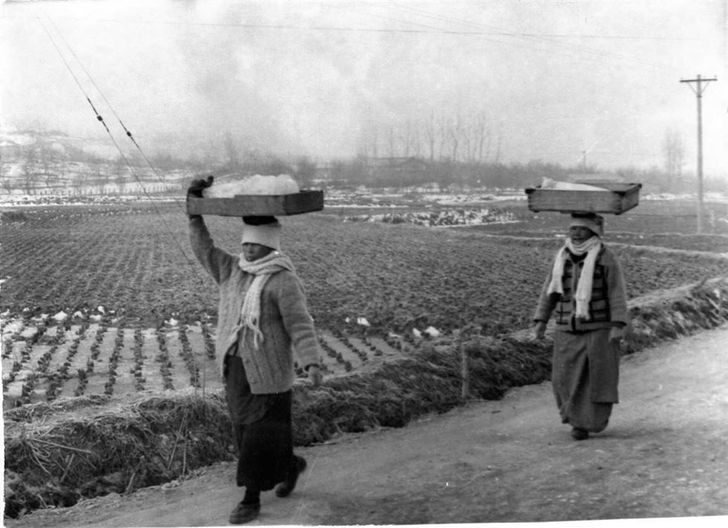
Women walk balancing newly made rice cakes on their heads on Feb. 4, 1979.
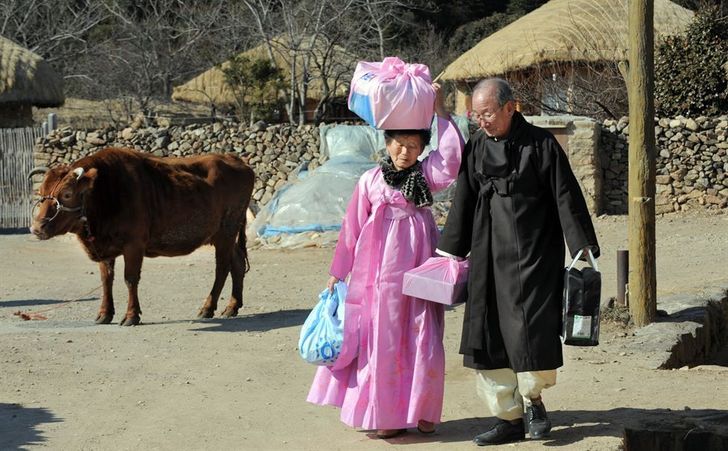
A senior couple leaves their home in Suncheon, South Jeolla Province, with bags of gifts for their children on Feb. 1, 2011.
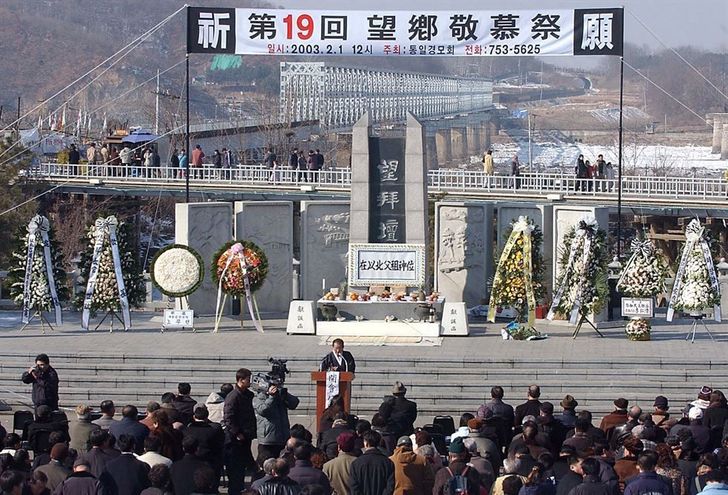
People born in North Korea host a joint ritual for their ancestors at Imjingak, a park near the border with North Korea, on Feb. 2, 2003.
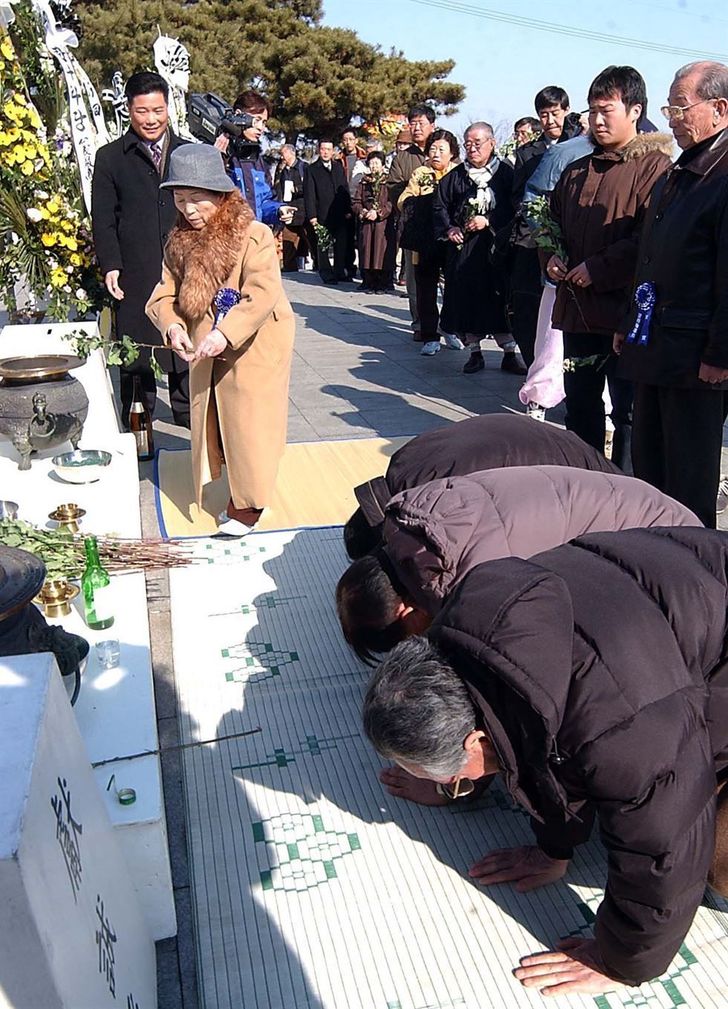
People make deep bows at an altar set up for a joint ritual by those born in North Korea, at Imjingak on Feb. 2, 2003.
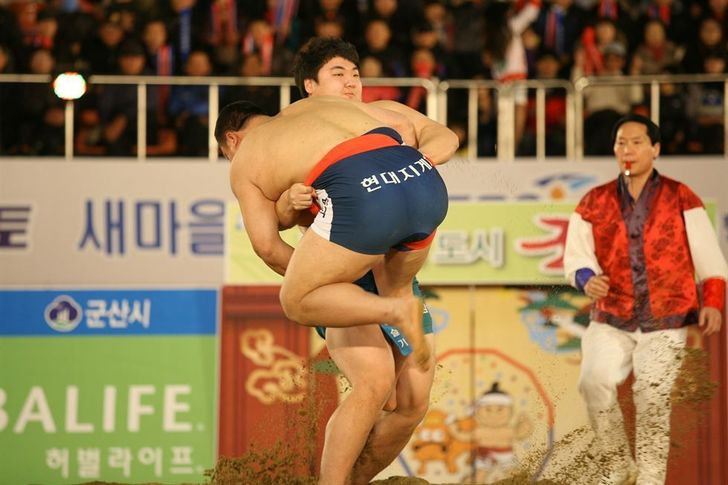
Ssireum players compete on Jan. 28, 2014. A ssireum championship is one of the sources of joy during the Seollal holidays. Ssireum was added to UNESCO's list of intangible cultural heritage in December 2018.
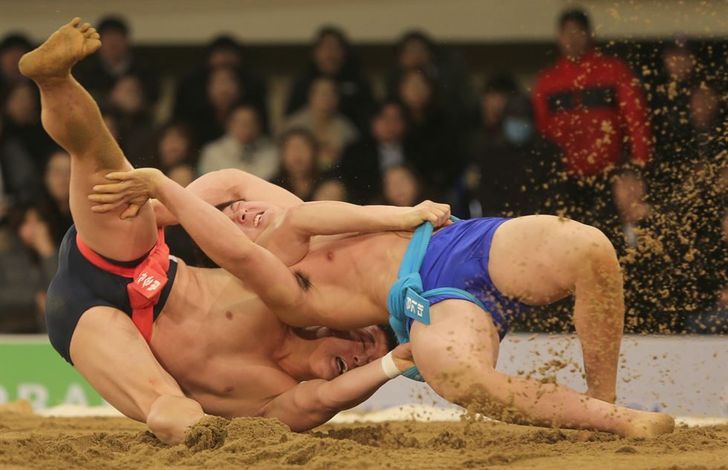
A Ssireum competition at an arena in Gunsan, North Jeolla Province, on Feb. 8, 2013.
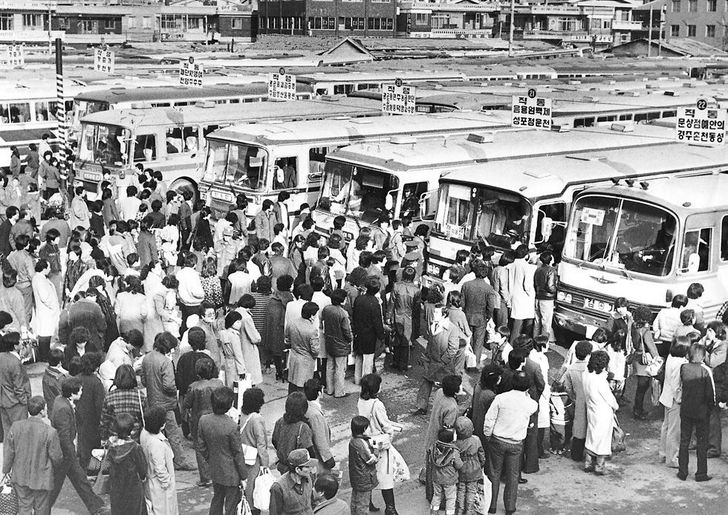
Holidaymakers queue to take buses bound for their hometowns on Jan. 4, 1983.
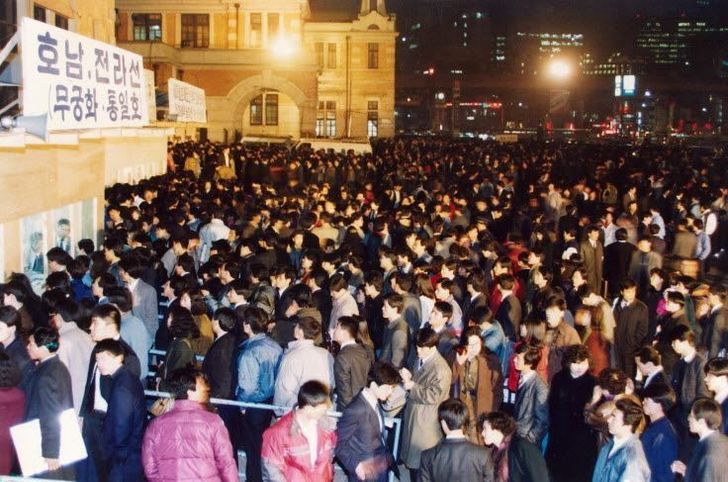
Thousands of people stand in lines outside Seoul Station to buy train tickets on Feb. 18, 1991.
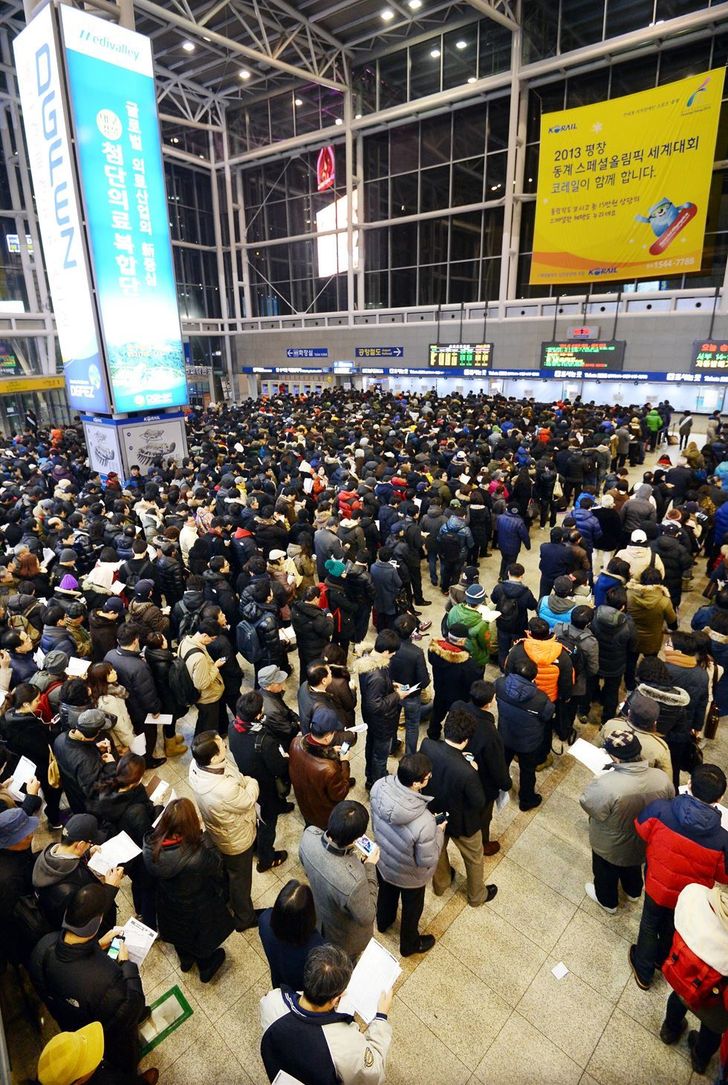
The desire to return to their hometowns during Seollal remains strong. People queue to buy train tickets at Seoul Station on Jan. 15, 2013.
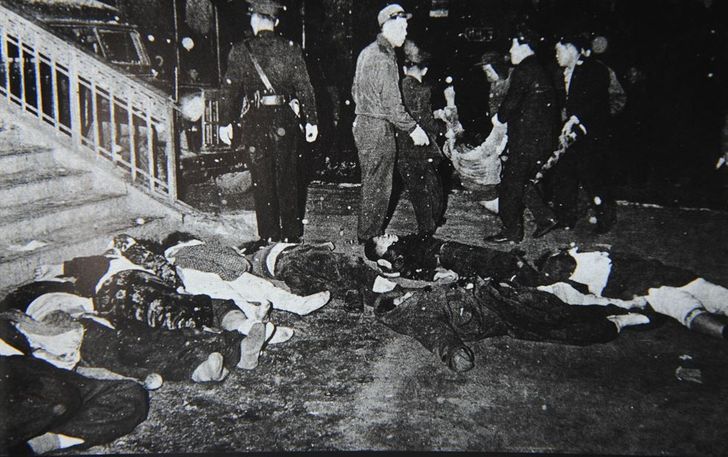
The homecoming tradition sometimes leads to tragedy. On Jan. 26, 1960, 31 people were killed and 41 injured in a stamped at Seoul Station. It was provoked by holidaymakers who rushed onto an already crowded train platform so as not to miss their train.
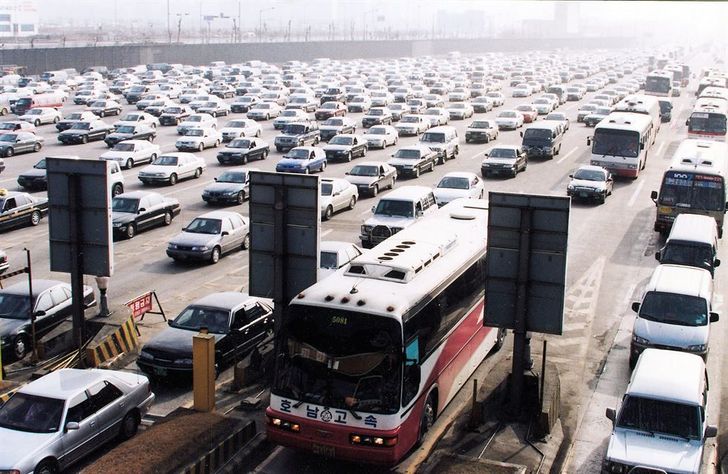
Hundreds of thousands of cars and buses jam highways during the holiday, turning them into temporary “giant parking lots.”
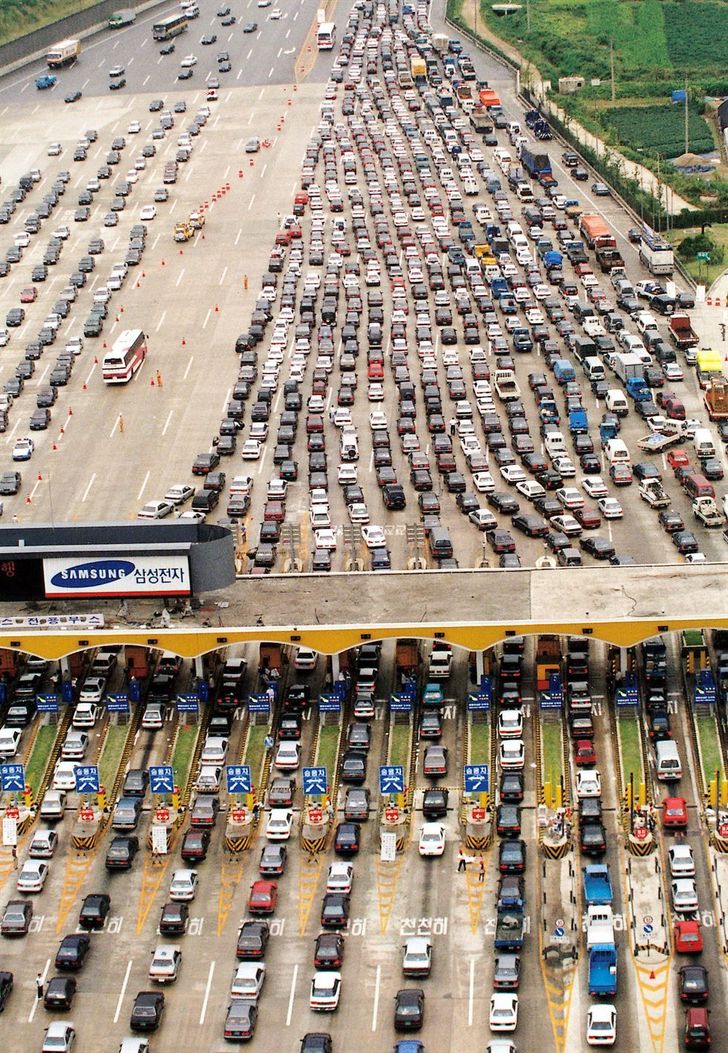
A highway or parking lot?
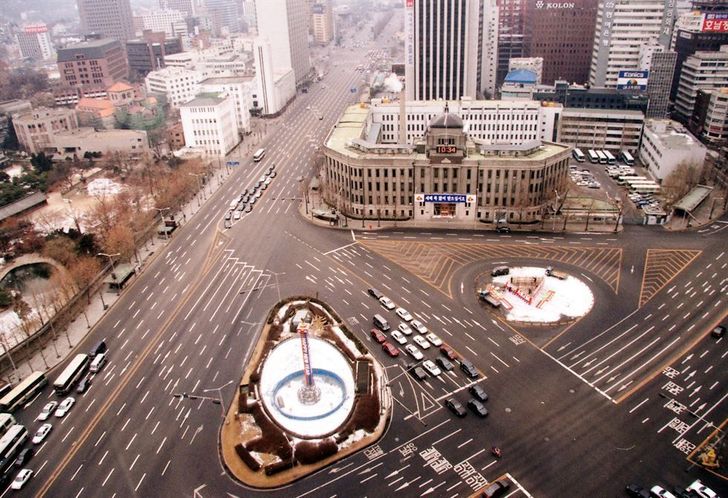
The Seollal exodus gives Seoul's downtown area a rare moment of calm.
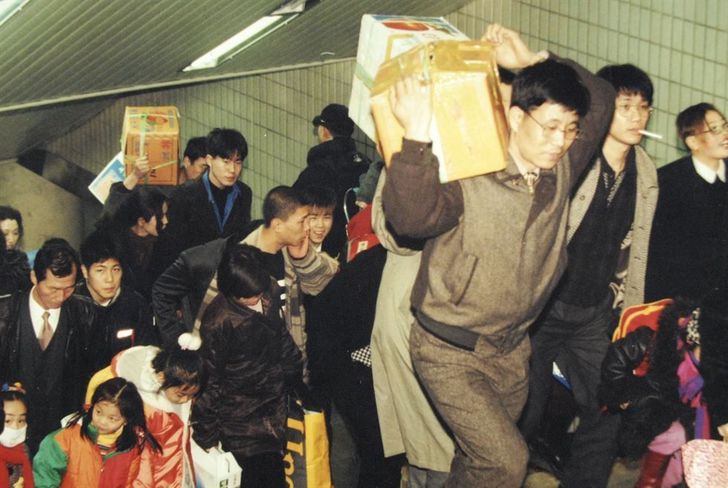
As the holiday comes to a close on Feb. 10, 1998, Seoul Station is crowded again with people returning with parents' gifts.