'Seoul could better use foreign residents' potential'
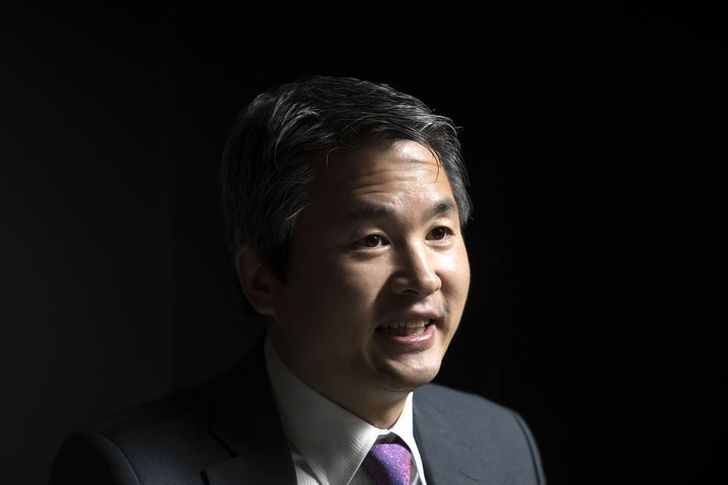
Ha Sung-do, the representative for the 2nd Seoul City Foreign Residents Council, talks about its plans in an interview at The Korea Times office, Jung-gu, Seoul, Thursday. / Korea Times photo by Choi Won-suk
By Lee Suh-yoon
Ha Sung-do, 45, is a businessman. From his perspective, Seoul is underutilizing foreign residents' potential in the community.
“In a way, each of the 410,000 foreign residents in Seoul is a valuable PR ambassador who can attract tourists from their home countries,” Ha said in an interview at The Korea Times office in central Seoul, Thursday. “Most foreign residents may work in 3D (dirty, dangerous, and difficult) jobs or wait on tables in Korea, but they usually have a higher social status back home. What they say or post on social media about Seoul can influence its international image and attract more tourism.”
An ethnic Korean from Heilongjiang Province, China, Ha is the new head representative for the
second Seoul City Foreign Residents Council
, launched Jan. 18 to act as an official channel between the local government and foreign residents here for the next two years.
Ha says he wants to make sure the rest of the 45-member council is allocated some funds to temporarily leave their day jobs and meet diverse foreign resident communities. Council members are currently paid by the hour for attending council meetings once a month.
“Most council members do not own their own business like me, so it's hard for them to spare money or time outside the meetings to directly hear the needs of other foreign residents,” Ha said.
Ha arrived in Korea in June 2008 and now lives in Daerim, western Seoul. The owner of a small trading company in Bundang, Gyeonggi Province, Ha became interested in joining the council after attending a town hall meeting in 2014 with Seoul Mayor Park Won-soon.
“I told the mayor we needed to give more foreign residents the opportunity to work in international commerce. This way, their personal connections back home, their foreign language and cultural skills could be used to promote Seoul and the products made by SMEs here,” Ha said.
Ha's suggestion at the town hall meeting was taken into account, leading to the expansion of the startup incubation center for foreign residents at Seoul Global Center.
“It got the feeling the current mayor actually believed in the value foreign residents can bring to the community, unlike other local government leaders,” Ha said.
Ha says the second Seoul Foreign Residents Council will try to communicate better through social media channels as well as the
, which was recently set up by the first council to connect different foreign resident community groups on one platform.
“The network will be led by the head of a member community in rotation ― like the secretary-general post at the U.N.,” Ha said with a smile.
Foreign residents from East or Southeast Asia are subject to more negative public perceptions, Ha says. In the case of ethnic Korean-Chinese like Ha, the media always portrays them as criminals running free in Daerim, where many reside.
“But in fact, the average crime rate by the Chinese population here is actually lower than the average crime rate among Koreans,” Ha said. “The negative stereotypes are very discouraging because we, too, are contributing members of the local community ― joining neighborhood patrols, sharing our culture at local events and paying taxes.”