Yeoju mayor Lee seeks to inherit King Sejong's spirits

Yeoju Mayor Lee Hang-jin poses for a photo with Yeoju's specialty rice at Yeoju City Hall in Yeoju, Gyeonggi Province, Tuesday. Korea Times photo by Choi Won-suk
By Kwon Mee-yoo
Lee Hang-jin, the new mayor of Yeoju, Gyeonggi Province, has had the busiest three months of his life after taking office on July 2. Lee is the youngest mayor and the first from the Democratic Party of Korea (DPK) to govern Yeoju.
Lee, 52, is still occupied in understanding his assignment as mayor.
"A local government's head oversees over 13,000 tasks. I am still on my way to comprehend what I have to do make Yeoju a better place to live," Lee said at an interview with The Korea Times, Tuesday.
Lee stepped into politics in 2014 when he was elected as a member of Yeoju City Council. Before that, he was an environmental activist who fought against the Four Major Rivers Restoration Project of the 2008-13 Lee Myung-bak administration. Yeoju was greatly influenced by the project as the city is on the Namhan River, an upstream branch of the Han River.
The new mayor aims to take a leaf from King Sejong's book, the fourth king of Joseon Kingdom who created hangeul and is praised as one of the greatest rulers in Korea's history.
Yeoju is also inextricably linked to King Sejong as Yeongneung, the double tomb of King Sejong and his wife Queen Soheon, is located in the city. "This year marks the 600th anniversary of King Sejong's accession to the throne and we are happy to organize Sejong-themed events such as the musical 1446 and the King Sejong Cultural Festival from Oct. 6 to 9," Lee said.
According to Lee, King Sejong was skilled at reinforcing and managing political authority. "Though the throne was inherited, a king had to retain his power. Back then, there was no such concept of citizen sovereignty, but King Sejong recognized the importance of the people very early," Lee said.
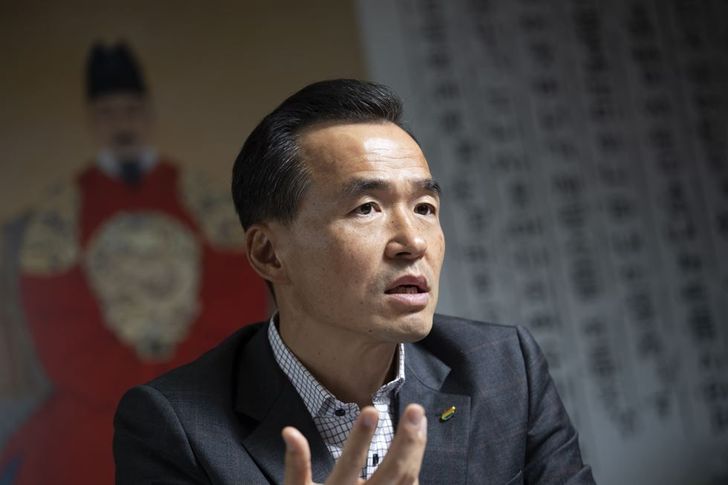
Yeoju Mayor Lee Hang-jin speaks during an interview with The Korea Times at Yeoju City Hall in Yeoju, Gyeonggi Province, Tuesday. Korea Times photo by Choi Won-suk
Lee speculates the environment King Sejong grew up in provided differentiation. "King Sejong was the third son of King Taejong and Queen consort Min. He was not designated as the crown prince until he was 21, just two months before he succeeded to the throne. King Taejong was a strict and powerful king and Sejong grew up rather freely compared to other heir-apparents. Such freedom gave him different perspectives and led to the invention of hangeul," Lee said. "I think King Sejong must have understood the importance of communication and language. So he put much effort into inventing an original alphabet matching with spoken Korean language."
King Sejong proclaimed hangeul in 1446, a few years before he passed away. "The creation of hangeul was the last piece of the jigsaw for King Sejong, who explored the origin of humanistic spirit. People have to understand themselves, and communication through oral and written language was essential in the process. Since commoners could not understand difficult Chinese characters, King Sejong knew they needed a written language of their own and invented hangeul, a scientific fruit of linguistics and phonetics," Lee said.
The mayor pointed out that King Sejong's thoughts are still relevant in modern politics.
"In democracy, power originates with the citizens and King Sejong understood the importance of empowering the people. So I think we can find a future vision by revisiting King Sejong's legacy."
The economy of Yeoju, located 60 kilometers southeast of Seoul, has been sluggish for years despite the city's rich cultural and natural resources. Lee hopes to enhance the level of happiness during his term.
"I am not the type of person who points out errors, but sets a goal and moves toward it. My goal is the happiness of all people who live, work and visit Yeoju," he said.
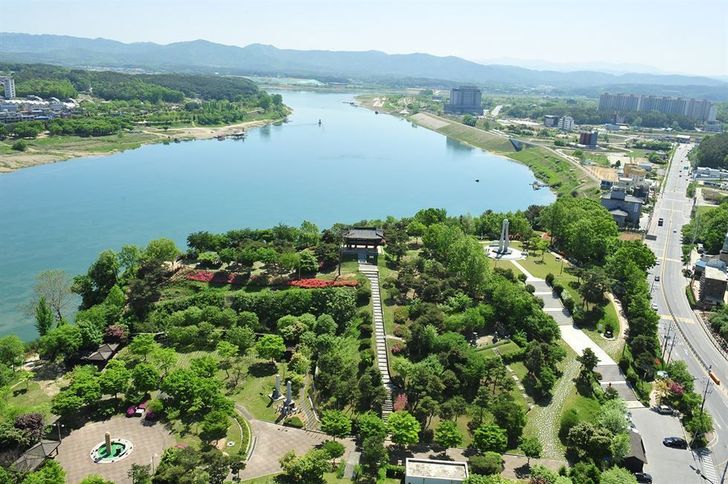
A bird's-eye view of Yeoju and the Namhan River, an upstream branch of the Han River / Courtesy of Yeoju City
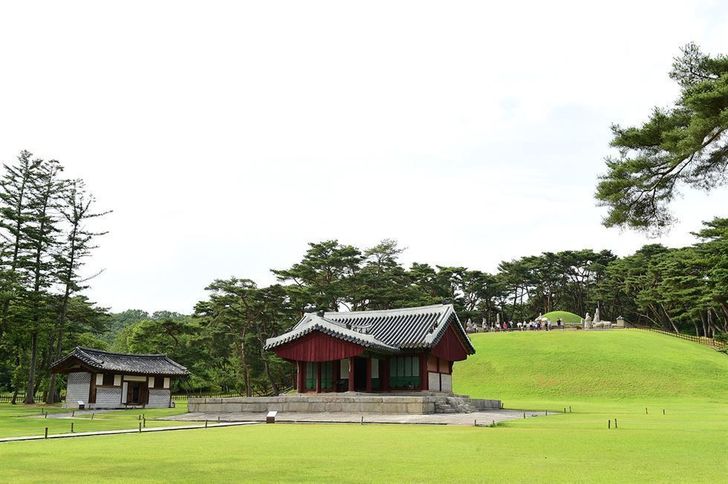
Yeongneung Royal Tomb, the joint tomb of Joseon's fourth King Sejong and his wife Queen Soheon / Courtesy of Yeoju City
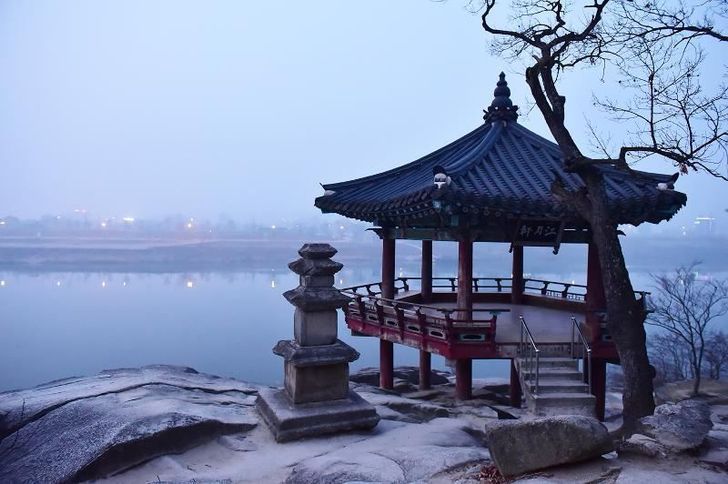
Silleuk Temple in Yeoju / Courtesy of Yeoju City