Seoul capitalizes on old stores as a tourism asset

Pictures of past visitors line the walls of Gaemi Mart in Yongsan-gu, central Seoul. Gaemi Mart, a local supermarket established around 1900, was chosen by the Seoul Metropolitan Government as an “Oraegage” site this month for its cultural and historical value. / Courtesy of Seoul Metropolitan Government
By Lee Suh-yoon
The Seoul Metropolitan Government recently picked 26 stores to add to its famed “Oraegage” list, a collection of old stores that are of cultural and historical value to the city.
Oraegage is a play on words that means both “old store” and “continue longer.” With the two meanings compounded, Oraegage stands for “old stores that should go on.”
Last year, the city put together a list of 39 such stores from the Jongno and Euljiro area, which gained some renown as unique tourist destinations, allowing a glimpse of an older and slower-moving Seoul from the past.
Gaemi (meaning ant in Korean) Mart, near Seoul Station in Yongsan District, is one of the new additions to the list. Established around 1900, it still retains the look and feel of a local neighborhood supermarket, while such stores have almost died out due to chain convenience stores. The exterior is plastered with visitors' photos taken with the owner.
To qualify as an Oraegage, the stores must be at least 30 years old or have been passed down at least two generations in a family.
The original list included numerous stores specializing in traditional arts and crafts, such as stamp carving and brassware sets, as they were chosen from neighborhoods that have long been populated by artists and craftsmen, such as Insa-dong and Bukchon.
The new additions, however, come from more residential neighborhoods such as Yongsan, Mapo, Seodaemun and Eunpyeong districts in central and northwestern Seoul, and thus include stores that cater to the daily lives of local residents, including supermarkets, ping-pong rooms, bath houses, secondhand bookstores and photo studios.
Local residents and culture experts helped narrow down the 26 stores from over 1,400 candidates. A full list of the new Oraegage stores can be found at
.
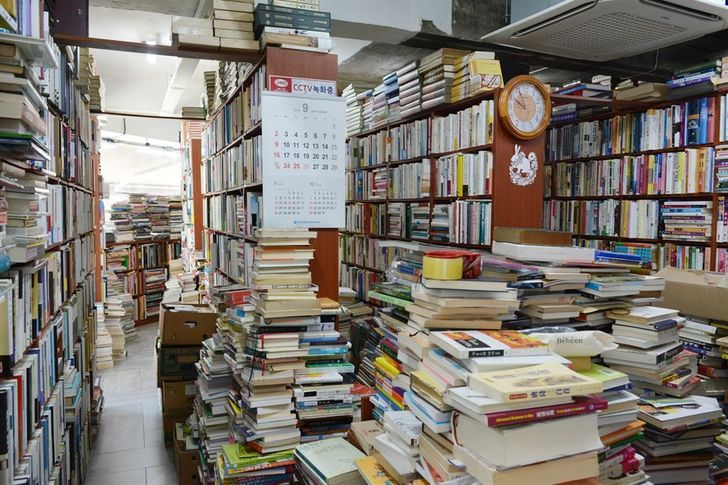
Secondhand books are stacked high inside Geulbut Bookstore, Mapo-gu, Seoul. Established in 1979, the shop was selected as an “Oraegage” store this month. / Courtesy of Seoul Metropolitan Government
There are also plans to link up Oraegage stores with nearby sightseeing spots, restaurants, and footpaths into a tour course, the city government said.
The city hopes the updated list will offer more guidance to the increasing number of travelers who visit Seoul alone or with friends and family instead of with a big tour group, unaided by a full-time tour guide.
The shift to individual visits was most noticeable among Chinese tourists as China banned tour groups to Korea last year in the dispute over the installation of Terminal High-Altitude Area Defense (THAAD) system.
“We have long-term plans to develop Oraegage stores into a tourism-related brand of its own,” Joo Yong-tae, the director of the city government's tourism and sports bureau, said. “In line with the increasing number of individual travelers, we will continue to promote Oraegage stores to create interactive tourism content that represents the unique characteristics of Seoul beneath the facade of the city.”