Particles from fossil fuel power plants not monitored properly
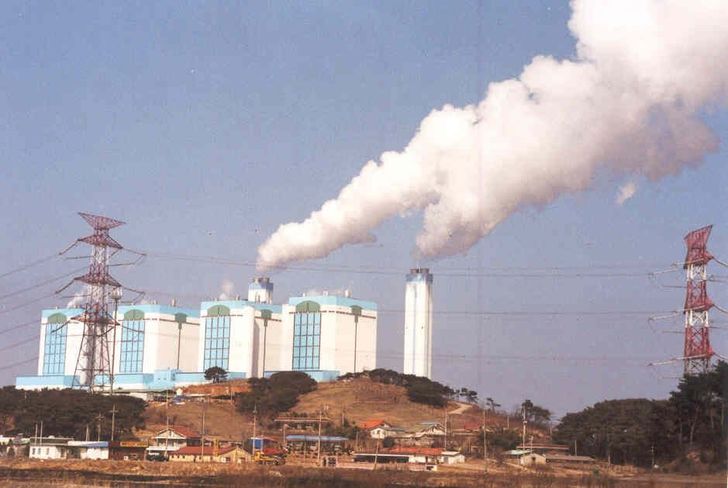
Not one fossil fuel power plant in South Korea, including one in Dangjin, South Chungcheong Province, above, has been properly monitoring how much particulate matters it emitted ― because measuring equipment was not installed at furnaces. / Korea Times file
By Ko Dong-hwan
Fossil fuel power plants in South Korea have been releasing toxic fine particles without properly monitoring how much they were emitting, a lawmaker revealed Monday.
Not one of 33 coal plants nationwide had equipment at their furnaces to measure particulate matter emissions, according to Rep. Choi Do-ja from the Bareun Mirae Party, citing a Ministry of Trade, Industry and Energy report.
The furnaces are equipped to give real-time readings of sulfur oxides, nitrogen oxide and total suspended solids. But readings for particulate matters are estimates based on the three chemical components, a method that is far from accurate.
“We have no idea how much particulate matters these coal-burning power plants have been emitting so far,” said Rep. Choi, who is also a member of the National Assembly's emergency committee targeting particulate matter-induced air pollution.
The Moon Jae-in administration estimated that domestic coal power plants emitted more than 28,000 tons of particulate matter in 2017.
In December 2016, the government invested 5 billion won ($4.7 million) to develop equipment which, when installed at coal plants' furnaces, will read and analyze the particulate matter.
Emissions from 11 domestic coal power plants were tested in 2017, revealing that the emissions contained 400-4,800 micrograms per standard cubic meter of particulate matter ― 11 to 137 times the maximum level to keep the air clean.