A glimpse into books that shaped Korea's English education
.jpg?w=728)
The covers of the books representing the trend of English education history in Korea, from the left; "English Study Basics" by Ahn Hyun-pil, "Pratical English" by Min Byoung-chul and "Tail-biting English" by Han Ho-rim / Captured from Online Kyobo Bookstore
By Rha Hae-sung
For the past 60 years, the English education boom has been heating up in Korea like no other non-English-speaking country. There’s nothing special about promoting the use of English in a non-English-speaking country. But in Korea, there seems to have been a special trend growing around English education.
1950s
The nation’s first wave of English fever started with Ahn Hyun-pil, a hit-it-big lecturer from the 1950s.
“Memorize until you can subconsciously speak in English,” Ahn wrote in his then-bestselling book, “English Study Basics.” Well-described by its title, the book underscored reading and memorizing as the key footholds in learning the language. With 5 million copies of the book sold in Korea, the first English education trend started with rote learning.
1980s
The 1988 Seoul Olympics, however, put an end to that learning method. As overseas travel became more common and the number of foreign visitors to Korea soared around the Olympics, demand for English education grew sharply, intriguing the second wave of English education.
Memorization may have helped improve reading and writing skills but it apparently wasn’t effective in real-life conversations.
“Now that the Olympics was held in Seoul and overseas travel had gained popularity, Koreans demanded conversational English in their education,” said Han Mi-hwa, a publication critic from the 1980s.
During that time, the English educational book series “Min Byoung-chul’s Practical English” was popular among students as it focused on proper pronunciation and daily conversation.
1990s
The third wave came a decade later when English-learning books with personal experience gained increasing popularity. Readers from that time demanded specific stories of those who claimed they mastered the language, which they found evident in the efficiency of their methods in learning the language. Story-based learning materials were also more interesting than conventional textbooks used in the past.
“Tail-biting English,” a comic book by Han Ho-rim who emigrated from Korea to Canada, became popular around the same time. The book sold more than 2 million copies in Korea.
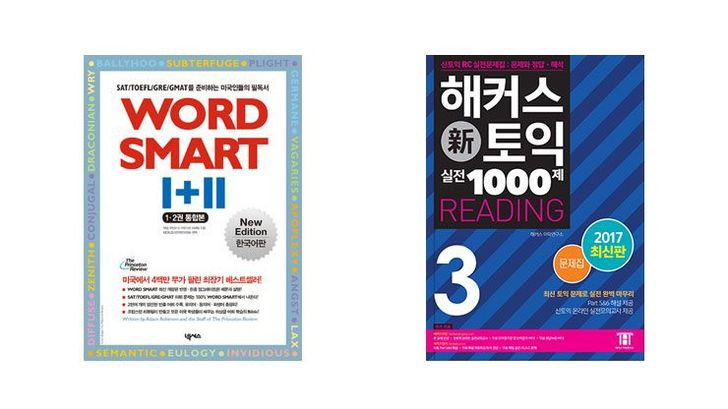
The covers of the books representing the trend of English education history in Korea, from the left; Princeton Review's "Word Smart", "Hackers TOEIC" by David Cho / Captured from Online Kyobo Bookstore
2000s
The latest trend from 2001 that has endured to this day is the use of English vocabulary books, including “Word Smart.” Demand for study books for the Test of English for International Communication (TOEIC) also increased as high TOEIC scores became a basic qualification for jobs in Korea. Study guides from Hackers, a famous private academy preparing students for the TOEIC, seized the English educational book market, recording over 11 million sales in the last decade.