Creating an 'immersive environment'
Expert gives advice for learning a foreign language faster and more effectively
By Chung Hyun-chae

Cho’s recent book “Fluent”
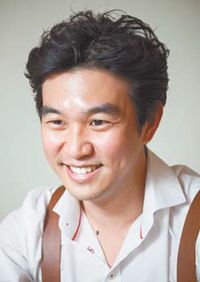
Language learning expert Cho Seung-yeon

“How to Study English” was published in April 2016.
Foreign language learners should create an “immersive environment” in which they can be exposed to the new language all the time. Such a situation can be uncomfortable for them at first, but it is necessary for the learners’ mastery of the language, foreign language-learning expert Cho Seung-yeon said.
“When I was studying Chinese, I never watched Korean movies or Korean news. But I did everything in Chinese,” he said.
In the same way, the 35-year-old author of 19 books, most of them about studying foreign languages, learned German and Japanese by himself.
He is also fluent in English, Italian, French and Korean.
“It is natural to feel frustrated when you cannot understand subtitles in movies and news. But it is part of the process toward progress. You need to get over the inconveniences to improve your language capabilities,” he said.
According to Cho, the same approach applies to studying foreign languages abroad.
“You’d better put yourself in challenging situations such as negotiating prices to buy a used car or drafting a lease contract in order to master a foreign language in a short period of time,” he said, citing his own experience in France.
Cho moved to the United States in 1993. He enrolled at New York University in 1999 to get a bachelor’s degree in business administration and graduated in 2004. He then moved to France in May 2005, where he studied art history at Ecole du Louvre from 2006 to 2008.
“I went to France to attend graduate school because my parents could not afford tuition in the U.S. due to their financial difficulties in the wake of the IMF crisis in 1997,” Cho said. “Then I visited government offices several times in France to get welfare money, an experience that I believe improved my French a lot.”
He noted that one’s language skills do not improve much if one lives a comfortable life in a foreign country and does not face any difficulties.
The purpose of learning a foreign language
Cho stressed that one needs to have a desire to see more of the world to learn a foreign language faster and more effectively.
“When you speak Korean, you can communicate with 50 million Korean people, but English allows you to communicate with almost everyone around the world,” Cho said, explaining what he believes should be the purpose of learning English.
He lamented that Korean people have the wrong motivations for learning English.
“English has been considered as one of the specs (specifications or qualifications) and the most crucial factor in winning the job war, but not as a means of communication,” Cho said. “This is why many Korean people struggle to learn English.”
The author believes that powerful motivation helps learners master a new language.
“For example, those who are interested in automobiles might want to read English magazines that describe foreign cars, and those who love hip-hop might want to follow American rappers’ rhymes,” Cho said. “In doing so, they will quickly attain proficiency in English,” Cho said.
The importance of grammar
Cho pointed out the biggest problem with the nation’s public education of English is its focus on grammar.
“The reason we have to study grammar is it enables us to find patterns in phrases and sentences so that we can understand both local dialects and the standard language,” Cho said. “Koreans, however, study grammar only to speak standard English.”
He emphasized that there is no one correct answer in grammar.
“For example, in Texas, people say ‘I be going’ instead of ‘I am going,’ while people living near the Appalachian Mountains in North America say ‘I done gone’ instead of ‘I have gone,’ which are technically incorrect grammar but are nonetheless commonly used there,” he said.
Last October, Cho wrote “Fluent,” a book in which he explains why people need to understand their way of thinking when they a foreign language.
“Being fluent doesn’t mean that one’s grammar is perfect but that a person can think like a native speaker of the language,” Cho said.