DPK wary of fallout from blocking chairman's arrest

Main opposition Democratic Party of Korea Chairman Lee Jae-myung enters the party's supreme council meeting at the National Assembly in Yeouido, Seoul, Monday. Yonhap
By Nam Hyun-woo
Concerns are growing within the main opposition Democratic Party of Korea (DPK) over the possible fallout due to its rejection of a motion to arrest its Chairman Lee Jae-myung, as it may come across as the party trying to make its leader “bulletproof,” regardless of the political cost.
According to the National Assembly, lawmakers will hold a vote, Feb. 27, on whether they will allow the prosecution to detain Lee over bribery and corruption allegations.
The prosecution sought an arrest warrant for the main opposition party leader last week on suspicions that Lee had breached his professional duties ― in relation to a land development project in the Daejang-dong area of Seongnam, Gyeonggi Province ― and attracted unfair corporate donations to a Seongnam-based football club in return for administrative favors.
During an ongoing session of the Assembly, an incumbent lawmaker is immune from being arrested or detained without the consent of the Assembly, unless he or she is caught while committing a crime. The prosecution has sent a request for consent concerning Lee's arrest and the Assembly confirmed that it received the request on Monday.
Since the DPK holds 169 out of 299 registered seats in the Assembly, chances are slim for the prosecution's arrest request to be approved. However, concerns are growing within the DPK that the prosecution will likely continue sending arrest requests in relation to Lee's other allegations, and that repeated rejections may be interpreted as the party's unjust attempt to protect Lee at any cost.
The prosecution is investigating Lee's alleged involvement in development projects in Baekhyeon-dong and Jeongja-dong, both of which are also located in Seongnam, as well as a North Korea-bound money transfer scandal and suspicious payments to his lawyers.
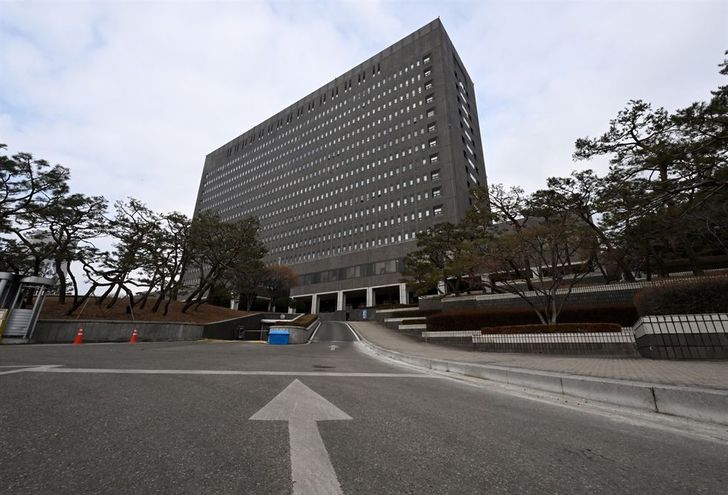
The Seoul Central Prosecutors' Office in Seocho District, Seoul, Feb. 16 / Korea Times photo by Hong In-kee
The party's leadership on Monday urged its members to dismiss the request for consent on lee's arrest, with supreme council member Rep. Jung Chung-rae saying “the DPK will proudly reject the arrest request,” but minor factions within the party are raising doubts over this stance.
“If Lee were to be indicted, he would have to step down from the chairmanship according to the party's charter,” DPK Rep. Lee Sang-min said during a radio interview with broadcaster SBS, Monday. “To exonerate himself, Lee should keep this issue separate from the party.”
The lawmaker said the chairman should voluntarily appear at the Seoul Central District Court for a review related to the arrest warrant, in order to keep his earlier promise of giving up his lawmaker immunity privilege, and this will not change the result because the court will likely dismiss the warrant given the insufficient grounds suggested by the prosecution.
Park Ji-hyun, former interim co-leader of the DPK, said in an interview with broadcaster BBS, Monday, “If the DPK rejects the arrest request at the Assembly, the party will end up losing its cause in legislation efforts and other debates for the public, and everything will lead to 'the bulletproof framing.'”
Against this backdrop, a poll shows that the DPK allowed the ruling People Power Party (PPP) to come from behind to beat it in approval ratings.
According to the Realmeter poll surveyed from Feb. 13 to 17, the DPK's support rate stood at 39.9 percent, down 2.9 percentage points from a week earlier. PPP's support rate reached 45 percent, up 2.5 percentage points during the same period.
The pollster said it is the first time in eight months for the two parties' gap to be wider than the survey's margin of error, 4 percentage points. The poll surveyed 2,504 adults and further details are available on the National Election Survey Deliberation Commission's website.