Presidential hopefuls' outfits are more than just fashion

Former Prosecutor General Yoon Seok-youl visits the National Assembly in Seoul, June 30, a day after he declared his presidential bid. Yonhap
Contenders choose styles, colors to deliver deeper messages
By Kang Seung-woo
While the presidential hopefuls are busy promoting their campaign pledges, they are also trying to appeal to voters with their fashion and style, which play a role in showing who they are, as well as in helping make a good impression on voters ― which is often nearly as important as what the politicians say. Currently, the liberal ruling Democratic Party of Korea (DPK) is going through a preliminary primary to pick its candidate for the presidential election in March next year, while the conservative main opposition People Power Party (PPP) is scheduled to start its selection process in August.
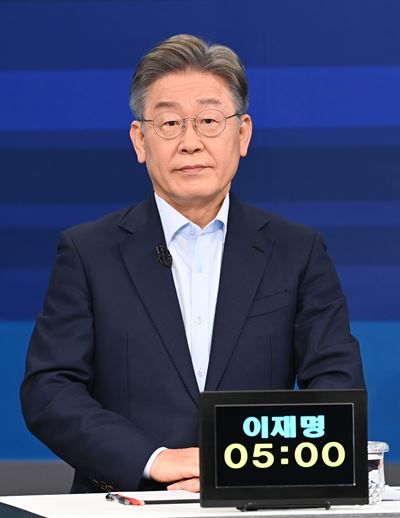
Gyeonggi Province Governor Lee Jae-myung participates in a televised debate at JTBC Studios in Seoul, July 5. Yonhap
Gyeonggi Province Governor Lee Jae-myung, one of the leading presidential contenders from the liberal ruling bloc, appears to be seeking stability in his fashion.
The 56-year-old is refining his “fighter” image and instead displaying a polished and hard-working appearance by not dyeing his hair black as he did in 2017 but instead leaving it grey, and by wearing tight-fitting suits and metal-rimmed glasses, versus horn-rimmed ones.
“The governor has received advice on how to dress through various channels, but the final decision is made by his wife,” said a representative of the Lee campaign.
Compared to Lee, some of the other, older presidential contenders are trying to show voters a dynamic and energetic appearance, through measures such as wearing a suit without a tie.
Rep. Lee Nak-yon, the former DPK chairman and former prime minister, is seeking to shift his previous dignified image by wearing bright-colored shirts and pants, along with loafers.
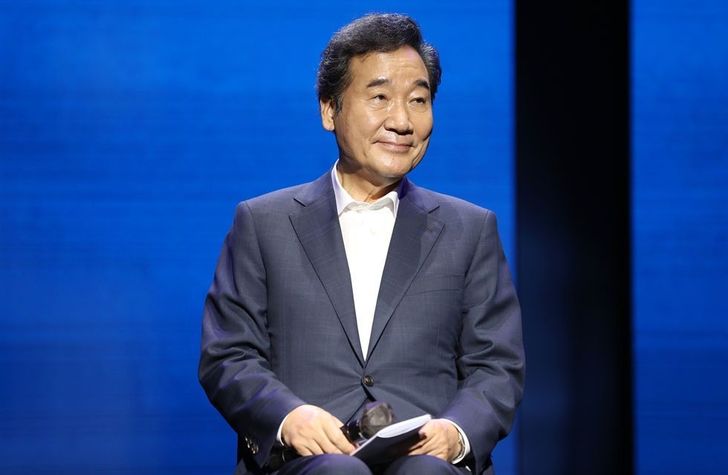
Rep. Lee Nak-yon of the liberal ruling Democratic Party of Korea listens during a DPK preliminary primary in Cheongju, North Chungcheong Province, July 4. Yonhap
Chung Sye-kyun, another former prime minister, prefers wearing blazers and pants as opposed to formal suits, without a tie, in what seems to be a move to appeal to young voters. For example, in a video clip posted on the video-sharing platform, TikTok, in June, Chung, a former six-term lawmaker, wore a leather jacket-featured cowboy outfit and hip-hop clothing with a bucket hat to convey an image of friendliness.
Choo Mi-ae, the former justice minister, prefers attire that reflects the image of a career woman and a reform politician, with a short bob haircut.
Using German Chancellor Angela Merkel as a benchmark, the 62-year-old often dresses in a formal way, with her top and pants the same color, and rarely wearing skirts so as to show her activeness.
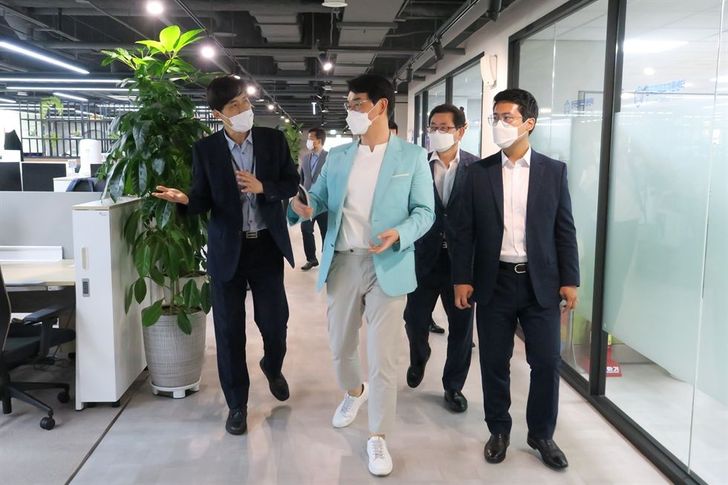
Rep. Park Yong-jin of the liberal ruling Democratic Party of Korea visits the nation's largest start-up support center in Seoul, July 2. Yonhap
Rep. Park Yong-jin, 50, regarded as a leading figure of the younger generation of lawmakers, dresses in business casual attire to show that he is a young and active politician seeking to reform politics. During the first televised debate of the DPK's presidential contenders, he was the only one who dressed down, wearing cotton pants and sneakers.
“Given that Park is the youngest presidential hopeful in the DPK primary, he often wears casual jackets, short-sleeve T-shirts and sneakers,” said a representative from the Park camp.
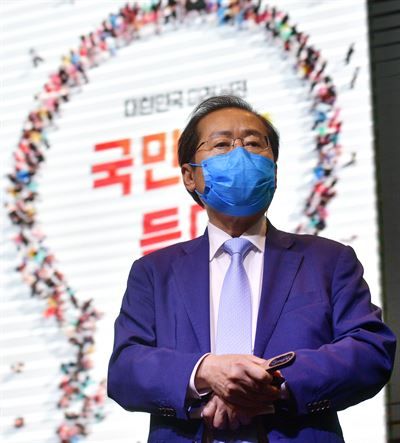
Rep. Hong Joon-pyo of the conservative main opposition People Power Party during a press conference in Seoul, June 29. Yonhap
On the conservative opposition side, Yoon Seok-youl, the former prosecutor general who is a leading presidential hopeful, drew attention during a press conference to announce his presidential bid, last month, and at another public event, by wearing a blue tie.
Given that the color has represented the liberal ruling party in recent years, the choice was seen as suggesting that he is pursuing an image of unity. It also could mean that Yoon is seeking to expand his support base to centrist voters.
Rep. Hong Joon-pyo of the PPP, known for his preference for the color red in his outfits, has been converting to blue as well, as the five-term lawmaker is often seen wearing blue ties and masks, in what, in his case, seems to be an effort to ease his image as a hardline conservative politician.
“I am trying to change my image of 'kkondae,'” he confessed in a recent media interview. “Kkondae” refers to people who are authoritarian and always think that what they say or do is right, while ignoring others' (typically younger people's) points of view.
Yoo Seong-min, a former four-term lawmaker, and Jeju Governor Won Hee-ryong, have both been wearing casual suits to give off a friendly impression, while Rep. Yun Hee-suk, who prefers to wear a black or white vest when appearing in public, is known for dressing unpretentiously, reflecting an image of being plain and unostentatious.
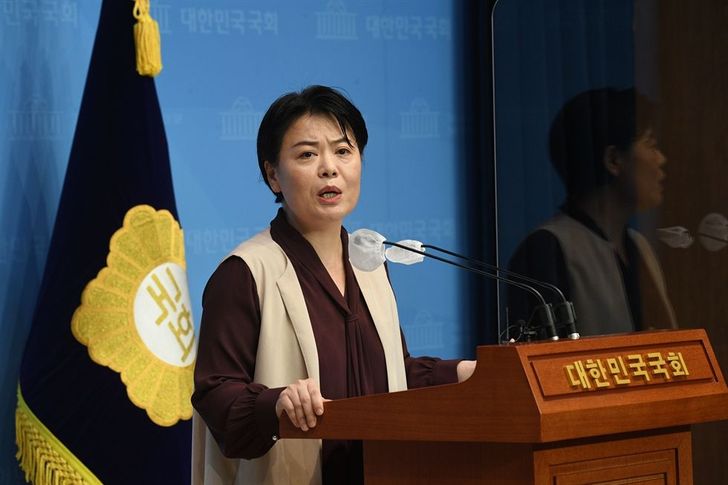
Rep. Yun Hee-suk of the conservative main opposition People Power Party holds a press conference at the National Assembly in Seoul, July 2. Yonhap