INTERVIEW Korea launches electronic travel authorization system

Korea Immigration Service Commissioner Cha Gyu-geun speaks during an interview with The Korea Times at his office in Government Complex Gwacheon, Gyeonggi Province, June 23. Korea Times photo by Choi Won-suk
Pre-screening process to be required for visitors from visa-free countries
By Lee Hyo-jin
Border management has become one of the biggest challenges for countries during the COVID-19 pandemic, as strict control is needed to prevent the spread of the coronavirus, while the right to essential cross-border movement should also be guaranteed.
Korea Immigration Service (KIS) Commissioner Cha Gyu-geun said that swift COVID-19 response measures have been a major task for the immigration authority over the past 18 months, since the coronavirus was first reported here in January 2020
But now, as many countries around the world, including Korea, scramble to reopen borders in the coming months, the KIS is preparing for a possible surge in the number of inbound travelers. To cope with this, it plans to launch the Korea Electronic Travel Authorization (K-ETA) program, an entry system for people from countries that are eligible to enter Korea without a visa, starting in September. Before the pandemic, Korea allowed people carrying passports from 112 countries to enter the country without having first to get a visa from the appropriate Korean Embassy. Currently, due to the pandemic, people from only 21 of these countries are allowed to enter Korea visa-free.
“The implementation of the pre-screening program is essential at this point in time when the number of visitors from abroad is expected to grow alongside the acceleration of coronavirus vaccination drives worldwide,” Cha said during an interview with The Korea Times at his office in Gwacheon, Gyeonggi Province, June 23.
“Under the new measure, passport holders from the list of visa-exempt countries must obtain authorization for their travel in advance (via the K-ETA program), for the safety of the country as well as for their own convenience.”
Korea has continuously expanded the number of visa-exempt countries in order to strengthen diplomatic relations and stimulate tourism.
“But allowing foreign nationals into the country without any entry requirements has brought some side effects, such as an increased number of undocumented foreigners and long waits at immigration checkpoints for those who are required to have further interviews at the airports,” Cha explained.
The KIS has been operating the K-ETA program as a pilot program since May 3. The optional procedure is currently available to passport holders from the 21 countries, and to “priority entrants such as businesspeople” with passports from the remaining 91 countries whose visa-free entry has been temporarily suspended, due to COVID-19.
During the pilot program, foreign passport holders should apply for the K-ETA program through the K-ETA website or mobile app at least 24 hours before traveling to Korea. If approved via email, their travel authorization will be valid for two years, during which they can visit Korea as many times as they wish. Those who have obtained authorization through the process are exempt from filling out an arrival card when they reach Korea.
“During the four-month pilot program until August, the K-ETA application will not be mandatory and the fee will be waived. However, after full implementation from September, it will become mandatory and travelers will have to pay the application fee. Eligible countries will be gradually expanded from the current 21 countries depending on the COVID-19 situation. You can visit the K-ETA website for more information,” the commissioner noted.
Regarding concerns that the pre-screening program may bring about negative impacts on tourism, he said, “Similar policies have been implemented in many countries, such as the United States, Australia and Canada, and no such data indicating that the program has led to a decline in tourists have been reported.”
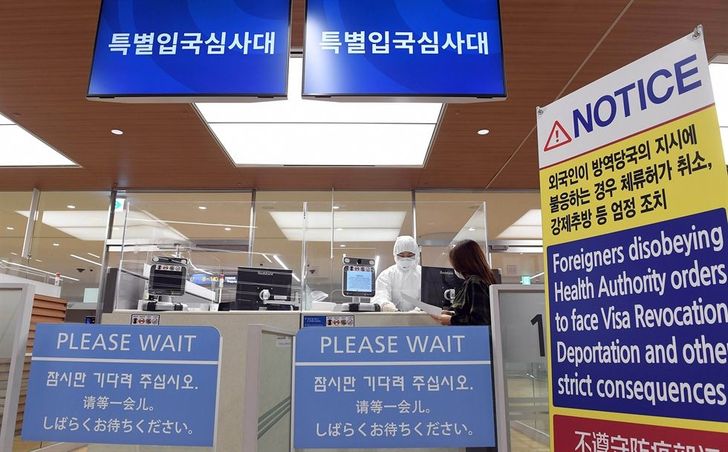
An immigration officer wearing protective gear screens a traveler at a checkpoint in Incheon International Airport, April 8, 2020. Korea Times photo by Shim Hyun-chul
Swift measures to prevent COVID-19 among residents of foreign nationality
One of the most daunting tasks for the KIS during the COVID-19 pandemic has been introducing timely measures to prevent infections among foreign residents here.
The implementation of the re-entry permit system was one of these measures.
“In the first half of 2020, a significant number of foreign residents were found to have re-entered the country after being infected with the coronavirus,” Cha said, explaining that strengthened requirements for re-entry were needed in order to prevent infections being brought into Korea.
Therefore, since June 1, 2020, residents of foreign nationality were required to obtain a re-entry permit if they wish to go abroad and then return on the same visa.
“The measure was not welcomed by many foreigners when it was first imposed, so we had to persuade the foreign community by citing the necessity of the policy for the safety of all residents in the country.”
Through the re-entry permit system, the KIS succeeded in bringing down the infection rate among re-entering foreign residents by half during the latter half of 2020.
It has also ensured anonymous COVID-19 tests for undocumented residents and has suspended crackdowns on them during this unprecedented health crisis, out of concerns that pushing them to go into hiding would make them more vulnerable to infection and pose a bigger risk to public health.
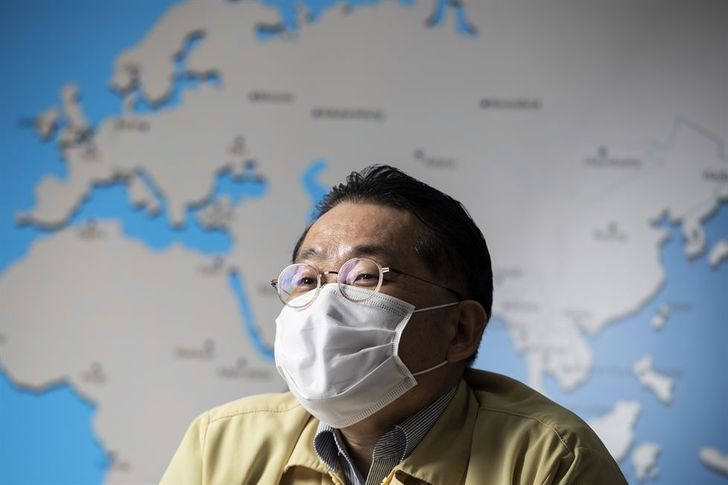
Korea Immigration Service Commissioner Cha Gyu-geun speaks during an interview with The Korea Times at his office in the Government Complex Gwacheon, Gyeonggi Province, June 23. Korea Times photo by Choi Won-suk
“Our mission is to design well-structured policies for foreign nationals by maintaining the balance between many conflicting values, such as the protection of human rights and the best interest of the country,” Cha said.
Discussion on the Nationality Act revision bill
A revision bill proposed by the Ministry of Justice easing the path to citizenship for Korea-born children of permanent residents has been at the center of debate since it was announced in April.
Under the revision, if a permanent resident with close ties to Korea ― i.e., those whose family members have lived here for several generations, or those with historic or ethnic ties to the country ― gives birth to a child here, that child may attain Korean citizenship via an application process.
However, the measure drew a strong backlash amidst a resurgence of anti-China sentiment here, as data showed that the vast majority of eligible applicants (95%) could be ethnic Koreans with mainland Chinese citizenship.
“The policy does not attempt to provide benefits to people of a certain nationality,” Cha said, explaining that it instead aims to help children who lack Korean citizenship build their Korean identity and better adapt to life here, while at the same time securing human resources to tackle the country's low birthrate and aging population.
He stressed that citizenship does not only mean receiving certain benefits, but is also about having certain responsibilities. “Under the system, those who obtain citizenship become subject to mandatory military service, like all able-bodied men with Korean citizenship.”
The commissioner said that the government does not plan to push ahead with the proposal, saying, “We will continue to gather various opinions about the policy, as making changes to the Nationality Act requires a public consensus.”