Moon administration losing fairness, morality

President Moon Jae-in takes off a mask before a virtual Cabinet meeting at Cheong Wa Dae, Feb. 2. / Yonhap
By Kang Seung-woo
The Moon Jae-in administration's emphasis on morality and fairness is being overshadowed by a series of cases featuring former and current senior officials receiving moral rebukes and legal punishment.
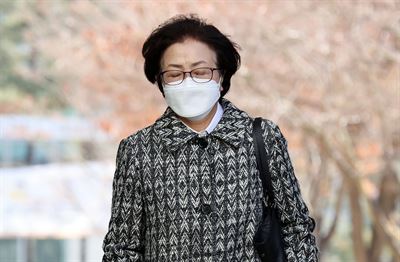
Former Environment Minister Kim Eun-kyung / Yonhap
The opposition is criticizing the government, which took power in May 2017 after former President Park Geun-hye was removed from office due to a string of corruption and influence-peddling scandals, for its two-faced and hypocritical standards.
On Tuesday, Kim Eun-kyung, Moon's inaugural environment minister, was sentenced to two-and-a-half years in prison by the Seoul Central District Court on charges of forcing chiefs of ministry-affiliated organizations, appointed by the Park administration, to resign so she could fill the posts with pro-Moon government figures. Right after the ruling, Kim was taken into custody for fear of destroying evidence.
This was the first time a former member of the Moon administration's Cabinet has been put behind bars for abuse of power. Kim led the ministry from July 2017 to November 2018.
Along with the former minister, Shin Mi-sook, a former senior presidential secretary who was involved in the case, received a suspended prison sentence of 18 months.
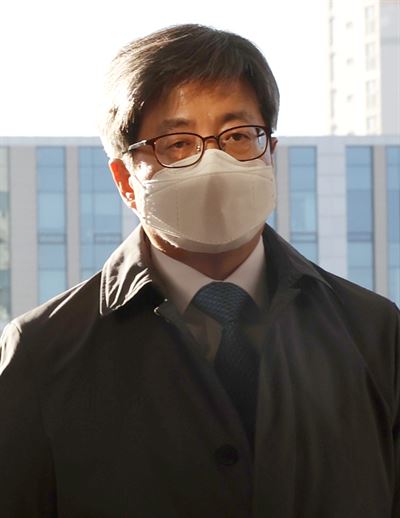
Supreme Court Chief Justice Kim Myeong-su / Yonhap
Cheong Wa Dae failed to make an immediate comment on the convictions, citing a potential appeal, which was in sharp contrast to its previous response. When the environment ministry's “blacklist” allegations emerged in February 2019, the presidential office strongly denied them. And when a warrant to arrest Kim was rejected last year, Moon's office immediately said it respected the court's decision.
A response to the ruling came Wednesday, when Cheong Wa Dae spokesman Kang Min-seok again claimed that the current government had never drawn up any blacklists.
“The Moon administration has respected the terms of the heads of state-run organizations who were appointed by the previous administration,” Kang said in a statement, adding that 330 chiefs and 90 standing auditors served their full terms in office or quit for “legitimate” reasons.
“This case is about whether it is an abuse of power to get resignation offers from the head of affiliates. The higher court will fact-check the matter,” he said.
The brouhaha involving Supreme Court Chief Justice Kim Myeong-su is another scandal dealing a blow to the administration's morality.
Since last week, the chief justice has faced severe criticism after making a false denial linked to the resignation of Lim Seong-geun, a senior judge at the Busan High Court who was impeached by the ruling Democratic Party of Korea (DPK) led National Assembly earlier this month.
According to a recording of a conversation between Kim and Lim, Kim refused to accept Lim's resignation due to a possible backlash from the DPK, which was attempting to oust the judge for allegedly abusing his power during the previous Park administration ― although he was acquitted by a local court. But before the recording was made public, the chief justice had denied the allegations.
Later, the chief justice imputed the false denial to a blurry memory of what happened nine months ago.
Kim is now under heavy pressure from the main opposition People Power Party to step down.
Another controversy involving a ranking government official is the energy ministry's decision on the early closure of the Wolsong-1 nuclear reactor in line with Moon's nuclear phase-out policy.
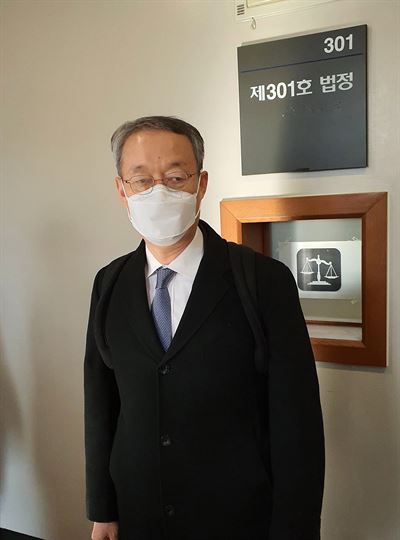
Former Energy Minister Paik Un-gyu / Yonhap
Although former Industry and Energy Minister Paik Un-gyu evaded arrest over his alleged abuse of power in making the decision, allegations are still escalating that the presidential office pulled strings during the process. The country's second-oldest reactor was shut down in December 2019, three years ahead of schedule.
Prime Minister Chung Sye-kyun told an interpellation session last week that it was strange for the closure of the nuclear reactor, a policy decision, to be subject to a judicial decision, something Cheong Wa Dae agreed with.
“Morality and fairness were the two key things the public had high hopes for from the Moon administration, but a series of incidents are placing the current government in the hot seat. These are things it might have wanted to avoid,” Hangil Research director and political analyst Hong Hyeong-sik said.
“However, considering the current government's style, President Moon is not expected to apologize or express regret.”