'Late Kim Hak-soon was trailblazer of #MeToo movement'
By Bahk Eun-ji
The brutality of Japan's sex slavery came to light when late former sex slave Kim Hak-soon, then 67, publicly testified about her experience for the first time in 1991. Lee Na-young, a professor of sociology at Chung-Ang University and the new head of The Korean Council for Justice and Remembrance for the Issues of Military Sexual Slavery by Japan (Korean Council) said Kim Hak-soon was the trailblazer of the #MeToo movement in Korea.
The group organizes the famous weekly vigil in front of the Japanese Embassy in Seoul, and Lee has replaced former head Yoon Mee-hyung who is starting a new career as a lawmaker from June.
“Kim's testimony was the beginning of the #MeToo Movement in Korea as it led people to recognize the responsibility of the perpetrators, and structural problems in society,” Lee said during a recent interview with Yonhap.
Born in 1924, Kim was forced into sexual slavery, to be a so-called “comfort woman” for Japanese troops between 1941 and 1942. In 1991, she came forward to describe her harrowing experience and filed a suit against the Japanese government.
There are no accurate statistics, but it's estimated that almost 200,000 women from Korea, China and other countries, were held captive and forced to provide sex for Japanese soldiers.
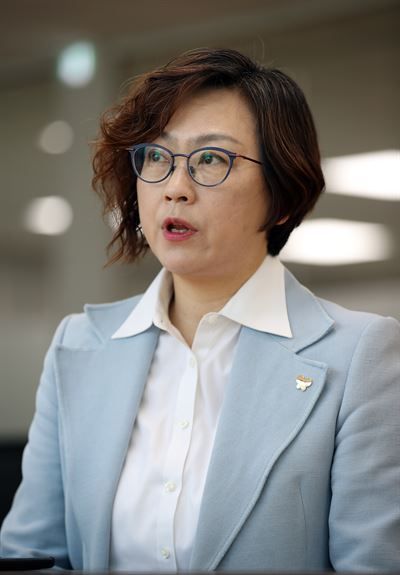
Lee Na-young, a professor of sociology at Chung-Ang University and head of The Korean Council for Justice and Remembrance for the Issues of Military Sexual Slavery by Japan. Yonhap
Lee expressed regret that Koreans still have a simple perception of the experiences of the victims even though the issue has been promoted.
“Comfort women were surely rooted in Japan's imperialism and colonial rule, but at the same time, the issue also reflects the social background of the misogynic culture that exploited women, and classism that utilized women in the lower classes who were looking for employment at that time,” Lee said.
She said the misogynic culture still exists and sexual violence still frequently takes place in society, citing the recent “Nth Room” case which refers to a massive digital sex abuse and exploitation case, involving dozens of victims, both women and young girls. The perpetrators called the victims “slaves” and used threats to force them to provide sexual, sometimes violent, photos and videos of themselves.
Lee said the case also directly reflects the patriarchal, misogynistic culture of Korean society.
“There are many young women in their 20s and even teenagers who participate in the weekly protest. I think they have begun to develop solidarity by looking at the sexual violence and human rights violations in society,” she said.