Epidemic derails Moon's summit diplomacy

Korea-China summit in Beijing, December 2019 Yonhap
By Do Je-hae
The national chaos over the COVID-19 outbreak is feared to result in setbacks to President Moon Jae-in’s planned summits this year.
Cheong Wa Dae announced March 4 that it has decided not to proceed with a presidential tour of the UAE, Turkey and Egypt, initially planned to take place later this month. The office explained that the cancelation was due to the President’s decision to focus on dealing with the viral epidemic.
The three nations are not Korea’s diplomatic priorities and the delay of summits may not pose a great setback to the government’s foreign policy. Koreans are more interested in the possible impact the epidemic could have on Moon’s planned summit here with Chinese President Xi Jinping.
Since the previous Moon-Xi summit in Beijing on Dec. 23, 2019, Cheong Wa Dae has been eager to host Xi in Korea in the early half of this year. After the December summit, a presidential aide had said that Xi’s visit in the “early half” of the year was almost certain.
But there are rising speculations that the highly-anticipated visit could be pushed back as the COVID-19 epidemic is unlikely to subside here in the near future, and the Chinese leader is also preoccupied with dealing with the virus outbreak in his own country.
On Thursday, the Japanese government announced that Xi’s state visit to Japan, planned to take place from April 6 to 10, had been postponed, with the new date likely to be after the Tokyo Olympics in the summer. The announcement from Tokyo has triggered concerns that a delay in Xi’s visit to Korea may also be inevitable.
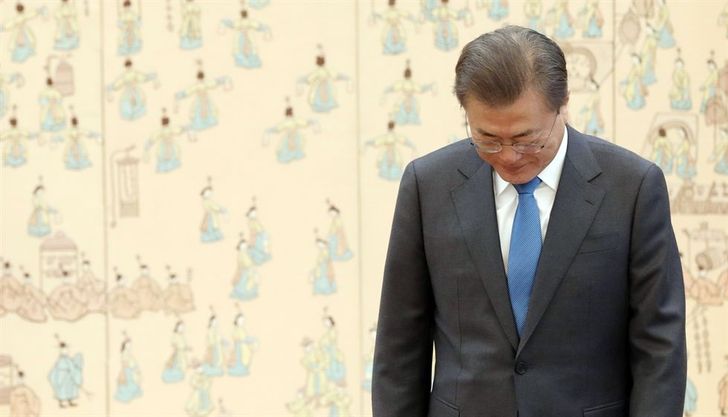
President Moon at Cheong Wa Dae event on March 5 Yonhap
“If the situation is not settled, there could be an impact on Xi’s visit to Korea,” a foreign ministry official told reporters, Tuesday.
The delay, if made, would be a huge blow for President Moon, who has eyed Xi’s visit in the early half as an utmost priority for a much-needed diplomatic achievement, amid mounting difficulties with other major powers such as the U.S. and Japan. Japanese Prime Minister Shinzo Abe announced Friday that his county will restrict travel to and from South Korea for two weeks to prevent the spread of the COVID-19. Korea-Japan relations have already been strained due to disputes over trade and their shared history during the Japanese colonial rule of the Korean Peninsula.
Lack of Beijing's eagerness
The postponement of Xi’s visit also looms large when considering Beijing has not shown Seoul’s level of eagerness with respect to any such presidential visit. The Chinese leader has not been to Korea since July 2014 when the two countries’ relations soured over a dispute on the deployment of a U.S. Terminal High Altitude Area Defense (THAAD) missile system, in Seongju, North Gyeongsang Province, in early 2017. He has yet to reciprocate Moon’s visit to China in December 2017.
China’s Ministry of Foreign Affairs has avoided explicitly mentioning Xi’s visit to Korea in its official statements after the December summit in Beijing, and after a phone call between the two leaders last month. But after each of these occasions, Cheong Wa Dae’s statements clearly underlined Moon’s invitation to Xi.
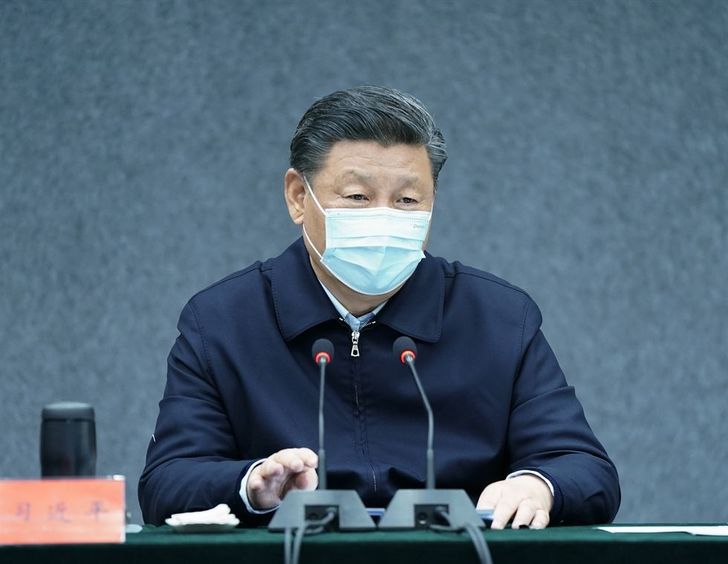
Chinese President Xi Jinping, also general secretary of the Communist Party of China Central Committee and chairman of the Central Military Commission, chairs a symposium at the School of Medicine at Tsinghua University in Beijing, March 2. Xinhua-Yonhap
“Under these circumstances, even if Xi does visit Seoul, the Chinese side may misinterpret Xi’s visit itself as a sufficient diplomatic gift for Korea,” Lee Seong-hyon, director of the Center for Chinese Studies at the Sejong Institute, wrote in a recent column. “On the other hand, the summit gift that China will demand from Korea could include issues regarding Seoul’s siding between Washington and Beijing, amid the deepening U.S.-China rivalry.”
Cheong Wa Dae has sought to ensure that Xi’s visit will take place as early as possible in the first half despite the virus. The President called the Chinese leader on Feb. 20 and offered consolation over the virus, saying “China’s suffering is Korea’s suffering.”