Oscars embraced diversity; what about finance?
By Kim Sang-kyung
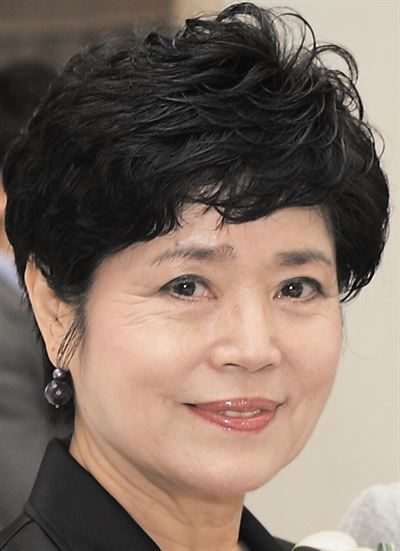
Kim Sang-kyung
An unprecedented result at the Academy Awards in February brought joy to many Koreans as the nation experienced fear and gloom over the spreading novel coronavirus.
The Korean film "Parasite" won not only the coveted award for Best Picture at the Academy Awards, but also took home the awards for Best Director, Best Original Screenplay and Best International Feature Film. It was the first time that an Asian film ― largely marginalized throughout the 92-year history of the Academy Awards ― took center stage.
The U.S. Academy Awards, once arguably a white man's game, exhibited unprecedented change this year, implying that those in the film industry have realized that disregarding diversity does nothing to ensure a box office hit. While late to join the diversity movement ― later, even, than the finance sector ― the impact this change in the film industry has had on people around the world is much greater.
After the 2008 financial crisis, many financial firms took an active role in trying to improve gender disparity within their senior-level positions, promoting an increasing number of women to positions central to business.
The 23rd World Conference of Banking Institutes held in London on Sep. 16 last year, explored the theme of "Growth and Sustainability in an Age of Disruption," and related discussions that took place focused largely on climate change, and gender equality concerns.
Concerning climate change, discussions highlighted the fact that, while not proactively trying to slow down climate change could result in the destruction of mankind, governments around the world were pre-occupied with economic growth rates and thus not adequately contributing to global action. Talks concluded that financial firms, in order to be sustainable, need to support businesses that are developing technology to prevent climate change.
Discussions also centered on the fact that, for financial businesses to sustain growth, they need to improve gender diversity. I spoke on the topic of gender equality at this conference attended by 600 professionals of 50 countries.
I was invited because I am from the country with the thickest glass ceiling among OECD member states. At the conference, I spoke about why I had chosen to work for a foreign financial firm. My reason was that Korean entities put women at a disadvantage from the start by making them pledge to quit work when they marry.
I also spoke about the hardships I endured for decades as a female professional in the financial sector. Audience responses implied that many people were surprised at the circumstances for women in Korea, considering that it is an advanced economy.
What I found most interesting about this conference was that the issue of gender equality was dealt with under the theme of "conduct and culture." This suggested that fostering a certain culture is much more effective than legislated quotas.
But for a culture to be formed, continued effort over a number of generations is needed. The dominant frame of thought within the financial sector for the past few decades has been that motivating yourself relentlessly and remaining loyal to your company were the shortcuts to success.
Therefore, a lot of value was placed on a male-centered way of working, which required one to overwork. Recently at global companies, however, we are seeing a culture that is redefining the concept of success. Regardless of gender, firms now have an increasing preference for people with diverse and new ideas, rather than those who are ready to strain themselves to work extra hours. This presents an advantage for women.
When I worked for a foreign financial firm, I knew some of my female colleagues were being discriminated against, but I managed to set myself apart. I believed that I could succeed if I did my best. I was not able to perceive how important gender diversity was, as the only female business leader at the time.
I was only able to admit to my mistakes when I realized that the workplaces of my two daughters were going to be much tougher than mine. Currently, I am mentoring female professionals in the finance sector to help them climb further up the corporate ladder.
Still, if you take a look at the gender ratio of executives at conglomerates, the bare minimum being achieved appears merely as a token to show that the company does not discriminate based on gender. My wish, therefore, is that other women who are in 'queen bee' positions do not make the same mistake that I did.
Korea now leads in various sectors ― as can be seen not only in the case of Parasite sweeping prizes at the Academy or Cannes awards, but also BTS spreading K-pop, and Samsung Electronics leading the smartphone and semiconductor industries. But the nation's financial sector is still lagging behind. I hope Korea also becomes a global financial powerhouse through promoting gender diversity.
The writer leads the Korea Network of Women in Finance and the Korea International Finance Institute.