Seoul to keep up momentum for China diplomacy

President Moon Jae-in hugs Chinese Ambassador Qiu Guohong at an aiport in Chengdu, China, in December 2019 before taking off to Seoul. Courtesy of Cheong Wa Dae
By Do Je-hae
The spread of the coronavirus originating from Wuhan, China, has brought additional diplomatic challenges for Seoul.
The “Wuhan virus” has aggravated the hostility toward China felt by some Koreans following China's criticisms of the encroachment on its national sovereignty with its opposition to the 2017 deployment of Terminal High Altitude Area Defense (THAAD), a U.S. missile defense system deployed in Korea.
Cheong Wa Dae's online petition site has been flooded with demands from Korean citizens to ban the entry of Chinese nationals after Seoul confirmed its fourth case of the coronavirus. As of Tuesday morning, more than 500,000 people supported a “temporary ban” on the entry of Chinese nationals.
The presidential office has been hesitant to respond to the roaring calls for the ban, although they are supposed to respond to petitions with more than 200,000 supporters. Some of the supporters underlined that North Korea has imposed an entry ban and criticized the government's “weak response” in dealing with China on this issue. Cheong Wa Dae has only said that it will act in accordance with the World Health Organization (WHO) regarding the entry ban.
Despite the rising calls for the entry ban, the presidential office is mindful that giving in to the rising anti-China sentiment may not be a wise move at this point when the two countries are finally starting to mend bilateral relations after a protracted standoff over THAAD.
President Moon and Chinese President Xi Jinping held a summit in Beijing in December 2019. It is widely expected that the Chinese leader will visit Korea in the spring, which would be his first visit here since July 2014. Cheong Wa Dae has eyed the potential visit as a key opportunity to improve bilateral relations. But concerns are rising that the virus epidemic could negatively impact the diplomatic ties with China.
“President Xi's visit to Korea in the first half of the year has been under bilateral consultation. We do not think that the virus outbreak has any relation to the summit,” a presidential aide said Tuesday. “With regard to the virus epidemic, the governments of the two countries should cooperate for a swift response.”
The presidential office also revealed Tuesday that Xi had sent a letter to Moon to congratulate him on his birthday on Jan. 28. Moon also sent a reply, but his office did not share the details of the letters exchanged between the leaders of the two countries.
For Cheong Wa Dae, keeping up the momentum for China diplomacy is vital, considering that it has had little progress in other diplomatically challenging areas such as North Korea or Japan. For the first time in years, Beijing will soon send an ambassador who is fluent in Korean and has special expertise on Korean affairs. Ambassador to Mongolia Xing Haiming, who has been tapped as the successor to Qiu Guohong, is expected to arrive in Seoul later this month, according to diplomatic sources.
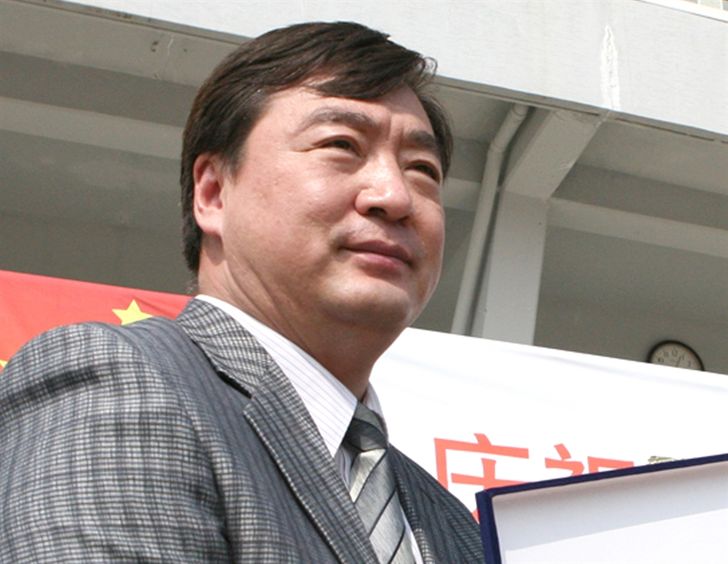
Incoming Chinese Xing Haiming is an expert on Korean affairs. Korea Times
The government's first priority has been to efficiently respond to the viral outbreak and assuage public concerns. On Tuesday, Cheong Wa Dae announced that Korean nationals will be evacuated by chartered aircraft from China's Hubei Province on Thursday and Friday. In addition, Cheong Wa Dae will hold a daily meeting to check on the situation starting Tuesday. President Moon Jae-in also visited the National Medical Center in Seoul on Tuesday and vowed to make all-out efforts to contain the spread of the disease.