VIDEO Civic societies can solve decades-long conflict between Japan and Korea: Japanese activist

Hideki Yano, 69, a Japanese activist who heads a Tokyo-based NGO dedicated to promoting civic groups' joint action for historical settlement of the wartime Korean forced labor issue, talks about his views on the conflict between the two countries during an interview with The Korea Times at the Press Center in central Seoul, Wednesday. Korea Times photo by Choi Won-suk
By Jung Da-min
Video by Lee Min-young, Kim-Kang-min
Seoul-Tokyo relations seem to be at their lowest since 1965 amid an ongoing trade row. But there is hope that the conflict could be resolved through the solidarity between civic groups of Japan and South Korea, said a Japanese activist.
Hideki Yano, 69, who has dedicated 24 years to promoting civic groups' joint action for historical settlement of wartime forced labor issues, said Seoul-Tokyo relations have passed many points of inflection in different fields including not just politics but also economy and culture. His battle to win civic groups' support started in 1995 when he received a request from surviving Zainichi Korean victims of forced labor asking for help to win a legal suit against Nippon Steel.
Although many positive changes have resulted from cultural exchanges between Seoul and Tokyo, he feels a “sense of crisis” these days when it comes to gaps in historical awareness, Yano said during an interview with The Korea Times at the Press Center in central Seoul, Wednesday. He was visiting Seoul to attend civic groups' events with surviving victims of forced labor.
“The declaration of a Japan-South Korea partnership by South Korea's then-President Kim Dae-jung and Japan's then-Prime Minister Keizo Obuchi in 1998 has led to a cultural opening between the two countries. The number of Japanese people who love K-pop and K-dramas significantly increased,” he said.
“But the only thing that was regressing was historical awareness.”
Yano pointed out that the essence of the ongoing conflict between Seoul and Tokyo is rather of how to settle historical issues including the wartime forced labor one that dominates his focus, rather than the trade row which has also spread to security.
The Japanese government began the trade restrictions against Seoul starting July with a tightened rule exports of some key materials for chipmakers in an apparent retaliation following the South Korean Supreme Court's decisions last year that ordered Japanese companies Nippon Steel and Mitsubishi to compensate surviving South Korean victims of wartime forced labor during the 1910-45 Japanese occupation.
The trade row later spread to security centering around the General Security of Military Information Agreement (GSOMIA) between the two nations, in the wake of Tokyo's removal of Seoul from its list of countries receiving preferential treatment in trade procedures citing “security” reasons.
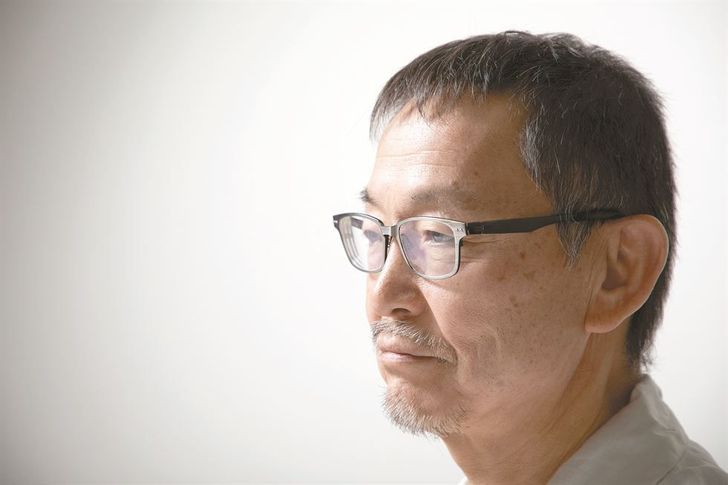
Hideki Yano Korea Times photo by Choi Won-suk
Yano said although Abe was pushing ahead with trade retaliation, he does not represent all of Japanese society.
“Stripping Seoul of its whitelist country status is like saying South Korea is not a trusted country in terms of security matters. But the GSOMIA is about guaranteeing security by sharing military intelligence among South Korea, Japan and the U.S. I do not believe these two can go together,” he said.
But the crisis of Seoul-Tokyo relations in politics and economy did not mean it is also a crisis in terms of people-to-people exchanges, he noted.
“There are still many civil exchanges going on between people of Japan and South Korea. I arrived last night in Seoul and heard the flight just ahead of mine was all booked. An official with an airline company told me there were still many people coming to South Korea from Japan,” he said.
“The issue of victims of wartime forced labor is one which civic groups in Japan and South Korea have been working on in solidarity for nearly 30 years since the 1990s. I believe this solidarity will never be shaken, even in the current aspects (of political and economic conflict). There are also many young people in Japan who have interests in historical issues and this means there is a hope in the future.”
Yano said Seoul-Tokyo relations have matured for the past 54 years since 1965 when the two countries agreed on the Treaty on Basic Relations but Japanese Prime Minister Shinzo Abe should make a formal apology to the victims of forced conscription to get ties between the two countries back on track.
"Abe never apologized after the South Korean Supreme Court made the compensation order on Oct. 30, 2018. ... But Japan should not forget that there are people who are still suffering from the pains caused by the remaining thorns of the stab wounds,” he said.