Reporter's Notebook What's all the fuss about past heroes?
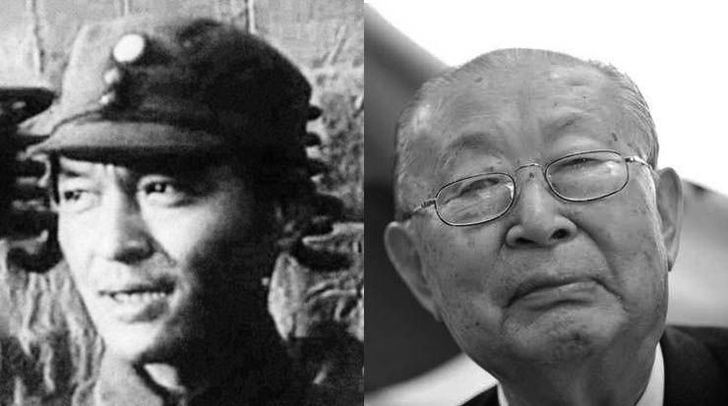
Late General Kim Won-bong (1898-1958), left, and General Paik Sun-yup (1920-). Korea Times file
66 years on since armistice, ideological conflict further polarizing South Koreans
By Jung Da-min
While President Moon Jae-in was delivering a speech at a ceremony marking the 64th Memorial Day at the National Cemetery in Seoul on June 6, some right-wing activists were staging an anti-Moon rally on the other side of the cemetery.
Moon in his speech called for the unification of liberal and conservative factions beyond the ideological conflict that has continued for nearly 70 years, But he sparked another ideological battle with his remarks giving credit to Gen. Kim Won-bong, leader of a secret society called the Korean Volunteer Corps, for his independence activities in the 1930s and 1940s against Japanese imperialism.
Lawmakers of conservative parties including the main opposition Liberty Korea Party (LKP) and the minor opposition Bareunmirae Party have criticized Moon for honoring Kim, citing that he later served the North Korean regime before being purged in 1958.
Four days after Memorial Day, LKP leader Hwang Kyo-ahn paid a visit to General Paik Sun-yup, who served as a South Korean army division and corps commander and army chief of staff during the 1950-53 Korean War, in an apparent move to strengthen the ideological solidarity of conservatives. General Paik is now serving as the chief consultant at the Institute for Military History under the Ministry of National Defense.
Lawmakers of the ruling liberal Democratic Party of Korea this time criticized Hwang for visiting Paik, citing that Paik took part in operations to suppress resistance to the Japanese occupation as a member of the Gando Special Forces in the state of Manchuria, then a puppet state in Northeast China under the Japanese Empire. Paik was later officially recognized as a collaborator by the Committee for Investigating Pro-Japanese and Anti-National Activities launched by a special act in 2005.
What we can see from this continued conflict between the liberal and conservative camps is not just some keywords like pro-North Korea and pro-Japan, but the fact that ideologies used for each camp's political logic are further polarizing people's thinking, strengthening themselves while being repeated over and over again for nearly 70 years since the Korean War.
The problem is that ideologies in South Korean politics are often used as tools to sway public opinion while they bolster blind faith as opposed to objective assessment. And further, while there are active discussions about the heroes of the past like Kim Won-bong and General Paik, the discussions over current issues at the National Assembly such as the government's extra budget or bills regarding electoral reform and establishing a new investigative body for corruption cases have not seen any progress for months.
Sixty-six years ago on July 27, 1953, the signing of the Korean Armistice Agreement ended fighting in the Korean War. Regrettably, however, South Korea's ideological conflicts continue to drag on. When people talk about peace on the Korean Peninsula, many say 70 years are “enough” for the two Koreas to overcome the painful memories of conflict and reconcile with each other. But probably and hopefully, 70 years are also enough for South Koreans to overcome the ideological conflicts among themselves.