Prosecution's discontent builds up against judiciary reform bill
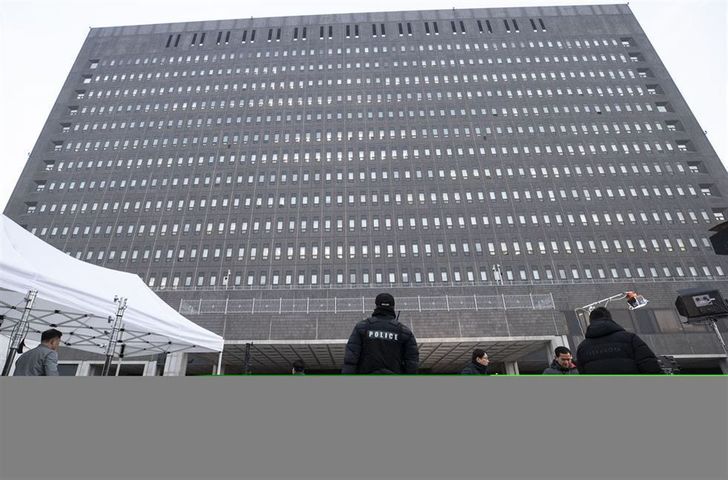
Seoul Central District Prosecutors' Office in Seocho, Seoul / Yonhap
By Lee Suh-yoon
The top prosecutor's public opposition to a judiciary reform plan is triggering a flurry of angry comments from prosecutors, as if implemented it will give greater autonomy to the police in investigations and divide the prosecution's exclusive power to indict with a new anti-corruption agency.
With more critical comments emerging among junior and senior prosecutors toward the plan, one of President Moon Jae-in's key policy goals, concern is rising that the issue could produce another case of collective insubordination by the prosecution similar to one in 2005, also regarding a plan to reduce its power.
Prosecutor-General Moon Moo-il openly expressed his opposition Wednesday to the judiciary reform bill that was recently fast-tracked at the National Assembly. In addition, the online bulletin board at Epros, the prosecution's intranet, has been flooded with complaints that the reform would make the police too strong if they were given “unchecked” investigative powers on top of its primary intelligence-gathering function.
“This bill has no purpose but to make the prosecution a scarecrow,” one wrote.
Another wrote: “The bill failed to properly consider the fundamental functions of the police and the prosecution, and what is really happening in the field during an investigation.”
“We'll lose when we give up; we need to unite and fight until the end,” another wrote. “The Supreme Prosecutors' Office should collect opinions from prosecutors nationwide and keep talking with the government, so the reform plan will not only side with the police.”
Other members of the judiciary also spoke out against the proposed bills.
“It seems this new agency for probing high-ranking government officials will be given both the powers of investigation and indictment. Who will keep it in check?” Kim Tae-kyu, a senior judge at Busan District Court, wrote on Facebook, Thursday. “High-ranking law enforcement officials, prosecutors, and judges ― the main targets of its investigations ― will have to kneel before the agency.”
Curbing the prosecution's power had been campaign promises by past presidents as well as the incumbent President Moon. Prosecutors in Korea hold the sole right to close an investigation, file for arrest warrants and indict a suspect. Police can only initiate a criminal investigation and hold suspects in emergency detention, while being subject to prosecutors' orders if the prosecution decides to step in.
Some prosecutors have called for self-reflection, agreeing that their power has been unchecked and not free from abuse.
“The public, who granted the prosecution with its far-reaching authority, can no longer trust the prosecution to exercise this power. The people now want to take some of those powers back,” Im Eun-jung, a prosecutor, said on social media, Wednesday. “It's not like we prosecutors did not have time (to change). Our efforts were lacking, and the prosecutor-general should have announced a letter of apology instead.”
But Im is in the minority. Mass resignations and disobedience by members of the prosecution such as in 2005 when the late former President Roh Moo-hyun tried to rein in the prosecution's powers, are a looming possibility.
If the bill is passed, the prosecution will no longer have a monopoly over criminal indictment ― sharing this power with a new agency to be set up specifically to investigate corruption by high-ranking civil servants, including members of the prosecution. Though the prosecution will retain its power to directly investigate large-scale crimes such as corruption, embezzlement and violation of the Election Law, police will also be granted the right to independently investigate and close other criminal cases.