Kim Jong-un takes Vietnam as case study

A Vietnamese policeman patrols near the Hanoi Metropole Hotel, a location thought to be the venue for the second United States-North Korea summit, Feb. 27. Korea Times photo by Choi Won-suk
NK leader to stay in Vietnam until Saturday
By Kim Yoo-chul
HANOI ― North Korean leader Kim Jong-un will stay in Vietnam until Saturday, according to North Korea's state media and Vietnamese government officials, Wednesday.
The Korea Central News Agency (KCNA) said Kim Jong-un will meet with U.S. President Donald Trump for their historic second summit on Feb. 27 and 28 and stay in Vietnam until March 2.
No information was available on Kim's itinerary during his stay, but sources here told The Korea Times he plans to visit factories and popular local attractions to get a glimpse of Vietnam's economic development.
In many ways, Kim's visit to Vietnam will be similar to his trip to Singapore last summer. The first Trump-Kim meeting failed to produce substantial results, but the summit was also an opportunity for the North Korean leadership to get an impression of Singaporean capitalism.
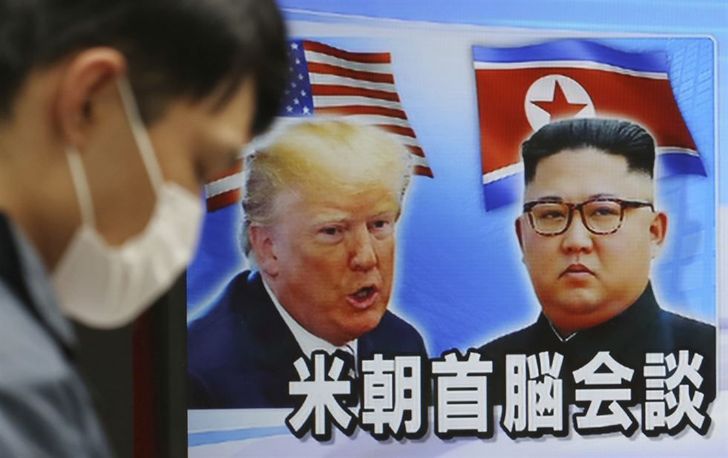
A man walks past a TV screen showing U.S. President Donald Trump and North Korean leader Kim Jong-un in a news program in Tokyo, Feb. 27. AP-Yonhap
Economic advisers to Kim and senior North Korean government officials visited a plant operated by Vietnamese vehicle startup Vinfast in Haiphong, Wednesday afternoon, and were the guests at a dinner banquet with their Vietnamese counterparts, a source who with direct knowledge of the issue said. The region is home to many booming Vietnamese firms started with financial assistance and support from foreign capital.
“The visit to the company by the North Korean delegation was led by Oh Soo-yong, who handles economic policies for North Korea,” said the source, adding Vinfast was the first Vietnamese car manufacturer that did not rely on foreign capital. The delegation left the Melia Hanoi Hotel at around 10 a.m. (KST), Wednesday, and first headed to Ha Long Bay.
Vietnam was one of the poorest countries in the world after being devastated by a long war that ended in 1975. After the war, the country was isolated from the world with very little access to global markets and international financial support.
But 1986 marked a huge turning point as the country successfully embarked on “Doi Moi” (renovation) reforms. The government loosened its grip on the economy gradually through deregulation and opening up to foreign trade.
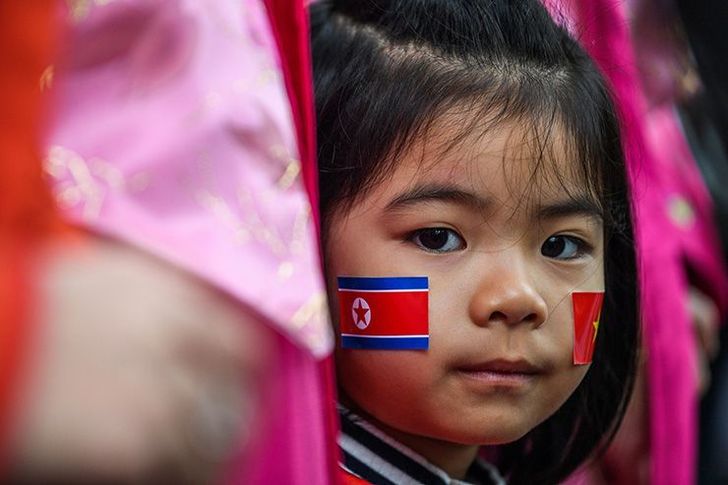
A child, wearing Vietnam and North Korea’s flag stickers on her cheeks, waits outside the Vietnam-North Korea Friendship Kindergarten in Hanoi, Wednesday. AFP-Yonhap
Thirty years have passed since, and Vietnam has experienced an “economic miracle” and has become one of the leading economies in Southeast Asia. Per capita GDP has risen over 11 times that before the reforms were started.
“But more importantly, the ruling Communist Party has still managed to retain a very tight hold on power despite the rapid economic development. Kim's visit to Vietnam will be a good learning experience for him in terms of how to mix and blend several factors for economic growth,” one Vietnamese government official said on condition of anonymity.
The United States, for its part, is very keen to see North Korea take some pages from Vietnam's economic history book and achieve the same success. Trump said North Korea has great potential to become an economic powerhouse.
“In line of the once-unimaginable prosperity and partnership we have with Vietnam today, I have a message for Chairman Kim Jong-un: President Trump believes your country can replicate this path,” U.S. Secretary of State Mike Pompeo said on a trip to Vietnam last summer.