KAI wants to tap into commercial aviation business

KAI engineers assemble the company's FA-50 light attack fighter jet to be exported to the Philippines, at its manufacturing facility in Sacheon, South Gyeongsang Province, in this file photo. / Courtesy of KAI
Gov't urged to support local aerospace players
By Lee Min-hyung
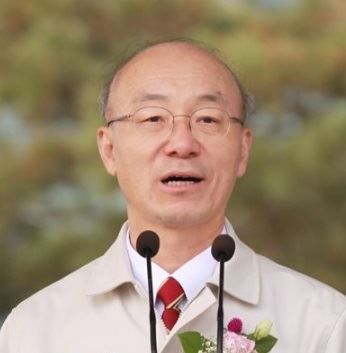
KAI CEO Kim Jo-won
SACHEON - The Korea Aerospace Industries (KAI) plans to increase its presence in commercial airplane manufacturing amid weak profitability from military aircraft production.
KAI CEO Kim Jo-won said diversifying revenue sources will be crucial for the firm's future, saying it should not be satisfied with its dominant position in domestic military aircraft sales. The firm makes up for the unit's weak profitability by relying on exporting military aircraft and parts for commercial airplanes.
“It is not a huge challenge for us to manufacture passenger planes (in terms of technological capability), but it remains unknown whether we can sell it well here,” KAI CEO Kim Jo-won told reporters visiting its manufacturing facility in Sacheon, South Gyeongsang Province, last week.
The firm's shift to passenger planes reflects concerns it may not be able to succeed in the business without strong support from the government which regulates the nation's aerospace business.
The KAI chief went on to underline the need for the company to expand its sales volume for civilian sectors.
“Demand for passenger and civilian aircraft is on a steady growth,” he said. “KAI is confident it will generate much better sales performance if it can operate in the passenger aircraft business under an atmosphere where the government encourages home-grown aircraft manufacturers to tap into the area.”
For example, the government can make it a rule for only local aircraft makers to supply passenger planes in use for ongoing inter-Korean reconciliation projects, according to Kim.
“Let's say that the two Koreas reach an agreement to allow South Korean tourists to visit Mount Paektu in the North,” Kim said. “In this situation, airplanes will top the list for possible transportation options to bring South Koreans to the mountain.”
If local aerospace players are only allowed to manufacture planes for the project, this will be a big revenue area not just for KAI, but other home-grown aerospace companies here, according to the KAI chief. This will help heighten national interest, enabling local aerospace players to enhance their capability to manufacture more commercial planes and sell them abroad, he said.
Aircraft maintenance
KAI also identifies the aircraft maintenance, repair and overhaul (MRO) business as one of its next key growth areas.
Most local low-cost carriers outsource maintenance of their aircraft to Southeast Asian countries, including Mongol, as they have cheaper labor costs.
As the MRO market comes with huge growth potential down the road, KAI hopes to expand its presence in the area.
According to market researcher ICF International, the global MRO industry will be worth $100.6 billion (114 trillion won) in 2026 from $68 billion in 2016.
The Korean government is also seeking to take advantage of the lucrative MRO market, in its bid to reduce local carriers' heavy maintenance reliance on overseas markets.
In December last year, the Ministry of Land, Infrastructure and Transport named KAI as the government-supported MRO business player, as the company has enough maintenance and repair experience with military and passenger aircraft.
The aerospace business consists of three major areas: airplane production, its operation and maintenance.
“In particular, KAI views the MRO business as its next major cash cow,” said an official from the company. “We have enough local demand for the aircraft MRO, which means the business is not risky. That is why we hope to tackle growing market uncertainty by tapping deeper into the stable revenue area.”