North Korea willing to hand over nuke list: expert
By Kim Yoo-chul
North Korea has a “serious intention” to possibly hand over a list of its nuclear warheads to the United States if Washington applies reciprocal measures in exchange for North Korean leader Kim Jong-un's determination to abandon its nuclear programs, a senior U.S. expert said.
“I didn't expect such a nuclear list to be handed over at the Pyongyang summit. However, I hope that there are serious expressions of intent to do so backed by additional signs for Washington that Moon is able to convey to Trump so as to jump-start the negotiation process between the United States and North Korea,” Scott Snyder, the director of the U.S.-Korea policy program at the Council on Foreign Relations, said in an email interview, Thursday.
Snyder, also chief Korea analyst at the council, said intent was largely based on a better-than-expected outcome from the third inter-Korean summit this year with the North's Kim committing to move toward abandoning its nuclear programs, subject to corresponding moves by the United States.
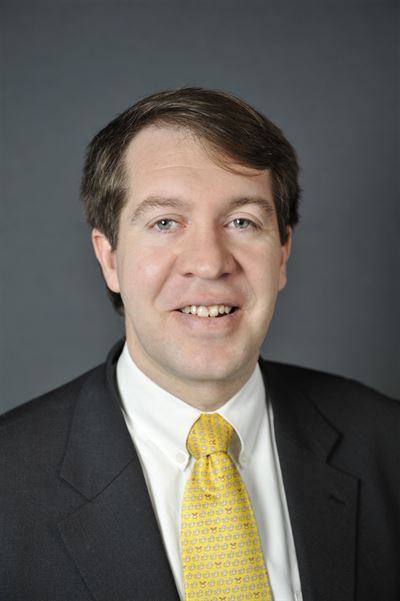
Scott Snyder, director of the U.S.-Korea policy program at the Council on Foreign Relations (CFR), the United States. Courtesy of CFR
But the expert warned that any overhyped-expectations about the pace of inter-Korean relations may bring unexpected results.
“I think Moon got more than he expected on denuclearization and tension reduction, but the projected pace of inter-Korean relations seems a bit over-optimistic. It is not clear whether Moon got enough to satisfy Trump _ we will find out about that next week,” Snyder said in the interview.
According to his observations, President Moon “exceeded earlier expectations” as the South Korean leader convinced his North Korean counterpart Kim to treat him as a “serious interlocutor” on nuclear disarmament issues that have traditionally been “saved” for negotiations with the United States.
“The result of the summit is better than expected in almost every area, but in some areas such as economic cooperation there are increasing risks of leaning too far forward without the necessary justification that will only be provided by tangible evidence of nuclear and conventional threat reduction on the Korean Peninsula,” said Snyder.
Regarding questions about Moon's ambitious assessment policies to highlight South Korea's ability to fulfill the country's self-assigned role of mediator, Snyder said President Moon mediated the stalled dialogue process on denuclearization quite successfully.
“Moon's given role was difficult because there has been the risk of getting caught in the middle, and Washington expected President Moon to be a go-between while remaining on the American side. Moon risks losing his influence with Washington if he gets too close to Pyongyang,” Snyder said.
U.S. President Donald Trump hailed the results of the summit between the leaders of the two Koreas. While the future of the denuclearization talks is subject to the degree of concessions to be offered from Washington, Snyder said upcoming reciprocal action from the United States could include U.S. commitment to guarantee the North's security.
“I have no reason not to take Trump's personal expressions on North Korean regime security at face value,” he responded.
A complete denuclearization, if it happens, is less likely to hurt the geopolitical order of Northeast Asia despite wishes from China and Russia to cut the number of U.S. forces stationed in South Korea during the dialogue process.
“No. The alliance commitments between South Korea and the United States and how they are fulfilled are solely a matter to be decided upon by Washington and Seoul. The U.S. troops stationed in South Korea will be adjusted in proportion to the shared sense of threat and capability needed to ensure Seoul's protection against those threats,” he said.