Local elections are about foreigners, too

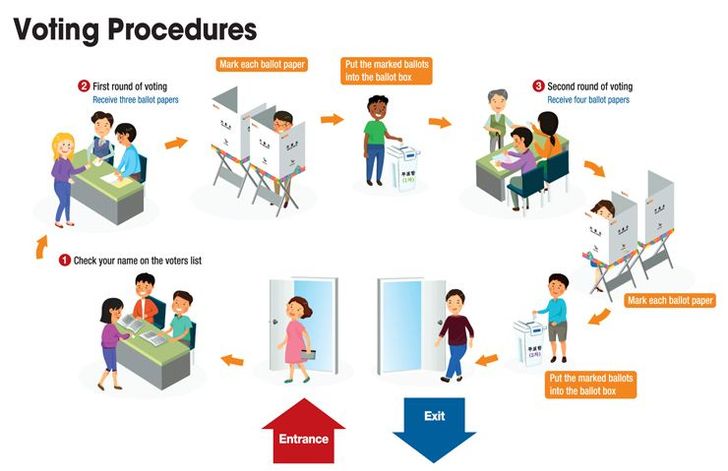
Immigrants participate in a mock poll organized by an election office at Seoul Station, May 31, in preparation for the June 13 local elections. / Yonhap
By Park Ji-won
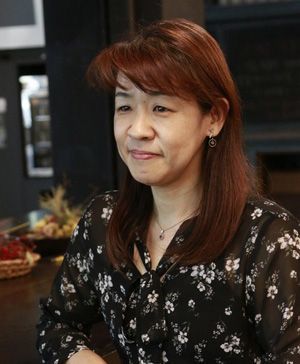
Makiyama Kumi

William Turner
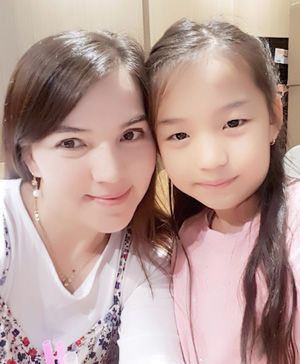
Sharipova Mahbuba
A ruling Democratic Party of Korea (DPK) candidate's approach is notable for one big difference -- the slogan on Ansan city councilor candidate Choo Yun-ho's campaign cards and banners is in Chinese.
In 2005, the voting law was revised to allow permanent residents to vote in local elections, seemingly to allow all members of a community to have a voice. This is why foreigners who have not naturalized still cannot vote in national elections.
He appears to be appealing to foreign voters in the Gyeonggi Province precinct where there are many Chinese citizens and Chinese-Koreans as well as other foreign workers.
The number of eligible foreign voters in this local election has more than doubled to 106,205 since the last local elections in 2014. Korea is a rarity in Asia -- a non-immigrant society that gives voting rights to foreign residents.
To be eligible to vote, foreigners must hold an F-5 permanent resident visa for at least three years.
Many foreigners say they are surprised at the election campaigns in Korea, especially the campaign songs and choreography, which they never see in their own countries.
“I saw people dancing during an election campaign in Seoul -- that is way more exciting than in Japan,” said Makiyama Kumi, 49, who came to Korea in 1993, but is voting for the first time.
“Japanese political campaigns are is a bit boring,” she said. “Koreans are more cheerful than Japanese in political campaigns. I like the campaign song Baby Shark.”
William Turner, 40, who came to Korea from New Zealand in 2001, said, “I was surprised how easy it was. There didn't seem to be much to do. You just walk in, write on a piece of paper, walk up to a booth and vote.”
However, many eligible foreign voters do not know whether they have the right to vote or how to vote because of difficulty in getting information about their rights and about the candidates.
According to a National Election Commission (NEC) survey, the number of foreign voters who actually voted in 2014 decreased by 17.6 percent to 8,512 out of 48,428 eligible voters from 35.2 percent (4,527) in 2010.
The survey results are contradictory considering the number of eligible voters continues to rise.
Many foreigners do not know that they have voting rights.
Sharipova Mahbuba, 34, an Uzbek married to a Korean man, said she only learned she could vote when she received information pamphlets.
“It is hard for me to know about the election and candidates,” she said.
“I am still hesitating to vote because I have little knowledge about the candidates. But I feel bad if I don't vote because I have the right to vote. It is hard for me to know about the elections because the pamphlets are all written in Korean,”
Many other interviewees also said the main reason they did not vote was lack of information or the language barrier.
“In the past, I wasn't so interested in local politics because it is clearly difficult for foreigners to get information about candidates, especially local candidates,” Turner said.
He even asked during the interview with The Korea Times when and how to vote in these local elections.
“There are too many words in the pamphlets advertising his or her pledges. It is hard to read all of it. It might be good to have one piece of paper that explains candidates' promises in sum,” Makiyama said.
“For people like us, there should be ways, such as programs or gatherings, to let people know about candidates. Otherwise, we follow our husbands' opinions because we have no way to know about candidates.”
Some people pointed out the lack of diversity among the candidates.
“They all look too same to me. I don't see very much diversity. In terms of the kind of people who are candidates, it is usually ajeossi, or middle-aged men,” Turner said.
“I don't know why it is always some old guys. Why don't they have a variety of people? Where are the young people? Where are the women? I don't know where they are. I don't understand.”
The government's approach seems to be failing many foreigners. The election committee has not provided further candidate information in other languages. It only provides information about voting procedures in English, Chinese, Vietnamese and Japanese.
“We have no plans to provide candidate information in other languages as we are busy with other jobs for the present election,” an NEC official said.
The official said the NEC provides guidelines about the voting process in English and Chinese every year and holds mock voting exercises at multicultural centers.
“Because it is not a legal obligation to give foreign language pamphlets to foreigners, some are not receiving English or Chinese guides. We have the foreign language guides online, but in the elderly and handicapped category. We will improve this situation in the next local elections,” the official said.
Critics said the government knows little about foreign voters.
“The NEC cannot even answer questions about the laws on foreign suffrage,” said Song In-sun at the Gyeonggi Global Center, where he helps immigrants to settle in Korea.
“Government officials just repeat the answer that anyone who has registered can vote. Even the little information available is centered on multicultural centers.”
Song said laws dealing with foreigners are contradictory in defining political activities.
“According to the Immigration Control Law, foreigners are not allowed to engage in political activities. But voting is a political activity. According to municipal ordinances, foreign residents are treated as local people,” Song said.
“The immigration law and voting rights for foreigners are completely contradictory. The former law should be revised because foreigners are excluded from the election process. Also, there are no protocols in translating foreign languages. Translation is not based on the number of foreigners in Korea.”
Lawyers point out the present situation is problematic because the range of political activities can be misunderstood.
“The fact that there is suffrage for foreigners is not well-known to the public,” Park Young-a, from law firm Gonggam, was quoted as saying on the Pressian website.
“There are no policies for foreigners -- candidates in local elections don't consider them as voters.”