Lawmakers endorse prosecutor general
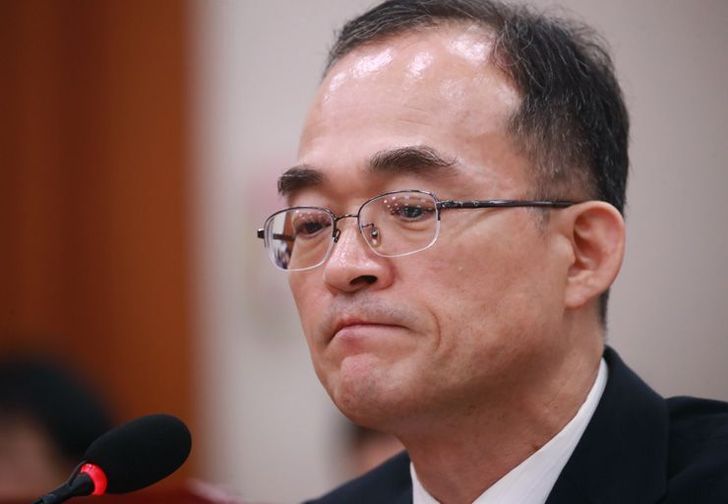
Mun Moo-il, the nominee for the country’s next prosecutor general, purses his lips during a confirmation hearing at the National Assembly, Monday. / Yonhap
By Jung Min-ho
The National Assembly endorsed Mun Moo-il as prosecutor general after heated discussions on reform of the prosecution during his confirmation hearing Monday.
The quick confirmation seemed to take many by surprise.
Mun’s view on the prosecution was adamant all along: the prosecution will not change unless it is forced to.
While answering questions from lawmakers, Mun said prosecutors should not give up any of the powers they have, claiming they were necessary to better serve the people.
Mun expressed opposition to key parts of President Moon Jae-in’s sweeping reform plan for the prosecution which has lost public trust over the years.
He voiced an objection to the government’s plan to allow police officers to have more investigative powers while prosecutors retain the power to indict suspects.
“Prosecutors need to be able to investigate some cases directly,” Mun said. “Nevertheless, I also believe prosecutors investigate too many cases directly. I will come up with a system to solve the problem.”
Another key pledge of President Moon was to set up an independent body that can investigate and indict suspects so that prosecutors will not be able to “pick and choose” cases to fit their tastes. It is also about preventing the prosecution from going easy on criminal cases involving prosecutors.
Mun avoided answering questions about the need for such an institution, saying, “We can find a better system.” But in a written reply he submitted to the National Assembly, he noted making such an institution can be viewed as unconstitutional because it may violate the people’s basic rights.
Asked about his views on the prosecution’s exclusive power to request warrants from courts, Mun again refused to give a clear answer, saying “Korea’s warrant system needs to change to a certain extent, but it is difficult to give you one, clear solution for its problems.”
The prosecution’s political neutrality is the only thing he clearly promised during the hearing in response to opposition lawmakers’ questions.
His ambiguity and lack of willingness to reform the prosecution is already drawing extensive criticism. Many say he does not seem to be the right person to spearhead the tough mission.
But political parties have not revealed their opinions about the nominee yet.
Korean prosecutors exercise boundless discretion in making crucial decisions, including how to investigate cases themselves or by directing police, whether criminal charges should be filed and what the charges should be, without having their powers checked.
Reforming the prosecution was one of the key pledges in the Moon government’s five-year plan, which was announced last week.