Moon nominates law professor for justice minister
By Kim Rahn
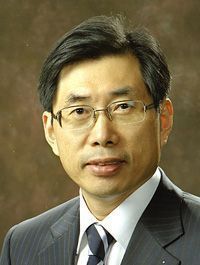
Park Sang-ki
President Moon Jae-in picked a law professor as his designated justice minister Tuesday, 11 days after the former nominee quit amid multiple corruption allegations.
Park Sang-ki, 65, a Yonsei University Law School professor and a co-representative of the Citizens’ Coalition for Economic Justice, was tapped for the post.
Park is also a former head of the Korean Institute of Criminology and a former chief of the Korean Association of Criminology. He majored in law at Yonsei and obtained his doctorate at the University of Gottingen.
The nomination of the professor shows Moon’s strong determination to reform the legal circle by selecting a non-legal professional for the post, which used to be filled with former prosecutors or judges. Moon’s earlier pick, former National Human Rights Commission head Ahn Kyong-whan, also had no experience as a legal professional.
“Park is a jurist who has made efforts to reform the nation’s legal system,” presidential spokesman Park Soo-hyun said. “He is a thinker and doer, with his activities for legal reform ranging from the academic circle and civic movements to legal administration. He is the most suitable person to lead the government’s drive to reform the ministry, make the prosecution politically neutral, and improving public legal services.”
Moon initially named Ahn for the post. But he quit five days after the nomination amid allegations including filing a marriage certificate without the consent of the woman involved, making misogynistic comments in his books, and exercising his power to prevent his son from being expelled from a high school over a rules violation.
Considering this, the spokesman said Cheong Wa Dae deeply examined the new nominee’s background to check for any past wrongdoings that would become a possible disqualifying factor. Park Sang-ki has to undergo a National Assembly confirmation hearing, although parliamentary consent is not legally necessary for the President to appoint him.
After the nomination, he told reporters, “If I’m appointed, I’ll try my best to reform the prosecution and the ministry, including setting up a separate investigative body for high-profile government officials, which is one of the Moon government’s top policy plans, based on my experience as a scholar and civic activist.”
Rights commission chief
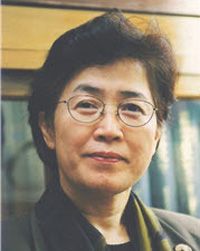
Pak Un-jong
Moon also appointed Pak Un-jong, a Seoul National University law professor, as the chairwoman of the Anti-Corruption and Civil Rights Commission.
The post does not require a National Assembly hearing so Pak took office immediately upon the announcement.
Pak, 65, is also a non-standing director at the Korea Legal Aid Corp., and is a former vice head of the presidential National Bioethics Committee and former chief of the Korea Human Rights Foundation. She majored in law at Ewha Womans University and obtained her doctorate at the University of Freiburg.
“She has expertise and insight on various rights issues including social minority protection and bioethics,” the spokesman said. “We believe Pak can help make a transparent society by protecting citizens’ rights, rooting out corruption and revising unreasonable administrative systems.”
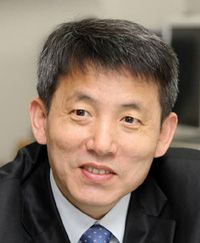
Lee Jin-gyu
For vice minister of science, ICT and future planning, Moon promoted Lee Jin-gyu, the head of the ministry’s policy office, to the post.
Lee, 54, obtained his bachelor’s and master’s degrees in naval architecture and engineering at Seoul National University and a doctorate in technology management at the University of Missouri. He has held various posts at the ministry.
“Lee is highly recognized for having abundant knowledge in science and technology and ability for policy coordination. He also has a good network in the science sector,” Park Soo-hyun said.