Murder of runaway teen exposes gaps in protection system
Summary
A 59-year-old man surnamed Jin was formally detained Friday in connection with the killing of a 15-year-old girl at a shared accommodation facility in Jeongneung-dong, Seoul. Police are also investigating a 26-year-old woman surnamed Kim over allegations that she involved the girl in prostitution and theft. The case has raised concerns about gaps in protections for runaway teenagers, including limits on shelters’ ability to keep young people safe. Experts say vulnerable teenagers can be manipulated by adults who offer food and accommodation.
Key Facts
- The Seoul Northern District Court issued an arrest warrant for Jin, citing concerns that he might destroy evidence or flee.
- The victim’s family alleges that Kim psychologically manipulated the girl into prostitution and stealing money and valuables from her home.
- Temporary shelters allow runaway youths to stay for up to seven days, while short-term shelters allow stays of up to two years.
- A 2024 Ministry of Gender Equality and Family survey found that 30.2 percent of at-risk youths surveyed had used a youth shelter after running away, while 58.3 percent had stayed with friends, acquaintances or peers.
- In September 2023, the Busan District Court sentenced a man in his 30s to 10 years in prison for forcing a teenage runaway into prostitution after contacting her through social media.
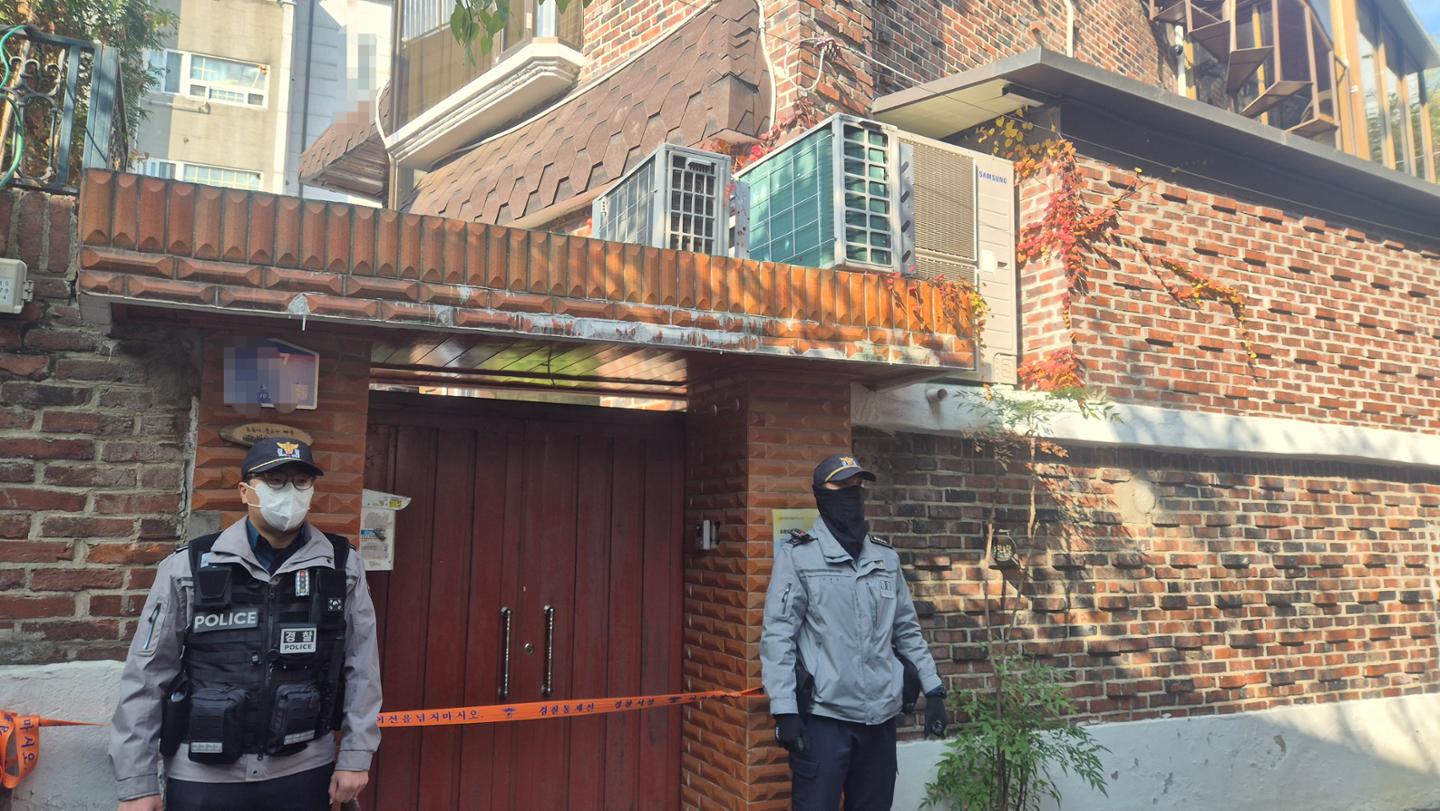
Police officers guard the scene of a murder in a residential neighborhood in Jeongneung-dong, Seongbuk District, Seoul, where a man in his 50s allegedly killed a teenage girl, Wednesday. Korea Times photo by Lee Jae-myung
The murder of a 15-year-old girl in Seoul's Seongbuk District has drawn attention to the dangers posed by adults who approach runaway teenagers with promises of food and shelter but may exploit them for criminal purposes.
The case has also raised concerns about gaps in Korea's protection system for young people living away from home amid allegations that the victim, who had been moving between youth shelters, was coerced into prostitution and other criminal activities.
According to police and other authorities Sunday, a 59-year-old man surnamed Jin, who was arrested on suspicion of killing the girl at a shared accommodation facility in Jeongneung-dong, Seongbuk District, was formally detained Friday and remains under police investigation.
The Seoul Northern District Court issued an arrest warrant for Jin, citing concerns that he might destroy evidence or flee. Jin has reportedly been uncooperative with investigators, including refusing to answer questions.
While investigating the motive behind the killing, police uncovered indications that a 26-year-old woman surnamed Kim, who had previously been in a common-law relationship with Jin, may have involved the victim in other criminal activities.
The victim's family alleges that Kim psychologically manipulated the girl into engaging in prostitution and stealing money and valuables from her home. The family also suspects that Kim played a role in the girl's decision to run away.
Police in Nowon District are investigating Kim on suspicion of forcing the girl into prostitution through a messaging application and stealing money and valuables from men seeking paid sexual encounters.
According to police investigations and other accounts, the girl had frequently run away from home. Since early this year, she had reportedly been staying mainly at temporary shelters for runaway youths, where residents are allowed to remain for up to seven days.
Although short-term shelters that allow young people to stay for up to two years are also available, the girl did not use such facilities. The reasons she relied exclusively on temporary shelters remain unclear.
Experts say the case illustrates how existing safeguards for vulnerable teenagers are failing to function effectively, with youth shelters struggling to fulfill their role as a last line of protection.
Under the current system, shelters have no authority to force young people to remain at a facility or transfer to another shelter if they refuse.
According to a 2024 survey of young people using support services for at-risk youths conducted by the Ministry of Gender Equality and Family, only 30.2 percent of respondents said they had used a youth shelter after running away from home. More than half, or 58.3 percent, said they had stayed with friends, acquaintances or peers.
"Further investigation is needed to determine whether the girl preferred temporary shelters or whether there were difficulties connecting her with a short-term shelter," a ministry official said.
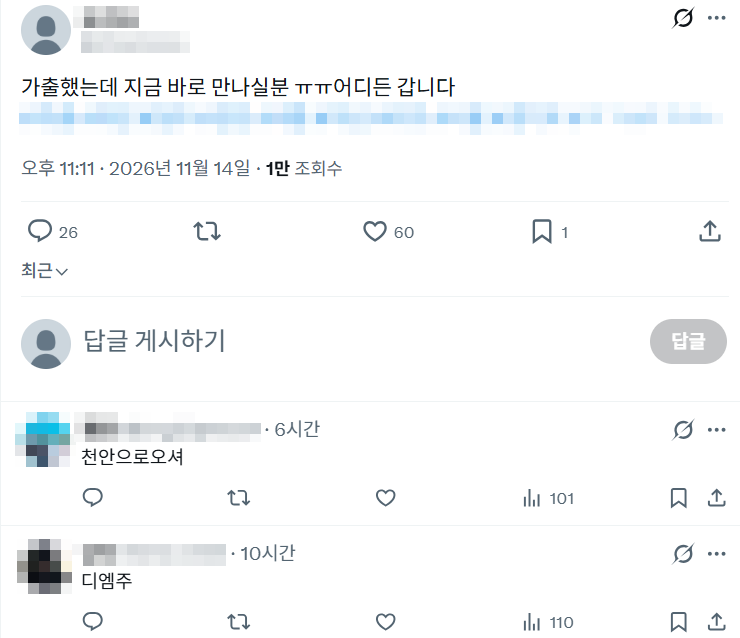
A social media post on X, formerly Twitter, saying the user has run away from home draws replies offering help and asking the user to check direct messages Saturday night. Captured from X
Such gaps in the protection system create opportunities for people to approach vulnerable teenagers.
These individuals use social media platforms to contact young people who have run away from home, promising free accommodation, meals and other assistance.
At around 11 p.m. Saturday, a user posted a message on X, formerly Twitter, saying, "I've run away from home. Is anyone available to meet right now?"
The post quickly attracted 26 replies.
"Send me a direct message. I'll provide free food and accommodation," one reply said. Others said, "Come to Cheonan" and "I'm in Busan."
The concern is that many of these offers may be linked to criminal exploitation, with perpetrators seeking to involve runaway teenagers in prostitution, theft or other illegal activities.
In September 2023, the Busan District Court sentenced a man in his 30s to 10 years in prison for violating the Act on the Protection of Children and Youth Against Sex Offenses and other laws.
The man had contacted a teenage runaway girl through social media and brought her to his home, where he forced her to engage in prostitution.
Experts warn that teenagers who lack parental attention and family support can be particularly vulnerable to psychological manipulation, making it difficult for them to recognize that they are being exploited.
"Teenagers who lack family care and parental attention can become targets of gaslighting and may not even realize that they are victims of crime," said Heo Min-sook, a legislative researcher at the National Assembly Research Service.
"We first need to examine how youth shelters can provide comprehensive support for these young people," she said.
This article from the Hankook Ilbo, the sister publication of The Korea Times, was translated by a generative AI system and edited by The Korea Times.
Explore More
- Q.
- Q.
- Q.