Korean student’s body awaits autopsy as rescue response faces criticism
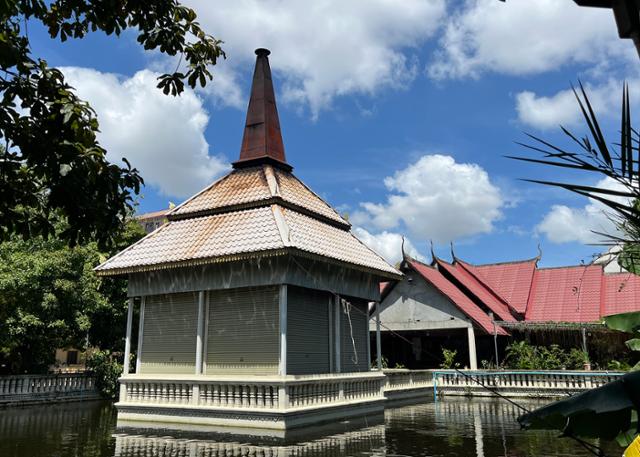
The crematorium at Tuktla Temple in Phnom Penh, Cambodia. The temple currently houses the body of a Korean college student surnamed Park, who died in August after being tortured while confined in an online scam compound in the Bokor Mountain area. Hankook Ilbo
PHNOM PENH, Cambodia — “Every year, at least three or four Korean bodies are brought here,” said a worker at a temple crematorium in Phnom Penh, Cambodia. “Most of them are young. Another man in his 30s was cremated just a few days ago.”
The worker spoke at Phnom Penh’s Tuktla Temple on Friday. This is where the body of a 22-year-old Korean student surnamed Park has been kept since August. Park was found dead after being kidnapped and tortured in a crime compound in Kampot’s Bokor Mountain region.
Park had left for Cambodia on July 17, telling his family he was “attending an expo.” His body was discovered a month later. Foreigners who die under suspicious circumstances or without family in Cambodia are usually sent to this temple, which houses facilities for cremation and body preparation.
“The Chinese are the most common here, but lately we see more Filipinos and Koreans,” the worker said, pointing toward the temple’s morgue. “The number of Korean victims seems to be increasing.”
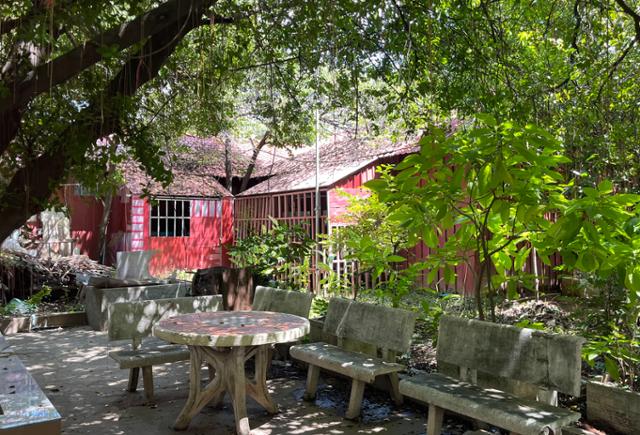
The morgue inside Tuktla Temple in Phnom Penh, Cambodia. The body of a Korean college student surnamed Park, who died after being held and tortured in an online scam compound in the Bokor Mountain area, remains stored there. Hankook Ilbo
When asked if Park’s body showed visible signs of assault, the temple worker said, “I couldn’t confirm anything with the naked eye. The police who transported the body didn’t make any particular comments either.” An autopsy is expected to take place on Monday or Tuesday, after which his remains will be cremated and repatriated to Korea.
Flawed ‘self-reporting’ rule leaves victims helpless
While Cambodian authorities continue to investigate Park’s death, experts say the tragedy underscores a deeper problem: Victims of trafficking and confinement have almost no realistic way to seek help.
Currently, the Korean government advises victims to report directly to Cambodian police, citing limited jurisdiction. The Korean Embassy’s official guidance for “fraudulent employment or confinement cases” instructs victims to use Telegram to contact Cambodia’s national police hotline (117).
However, the process is far from practical. Victims must describe their situation in English, provide their exact location and photos of the building, list a reachable phone number and include the building name and unit number. They are also required to submit a passport copy, a recent photo and even a short video stating “I want to be rescued.” The embassy’s website warns that no report will be processed until all of these materials are submitted.
Such procedures are nearly impossible to complete for those living under constant surveillance. A 28-year-old Korean man surnamed Kim, rescued after five months of forced confinement in Sihanoukville, told the Hankook Ilbo that “it was impossible to report directly.”
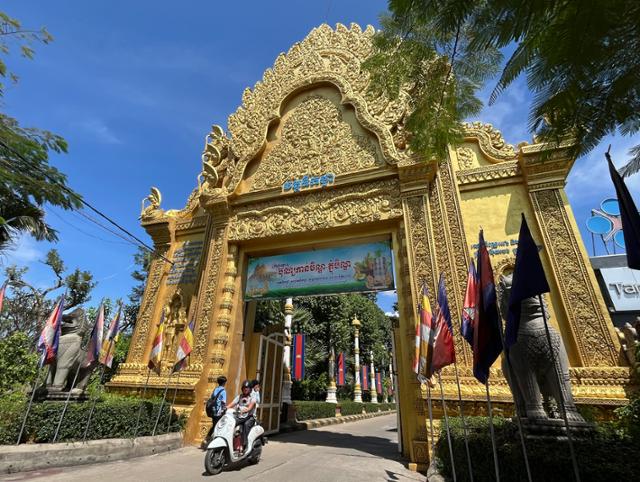
The entrance to Tuktla Temple in Phnom Penh, Cambodia / Hankook Ilbo
“They took my passport and phone,” Kim said. “I borrowed a guard’s phone to message a Korean restaurant nearby, but the syndicate was monitoring Wi-Fi traffic. They caught me within two hours and tortured me.”
Despite such cases, some in the local Korean community say Cambodian police insist on direct reporting for a reason. “When third parties reported cases, police often arrived to find victims denying they were being held,” one long-time resident said. “Some were rescued only to return to another compound. It’s disheartening.”
Unlike Korean police, Cambodian law enforcement rarely responds immediately. Rescues often depend on personal connections or local intermediaries.
Following mounting criticism, both governments have agreed to form a bilateral crime task force to streamline procedures and strengthen coordination in human trafficking investigations.
But for now, as Park’s body remains in the temple morgue awaiting autopsy, the tragedies continue — silent reminders of young Koreans lured by false promises, trapped in a system that too often fails them.
This article from Hankook Ilbo is adapted by a generative AI system and edited by The Korea Times.