‘It’s practically a prison city’: Inside Sihanoukville’s largest scam compound
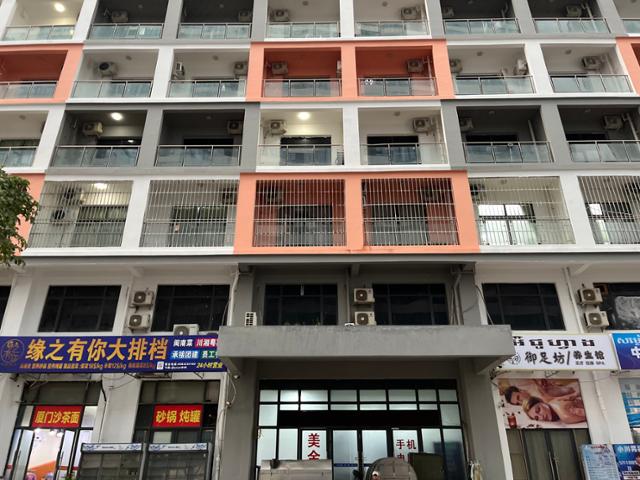
A building in Sihanoukville, Cambodia, believed to be part of a scam compound, shows windows sealed with iron bars on Wednesday. Hankook Ilbo
SIHANOUKVILLE, Cambodia — Rows of gray buildings with thick iron bars line the streets of Sihanoukville, about 250 kilometers southwest of Phnom Penh. Near the city’s Chinatown stands Cambodia’s largest so-called “yuanqu” — a slang term in Chinese criminal circles describing a “scam compound.”
Inside these complexes, online crimes such as voice phishing and romance scams are part of daily life. Young people from Korea and other countries are kidnapped or lured by Chinese-run syndicates, then stripped of their passports and phones and forced to commit fraud. Iron bars sealed the lower floors, apparently to stop captives from jumping off balconies in an attempt to escape.
Surrounded by 3- to 4-meter-high concrete walls topped with barbed wire and even shards of broken glass, the compound looked more like a high-security prison than an apartment block. Closed-circuit cameras were installed on nearly every corner.
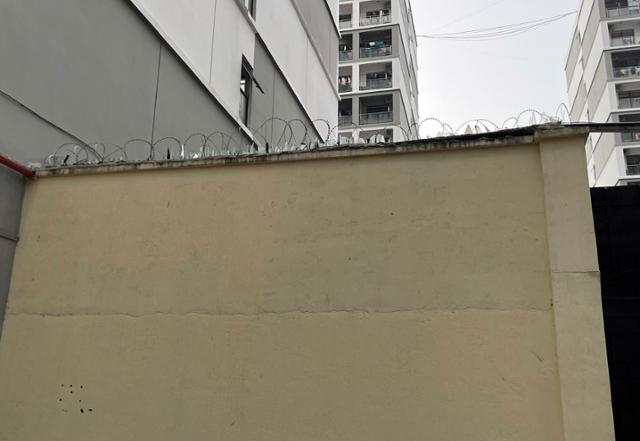
Barbed wire and shards of glass can be seen on the wall of a suspected scam compound in Sihanoukville, Cambodia, on Wednesday, apparently to prevent captives escaping. Hankook Ilbo
Armed guards kept watch over the area. When this reporter stepped out of the car to take pictures, one glared in warning. There was only one entry gate, where each visitor and vehicle was thoroughly checked.
Local residents said most of the operations were led by Chinese nationals, though some Koreans served as middlemen. According to Amnesty International, at least 53 compounds of this kind are scattered across Cambodia.
A Korean restaurant owner nearby said, “Many of these compounds even run their own internal canteens. Sometimes we get delivery orders for gimbap or kimchi from casinos or buildings like that. When we deliver, a Chinese man usually comes out to pick up the food.”
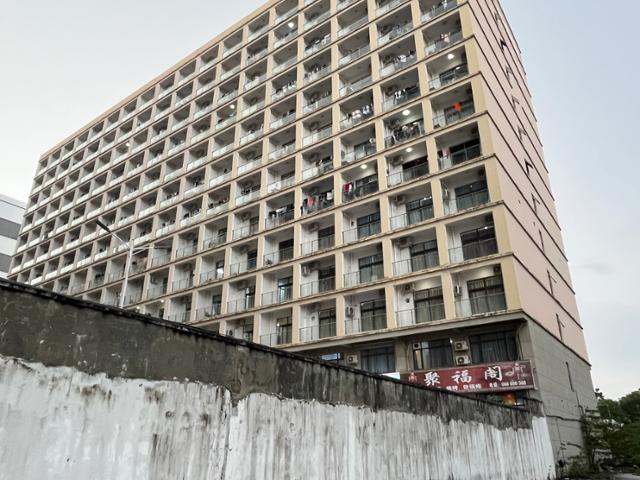
A building surrounded by high walls in Sihanoukville, Cambodia, is believed to be part of a criminal scam compound. Hankook Ilbo
The crimes are not limited to these gray, prison-like compounds. Many of the city’s luxury hotels and casinos also conceal scam operations.
Two Korean men the reporter met at the Sihanoukville provincial police office said they had been locked on the 13th floor of a city hotel and forced to conduct voice phishing calls before being rescued. In that 15-story building, the first 10 floors were regular guest rooms, while the upper five floors served as the criminal group’s base.
A local Korean resident pointed to the reporter’s own hotel and said, “That place used to be a yuanqu compound too, before it was converted into a hotel.”
Oh Chang-soo, head of the Sihanoukville Korean community and a missionary who helps rescue Koreans held captive, described the situation starkly: “The entire city of Sihanoukville is practically a prison.”
He added that on the previous night, a Korean man in his 20s who was trapped in a hotel casino called him for help and tried to meet near a small opening in the wall, but gave up. “He said the security surveillance was too intense,” Oh said.
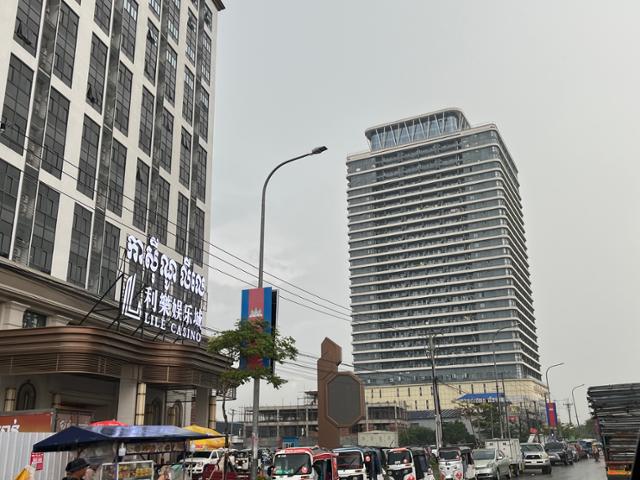
A hotel in Sihanoukville, Cambodia, where the upper floors are reportedly being used as a base for voice phishing scams. Hankook Ilbo
This article from the Hankook Ilbo, the sister publication of The Korea Times, is translated by a generative AI system and edited by The Korea Times.