Two foreigners caught smuggling 'zombie drug' mephedrone into Korea
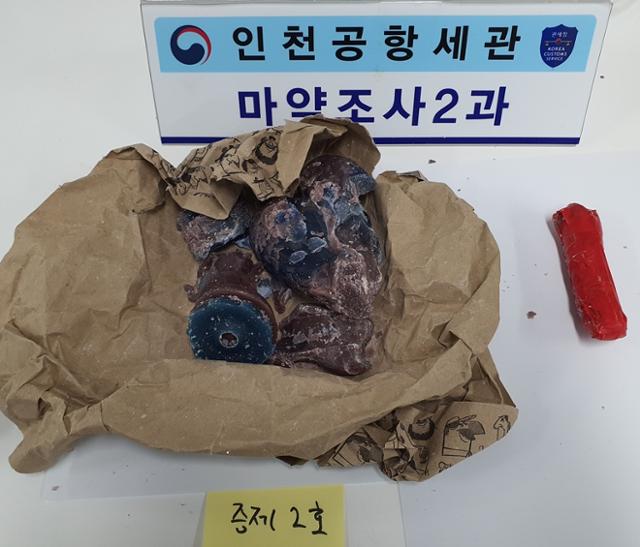
Mephedrone concealed inside candles in an attempted smuggling operation / Courtesy of Incheon Airport Customs
Two foreign nationals were caught by customs authorities attempting to smuggle mephedrone — a synthetic drug commonly known as a “zombie drug” for its extreme side effects — hidden inside candles.
Incheon Airport Customs said Wednesday it had arrested and handed over to prosecutors a 29-year-old foreign man on charges of violating the Narcotics Control Act. Authorities also issued a wanted notice for a second suspect, a 28-year-old man who has fled to his home country.
The investigation began after Incheon Airport Customs officers discovered 61.5 grams of mephedrone concealed in candles during a customs inspection of an express parcel from Ukraine in October 2024. Mephedrone is a new psychoactive substance often used in Central Asian countries such as Russia, Ukraine and Kazakhstan as a substitute for methamphetamine.
Despite attempts to evade detection by frequently changing delivery addresses and contact information, the 29-year-old was arrested at Gimpo International Airport just before he attempted to leave the country. Authorities believe he had taken mephedrone and MDMA (also known as ecstasy) at local nightlife establishments and was planning to flee to to their home country.
Customs investigators said the man was in Korea illegally and had conspired with the second suspect to smuggle drugs into the country for distribution in areas with large foreign populations. The two were reportedly in contact with a drug supplier overseas via the encrypted messaging app Telegram.
“Drug smuggling targeting foreigners living in Korea is steadily increasing, and related crimes are also on the rise,” a customs official said.
This article from the Hankook Ilbo, the sister publication of The Korea Times, is translated by a generative AI system and edited by The Korea Times.