Do you know about ‘room cafés,’ the banned hangout spot Korean teens are flocking to?
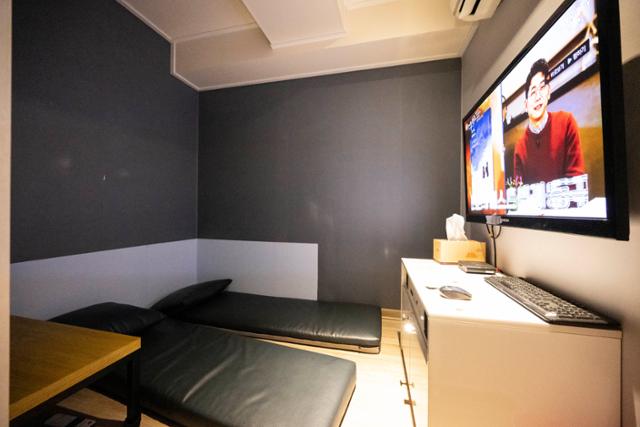
A room café in western Seoul's Mapo District / Hankook Ilbo file
More than one in 10 teenagers in Korea has visited a “room café” over the past year, despite the venues being off-limits to minors. These spaces, which include private rooms equipped with beds and bathrooms, have sparked controversy for enabling coed overnight stays similar to motels.
The finding comes from the Ministry of Gender Equality and Family’s 2024 survey on harmful environments for youth,” released on April 1. The biennial study surveyed 15,053 students nationwide, from fourth-grade elementary students to high school seniors, between September and November last year.
Among the surveyed youth, 12.6 percent said they had been to a room café in the past year. The next most-visited venues were “multi-rooms” (4.4 percent) and video/DVD rooms (2.2 percent). In the previous 2022 survey, when room cafés and multi-rooms were grouped together, 13.8 percent of respondents reported visiting such places.
Room cafés are businesses that operate in a legal gray area. While not inherently illegal, many are registered as general entertainment facilities, not lodging establishments. However, if they feature door locks, enclosed spaces and beds — creating a motel-like atmosphere — they may be designated as businesses prohibited to minors under the Juvenile Protection Act. It is also illegal to provide spaces for the purpose of coed stays among minors. Nevertheless, due to weak enforcement, teens continue to use room cafés as alternatives to motels.
The survey also found a rise in youth violence. Over the past year, 22.6 percent of respondents reported experiencing some form of violence — a 6.6 percentage point increase from two years ago (16 percent). Verbal abuse or demeaning language, both online and offline, was the most common form of harm at 25.1 percent, while 7.5 percent said they had experienced physical violence or injury.
Sexual violence remained a persistent concern, with 5.2 percent of respondents reporting such experiences, down slightly from 5.5 percent two years ago. Types of abuse included sexually harassing language, gestures or expressions (2.7 percent), online stalking or sexual conversations (1.4 percent) and unwanted physical contact or exposure (1.4 percent).
In most cases, the perpetrators of sexual violence were acquaintances. Sixty percent of victims said the offender attended the same school, followed by known individuals from outside school (10.5 percent). People met online (10.6 percent) and strangers (18.5 percent) were less common.
This article from the Hankook Ilbo, the sister publication of The Korea Times, is translated by a generative AI system and edited by The Korea Times.